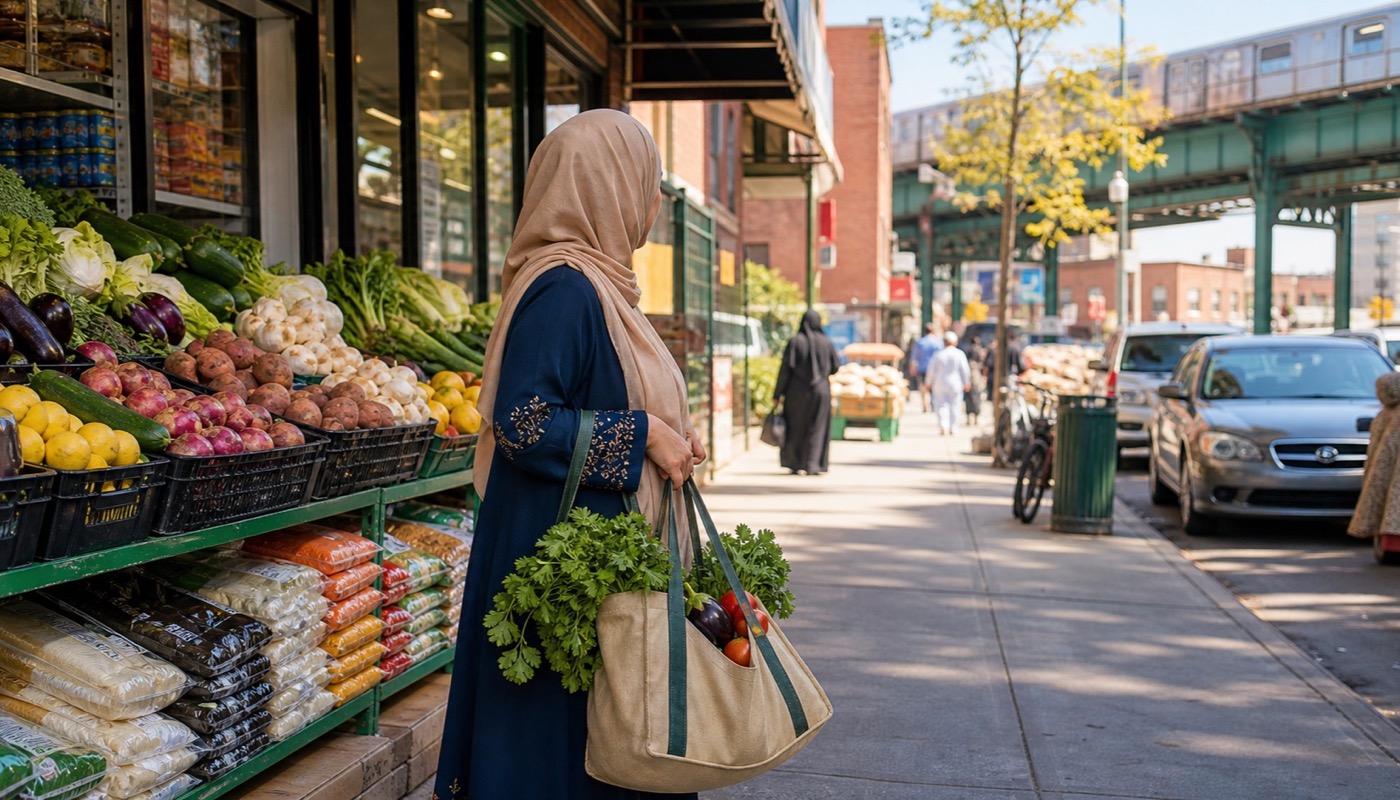

Plan a practical Brooklyn halal grocery route with Bay Ridge, Little Pakistan, commute-friendly shopping, current verification resources, cold-chain guidance, and a small-kitchen prep system.
What this guide covers
- 01Brooklyn works best as several neighborhood shopping zones; choose one according to the food you need and the route you already travel.
- 02Official data documents diverse immigrant communities and changing neighborhoods, but it does not provide a borough-wide Muslim growth rate.
- 03Bay Ridge and Coney Island Avenue can support different pantry styles, while Flatbush and southern Brooklyn add broader international options.
- 04Use New York State's live halal registry and precise supplier, certifier, and handling questions instead of relying on neighborhood identity.
- 05Carry perishables in an insulated bag, shop for cold food last, and refrigerate promptly after the trip.
- 06A small Brooklyn kitchen can produce variety by preparing flexible components for three days rather than seven complete recipes.
The useful answer: shop by neighborhood, prep by schedule
Brooklyn does not have one all-purpose halal shopping district. It has several useful food corridors, each shaped by different communities, transit lines, work patterns, and grocery traditions. Bay Ridge can make a Middle Eastern pantry easier to build. Coney Island Avenue is a practical place to compare South Asian staples. Flatbush, East Flatbush, Sunset Park, Gravesend, and East New York add their own Caribbean, African, Asian, and international options. The best route is the one that matches what you plan to cook and how you will carry it home.
That last part matters in a borough where a ‘quick grocery trip’ may involve a bus, subway stairs, a stroller, or a twenty-minute walk. This guide is not a ranking of stores, and it does not claim that every business in a Muslim neighborhood is halal. It is a repeatable system: choose one area, verify the product or establishment, protect cold food on the trip, and turn the basket into meals before the week gets loud.
If you want a cross-borough list of international pantry categories, the Queens guide covers that search intent. Here, the focus is narrower: how a Brooklyn resident can connect neighborhood shopping with a realistic workweek meal-prep routine.
Brooklyn's Muslim communities are visible; the exact growth number is not
It is easy to look at new restaurants, groceries, mosques, community organizations, and Ramadan displays and conclude that Brooklyn's Muslim population has risen by a particular percentage. The problem is that the U.S. Census Bureau does not collect a borough-level religion count. Kings County had an estimated 35.3 percent foreign-born population in the 2020–2024 QuickFacts data, but birthplace is not faith, and neither a national origin nor a neighborhood can prove that a person is Muslim.[2]
New York City Planning gives us a more careful picture of change. Its 2026 report counted about 919,700 foreign-born Brooklyn residents in 2023—roughly 35.9 percent of the borough—and found that Brooklyn's immigrant population had declined overall since 2013. At the neighborhood level, however, the pattern was mixed. Gravesend and East New York experienced significant immigrant growth, while Coney Island and Sheepshead Bay also saw substantial increases. Southern Brooklyn remained one of the city's largest immigrant hubs.[1] These figures help explain a changing food and business landscape, but they still do not measure religion.
So the honest conclusion is more useful than a dramatic headline: Brooklyn has longstanding, diverse Muslim communities and commercial corridors where halal-sensitive shopping is part of daily life. Some immigrant neighborhoods are growing, others are changing, and the number of halal options can move independently of either trend. This article describes what a shopper can verify today without inventing a borough-wide Muslim growth statistic.
Choose the Brooklyn zone that fits your basket
Start with the meal, not the neighborhood's reputation. A short ingredient list will tell you whether you need a Middle Eastern pantry stop, a South Asian staples run, a broad international market, or simply a verified source for meat and poultry. The table is a planning aid, not a halal certification map; businesses, suppliers, and inventory can change.
| Brooklyn area | Useful foods to compare | Plan around |
|---|---|---|
| Bay Ridge and 5th Avenue | Bulgur, rice, lentils, tahini, yogurt, bread, olives, herbs, Middle Eastern spices | Walking distance, package sizes, deli ingredients, meat supplier and certifier |
| Kensington, Midwood and Coney Island Avenue | Basmati rice, dal, whole spices, produce, frozen flatbreads, yogurt, chutneys | A focused list, frozen-food label checks, butcher verification, bus or subway carry time |
| Flatbush and East Flatbush | Caribbean produce, beans, rice, fish, greens, root vegetables, spices and sauces | Do not infer halal status from cuisine; check meat, stocks, sauces and prepared foods |
| Sunset Park | International produce, grains, tofu, seafood, noodles, herbs and specialty sauces | Alcohol in sauces, broths, dumplings, prepared foods and a cold trip home |
| Gravesend, Bensonhurst and nearby southern Brooklyn | Large international markets, produce, pantry staples, seafood and family-size formats | Only buy bulk when storage and the week's meal plan justify it |
Confirm the exact business, product, supplier, certifier, price, inventory, and hours before making a special trip. Neighborhood identity is never a substitute for halal verification.
Bay Ridge: build a pantry that earns its shelf space
Bay Ridge's 5th Avenue is a useful starting point when the week's meals lean toward rice or bulgur bowls, lentil soup, grilled protein, chopped salad, tahini sauce, or yogurt marinades. A New York City Small Business Services assessment published from fieldwork conducted around 2019–2020 described Bay Ridge's commercial corridors as culturally diverse and reported a substantial Arab community in the neighborhood.[3] That document is helpful historical context, not a promise about which businesses or products are present now.
Shop for overlap. Parsley, mint, cucumber, tomato, lemon, yogurt, chickpeas, lentils, tahini, rice, and one verified protein can become several coherent meals without creating five separate recipes. Bulgur may replace rice in a lunch bowl; chickpeas can become a side or a quick dinner; the same lemon-herb base can season chicken one day and dress a bean salad the next.
The danger is enthusiasm in a small apartment. A large olive-oil tin, restaurant-size tahini, or ten-pound bag of grain is economical only when you have a cool storage spot and a real usage rate. Compare unit prices, but also compare cabinet space, package instructions, and how quickly opened food will be used. Brooklyn square footage belongs in the grocery calculation.
Coney Island Avenue: use Little Pakistan for a focused workweek shop
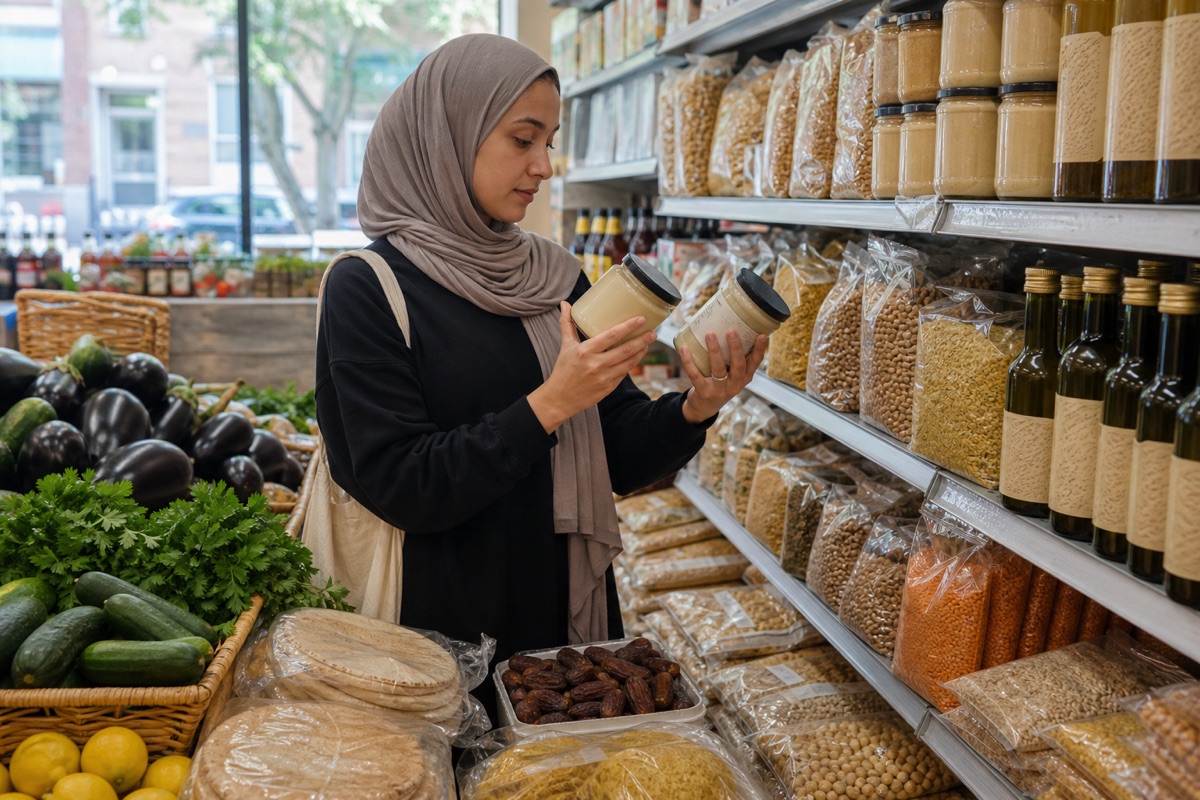
Coney Island Avenue is not internet folklore. A 2026 New York City Planning document describes it as a major commercial and retail corridor and identifies the area as home to Little Pakistan.[4] For a meal-prep shopper, the practical appeal is the ability to compare rice, lentils, whole spices, fresh ginger and garlic, herbs, yogurt, frozen bread, and other South Asian staples within one corridor.
Go with a list short enough to hold in one hand. Pick one main grain, one or two dals or beans, two sturdy vegetables, fresh aromatics, and a verified protein or reliable plant-based anchor. Then choose one convenience item—perhaps frozen flatbread or a prepared chutney—that saves genuine time. Reading every freezer door as an invitation is how a thirty-minute shop becomes an expensive research project.
Packaged foods need their own review. A familiar dish name does not answer questions about meat source, gelatin, cheese enzymes, cooking alcohol, bouillon, shortening, flavors, or shared production. Keep the package until you know the product works for your household and its cooking directions have been saved. When a label is unclear, choose a simpler ingredient rather than trying to solve food chemistry in the checkout line.
Let your commute decide how ambitious the trip should be
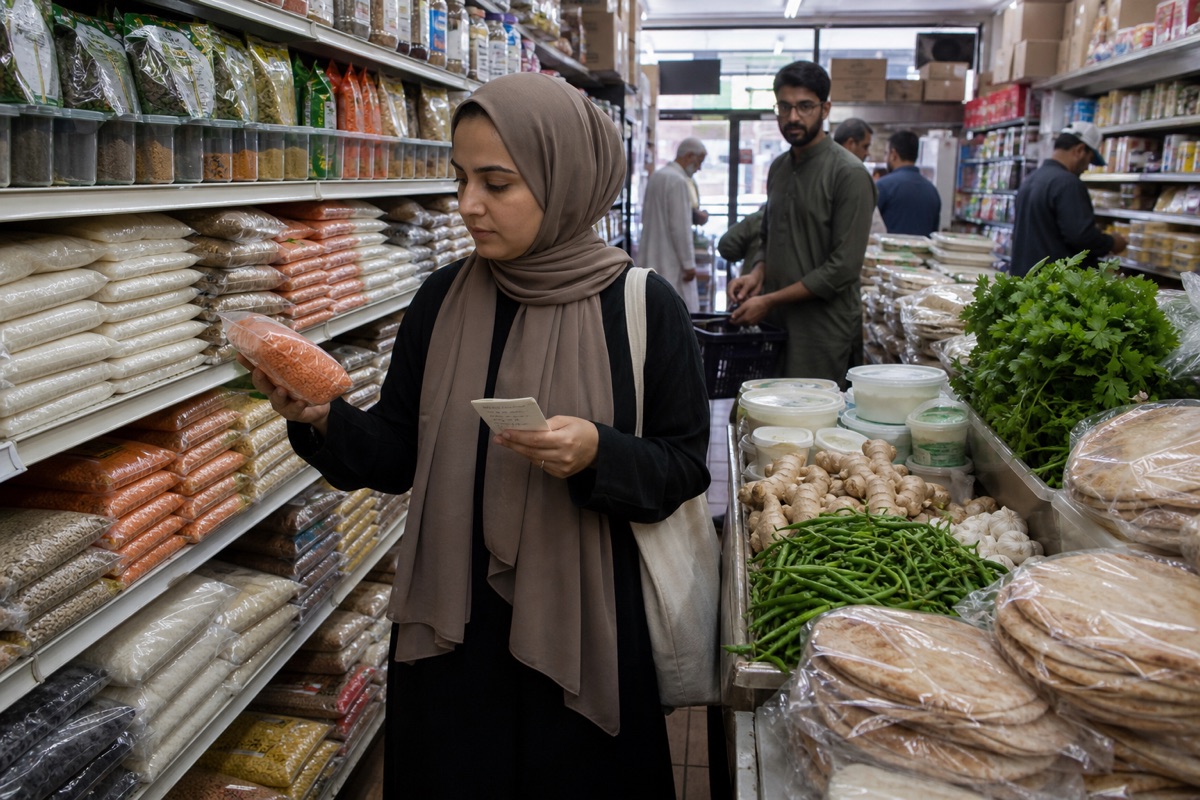
A remote worker near the store and a night-shift worker carrying groceries across two buses do not need the same plan. Before choosing a shop, ask three boring but powerful questions: How long will the trip home take? How much can I carry without hating this system? When will I actually cook? Those answers are often more important than finding one additional specialty ingredient.
If you commute through Flatbush, East Flatbush, or East New York, build a stop around the route you already travel. International groceries may offer useful produce, fish, rice, beans, greens, roots, spices, and sauces, but cuisine and neighborhood demographics do not establish halal status. Verify meat and poultry separately; inspect stocks, bouillon, sauces, and prepared foods; and ask about shared equipment when that matters to your standard.
Late-shift shoppers should favor a smaller basket that can be put away immediately: one verified protein, one quick base, two vegetables, one sauce, and a freezer backup. Weekend shoppers can handle a larger component-prep plan. Neither is more virtuous. The good system is the one that still functions after an exhausting Tuesday.
The Brooklyn halal check: turn a claim into usable information
New York's Halal Foods Protection Act creates a transparency system for businesses that represent food as halal. The Department of Agriculture and Markets publishes registration information for establishments and certifiers, and says its registered-establishment list is updated weekly.[5][6] A covered restaurant, caterer, butcher, or food establishment may have a posted filing that identifies who makes or certifies the claim and answers questions about suppliers, equipment, storage, and whether all meat sold there is halal.
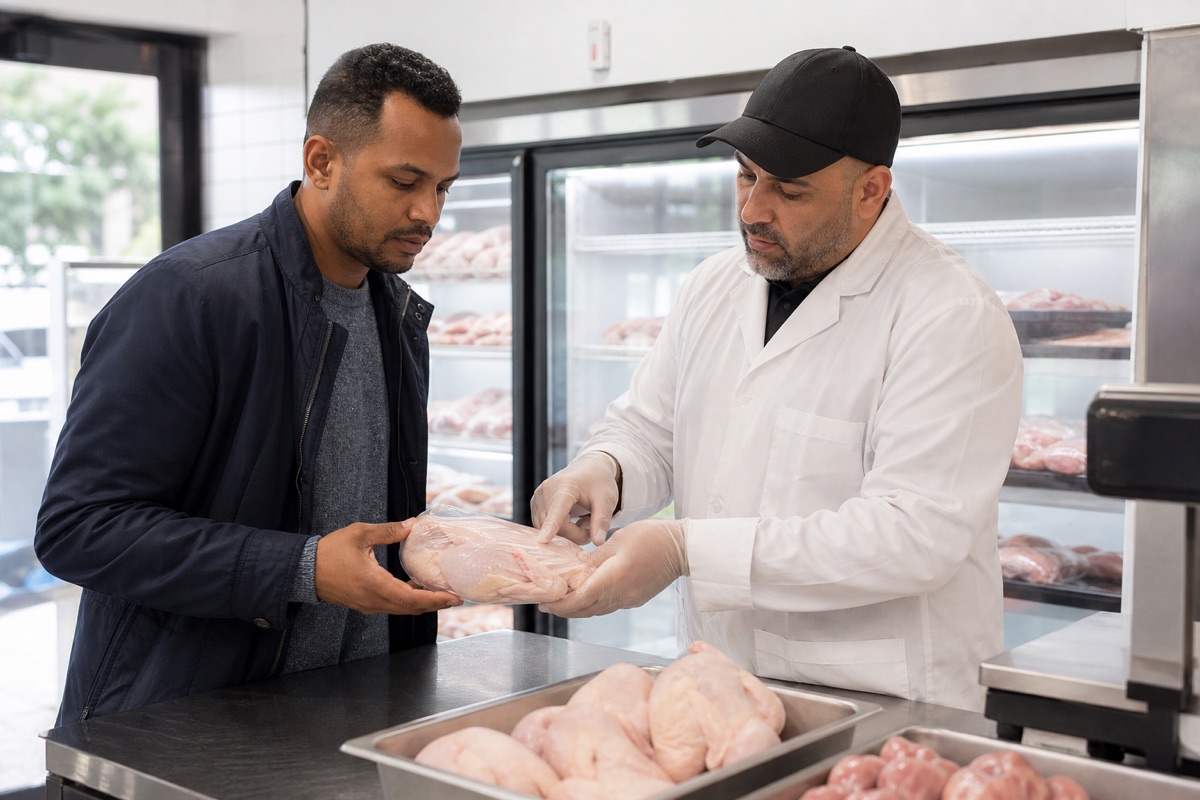
Use the live registry before a special trip, then look at the posted information and ask a precise question in person. ‘Who supplies or certifies this chicken?’ is better than ‘Everything is halal, right?’ If a store sells both halal and non-halal products, ask how they are stored, cut, wrapped, and displayed. For a sealed package, keep the label until the meal has been cooked and portioned.
Registration does not create one universal religious standard, endorse taste, guarantee current inventory, or replace your household's criteria. Some shoppers care about a particular certifier, stunning method, hand slaughter, shared equipment, or other details. The registry helps locate the accountable claim; you still decide whether the evidence meets the standard you follow.
Use a one-zone, two-bag shopping route
Choose one Brooklyn zone for the week and divide the shop into a shelf-stable bag and an insulated cold bag. Buy rice, lentils, canned goods, spices, and other room-temperature items first. Pick up meat, fish, dairy, frozen foods, and prepared cold items last. Then go home; the chicken does not need to visit the pharmacy, coffee shop, and hardware store with you.
Federal food-safety guidance says perishable food should be refrigerated within two hours, or within one hour when exposed to temperatures above 90°F. It also recommends a refrigerator temperature of 40°F or below.[7] In a New York summer, a crowded bus or sunny walk can use that time quickly. An insulated bag and a small ice pack are not decorative meal-prep gear; they make a longer route more forgiving.
At home, refrigerate or freeze cold items before sorting the pantry. Do not wash all produce automatically—follow storage guidance for the specific item and prep only what you can handle safely. Save unfamiliar labels, note which products were useful, and remove items from next week's list if they created more work than value.
- Before leaving: choose three meals, inventory the kitchen, check store hours, and review the current state halal registry when relevant.
- At the store: buy shelf-stable food first, verify the exact meat or packaged product, and collect cold items last.
- On the way home: use an insulated bag, skip unrelated errands, and keep track of the time.
- After unpacking: chill perishables first, photograph labels you may need, and assign every ingredient to a meal or backup.
In a small Brooklyn kitchen, prep components—not seven finished dishes
A compact kitchen becomes chaotic when every recipe demands a cutting board, sauce, garnish, and separate pan. Use components instead. Cook one grain, roast one tray of vegetables, prepare one verified protein, make one legume, and mix one sauce. Portion some meals now, but keep a few ingredients separate so texture and flavor can change later.
For example, rice, lentils, roasted chicken, broccoli and carrots, cucumber-tomato salad, and yogurt-herb sauce can become a bowl, a warm plate, or a flatbread filling. The ingredients repeat; the eating experience does not have to. A meatless serving can use extra lentils, while a fish or egg meal later in the week can borrow the same vegetables and sauce.
Start with three days if you are still learning how much your household eats. Freeze extra cooked protein or grain in useful portions rather than filling the refrigerator with a week's worth of optimism. Label containers with the preparation date, use shallow containers for faster cooling, and follow product-specific storage and reheating guidance.
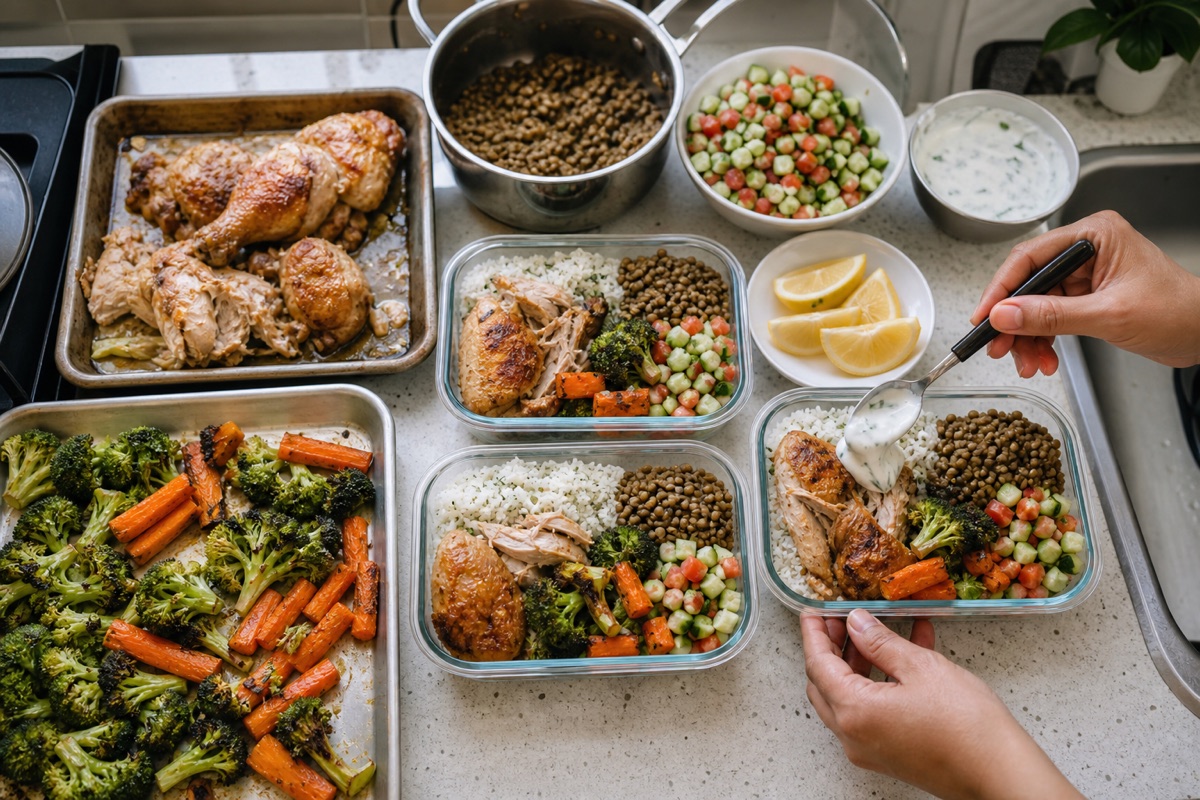
A three-day Brooklyn batch that does not feel repetitive
Use the formula below as a planning example, not a nutrition prescription. Portions depend on appetite, age, activity, health needs, and the rest of the day. The goal is to show how one neighborhood shop can produce variety without asking a small kitchen to behave like a restaurant.
| Day | Meal | What changes |
|---|---|---|
| Day 1 | Chicken-rice bowl with roasted vegetables and yogurt-herb sauce | Serve the components fresh and keep salad separate until eating |
| Day 2 | Lentil and chicken plate with chopped salad, lemon and a smaller scoop of rice | Shift the balance toward lentils and use lemon for a brighter finish |
| Day 3 | Warm flatbread or grain bowl with chicken, vegetables, salad and tahini or yogurt sauce | Change the format and sauce rather than cooking a new set of ingredients |
Keep cold foods refrigerated, reheat only what you will eat, and use the storage guidance for the exact ingredients and containers in your plan.
What to verify again next week
Brooklyn's halal food landscape is useful precisely because it is alive: suppliers change, products appear, businesses move, and neighborhoods evolve. That also means a guide should not freeze one store list and pretend it will remain current. Recheck hours before traveling, use the state registry for current filings, read the product in your hand, and ask about the exact meat or preparation you plan to buy.
The repeatable part is your system. Pick one neighborhood that fits the basket and commute. Verify the claim. Carry cold food safely. Prep a small set of flexible components. Keep notes on what earned a place in the next shop. Do that, and Brooklyn stops feeling like an endless search for the perfect market; it becomes a network of practical routes you already know how to use.
Frequently asked questions
Which Brooklyn neighborhood is best for halal grocery shopping?
There is no single best neighborhood for every basket. Bay Ridge can be useful for Middle Eastern pantry staples, while Coney Island Avenue and Little Pakistan can simplify a South Asian shop. Flatbush, East Flatbush, Sunset Park, Gravesend, and nearby areas offer other international ingredients. Choose the corridor that fits your list and commute, then verify the exact product or establishment.
Does a store in a Muslim neighborhood automatically sell halal food?
No. Neighborhood identity, cuisine, ownership, and customer base do not prove that a product is halal. Check the exact label, supplier or certifier, posted registration, and handling practices that matter to your household.
How can I check a halal business in Brooklyn before traveling?
Search the New York State Department of Agriculture and Markets halal establishment registry, which the department says is updated weekly. Treat the filing as a transparency resource, then confirm current hours, inventory, supplier, certifier, and handling details with the business.
How much food should I prep in a small apartment kitchen?
Begin with about three days of flexible components rather than seven fully assembled meals. One grain, one verified protein, one legume, roasted vegetables, fresh salad, and one sauce can create several meals while using less counter and refrigerator space.
Sources and further reading
- Patterns of Residence of the Foreign-born Population — The Newest New Yorkers, 2026New York City Department of City PlanningAccessed Aug 8, 2026
- QuickFacts: Kings County, New YorkU.S. Census BureauAccessed Aug 8, 2026
- Bay Ridge Commercial District Needs AssessmentNew York City Department of Small Business ServicesAccessed Aug 8, 2026
- City Planning Commission report N 260210 HKKNew York City Department of City PlanningAccessed Aug 8, 2026
- Halal Foods RegistrationNew York State Department of Agriculture and MarketsAccessed Aug 8, 2026
- Halal Establishment RegistrationsNew York State Department of Agriculture and MarketsAccessed Aug 8, 2026
- 4 Steps to Food SafetyFoodSafety.govAccessed Aug 8, 2026
We review articles for clarity and update them when guidance, products, or local information changes. Always verify current certification and food-safety information with the relevant primary source.
Read our editorial policy →NYHMP Editorial Team
Practical, evidence-aware guidance for healthy halal living in New York.