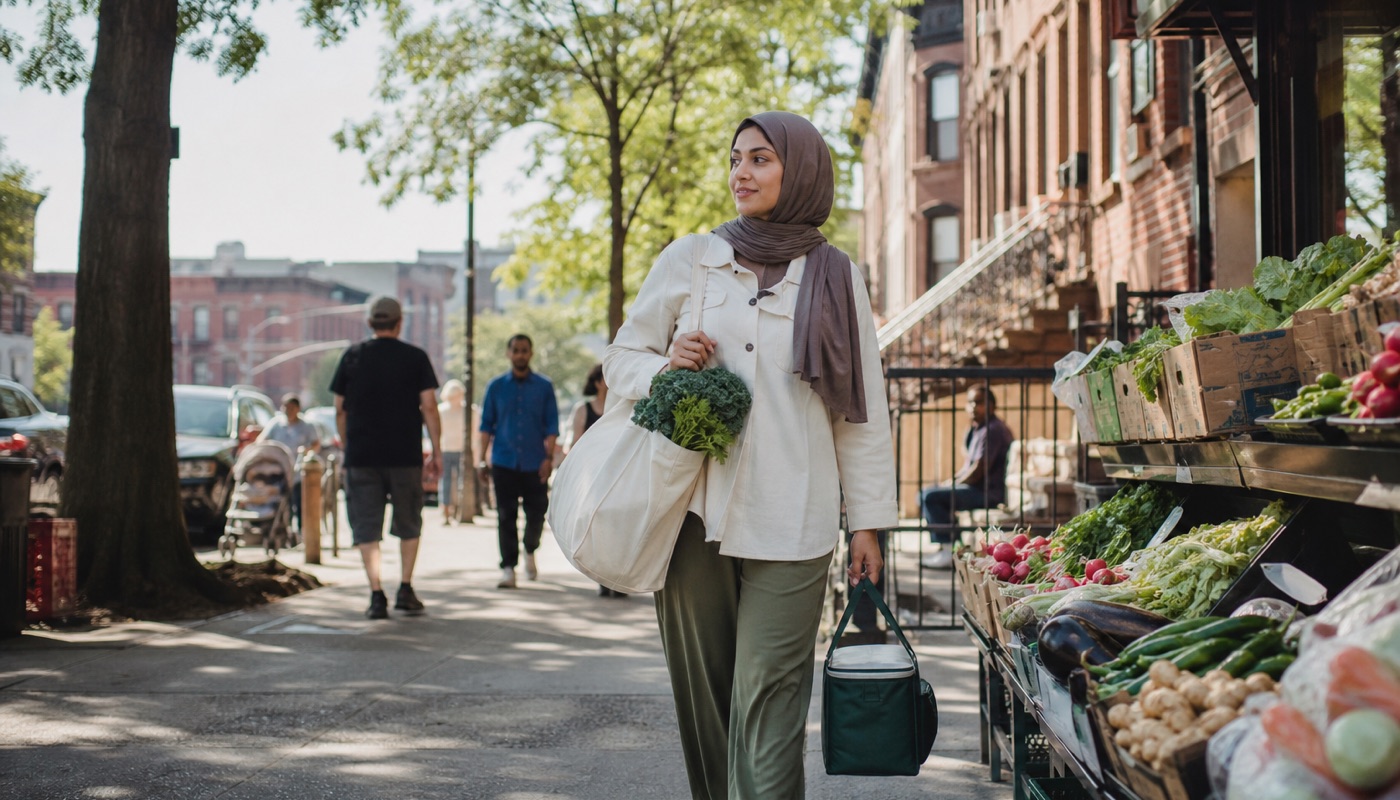

Plan a halal grocery trip through Queens with neighborhood shopping corridors, current verification resources, a meal-prep list, and realistic local context.
What this guide covers
- 01Queens’ international diversity expands grocery choice, but birthplace, cuisine, and neighborhood identity do not prove that a product is halal.
- 02Choose one shopping corridor according to the ingredients you need instead of crossing the borough for an arbitrary ‘best’ list.
- 03Use New York State’s live halal registry to identify the establishment or certifier behind a halal representation.
- 04At a meat counter, ask who supplies or certifies the product and how halal and non-halal items are handled.
- 05Build a five-part list—protein, base, produce, flavor, and backup—so variety supports meal prep instead of creating waste.
- 06Treat store inventory, hours, suppliers, and certification as changeable information and recheck before a special trip.
The short answer: Queens has become a better place to shop across cuisines
Halal grocery shopping in Queens is no longer one trip for meat and another trip for everything interesting. The borough’s international retail corridors increasingly let a shopper build a week around Bangladeshi rice and lentils, Egyptian pantry staples, Afghan bread, Guyanese produce, Turkish dairy, Central Asian noodles, or West African seasonings—sometimes within a few subway stops. The useful change is not that every international market is halal. It is that a wider range of communities now supports a wider range of ingredients, suppliers, butchers, frozen foods, and prepared shortcuts.
That variety matters for meal prep. A cook can buy chicken for kebabs, split peas for a Caribbean-style stew, herbs for chutney, yogurt for marinades, and frozen flatbread without forcing every meal into one cuisine. Diversity gives you options; a verification habit tells you which options meet your standard.
This guide is organized by shopping corridor rather than a ranked store list. Queens businesses open, close, change suppliers, and revise inventory. A corridor-based plan stays useful longer, while New York State’s live halal registry can answer the more time-sensitive question of who is currently registered and which certifier is listed.[4][5]
Queens is diverse—but do not turn diversity into a fake Muslim head count
The Census Bureau estimates that Queens County had about 2.36 million residents in 2025, and 47.6 percent of residents were foreign-born in the 2020–2024 data.[1] New York City Planning’s 2026 immigrant report counted about 1.11 million foreign-born Queens residents in its 2019–2023 analysis. China, Guyana, Ecuador, Bangladesh, the Dominican Republic, Jamaica, Mexico, Colombia, India, and Korea were the borough’s ten largest countries of birth in that dataset.[2]
Those figures explain cultural and commercial variety; they do not measure religion. The Census and City Planning tables cited here classify people by birthplace and related demographic characteristics, not by whether they are Muslim. A Bangladeshi, Guyanese, Indian, Egyptian, Albanian, or Uzbek identity cannot be used as a substitute for a halal claim, and no grocery becomes halal merely because it serves a community with many Muslim residents.
The defensible conclusion is narrower and more useful: Queens contains large, overlapping immigrant communities, including visible Muslim communities, and that demand supports a richer food marketplace. The exact number of halal products sold over time is not tracked in a public borough-wide dataset, so this article does not invent a growth percentage. It describes the variety a shopper can look for and the checks that still matter.
Choose a corridor by the basket you need
Queens is too large for a single ‘halal neighborhood’ answer. Start with the ingredients you need, choose one commercial corridor, and confirm store hours and inventory before leaving home. The table is a planning map, not a certification list: it describes useful categories to compare, while the exact meat, prepared food, and packaged product still require verification.
| Queens corridor | Useful categories to compare | Halal-sensitive check |
|---|---|---|
| Jackson Heights, Elmhurst & Woodside | South Asian rice, lentils, spices, herbs, frozen flatbreads, produce | Verify meat supplier, certifier, frozen meals, bouillon, and mixed prepared foods |
| Astoria & Steinway | Middle Eastern and Mediterranean bread, olives, grains, yogurt, tahini, spices | Check butcher certification, deli meats, cheese enzymes, sweets, and prepared sauces |
| Jamaica, Jamaica Hills & Briarwood | Bangladeshi and broader South Asian staples, produce, fish, meat, large rice formats | Look for the posted registration, named certifier, current meat source, and handling answers |
| Richmond Hill & South Ozone Park | Guyanese and Indo-Caribbean produce, split peas, roti ingredients, herbs, chiles | Do not assume every meat or prepared item is halal; ask about supplier and shared equipment |
| Flushing & Fresh Meadows | East and Central Asian produce, noodles, tofu, seafood, dumpling ingredients, specialty sauces | Read sauces, flavorings, dumplings, broths, gelatin, cooking alcohol, and certification marks |
Neighborhood inventories change. Use this as a route-planning tool, then confirm the exact product or establishment through its label, certifier, supplier information, and the current New York State halal registry.
Jackson Heights and Woodside reward a focused list
The 7-train corridor is the obvious starting point when your list leans South Asian. City Planning describes northwestern Queens as New York City’s largest foreign-born borough subsection, with about 457,700 immigrants in the 2019–2023 period. It also notes a strong Bangladeshi commercial presence around Diversity Plaza and Bangladeshi populations in Jackson Heights, Elmhurst, Sunnyside, and Woodside.[2] A recent city commercial assessment likewise describes Jackson Heights vendors and businesses as unusually varied in trade and background.[3]
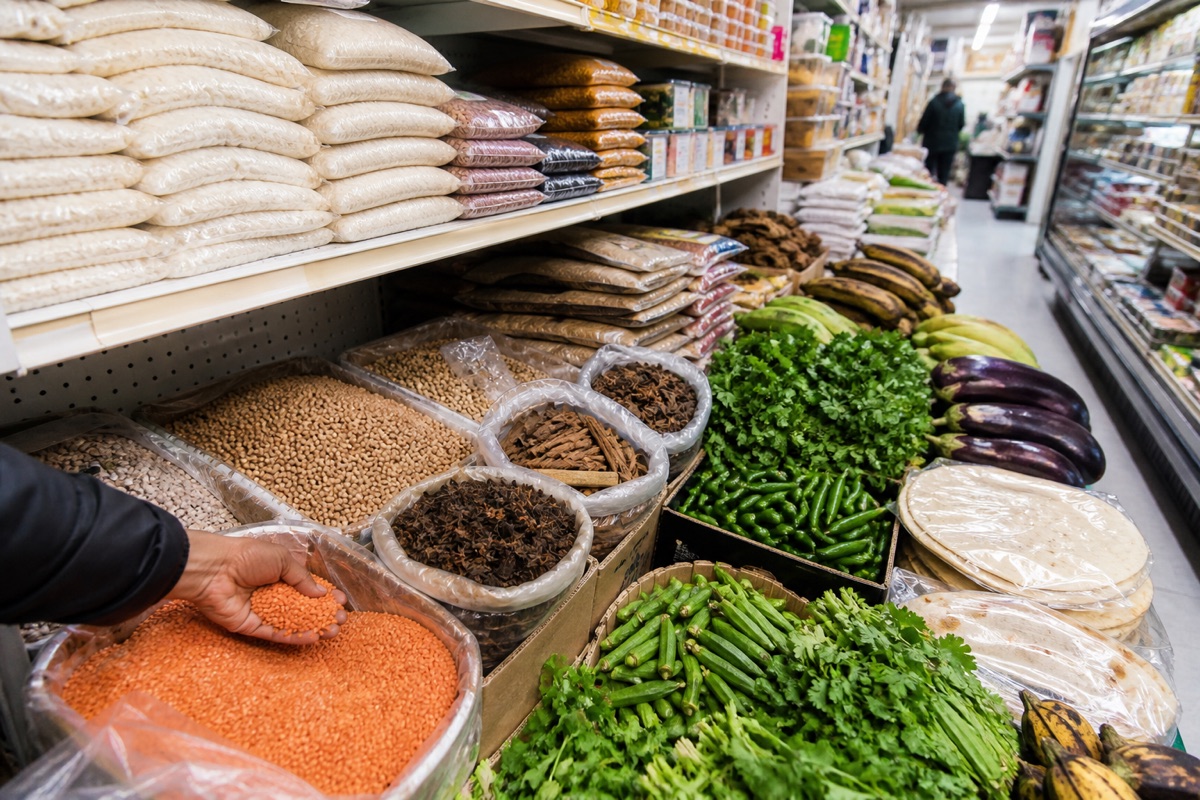
For a meal-prep shop, that translates into useful comparison shopping: multiple rice varieties and package sizes, dry lentils and beans, whole spices, fresh herbs, green chiles, okra, eggplant, frozen paratha, chutneys, yogurt, and family-size pantry goods. The advantage is not simply ‘ethnic food.’ It is being able to choose the format that fits your kitchen—two pounds rather than twenty, frozen bread rather than a recipe project, or whole spices you will actually use.
Avoid buying by excitement alone. If you have never cooked a large bag of a particular rice or dal, start small. Photograph the package before transferring it to a container, especially when cooking instructions, allergen information, or certification details are on the bag. A crowded shelf is an opportunity only when the product still has a job in this week’s plan.
At the meat counter, ask for evidence—not reassurance
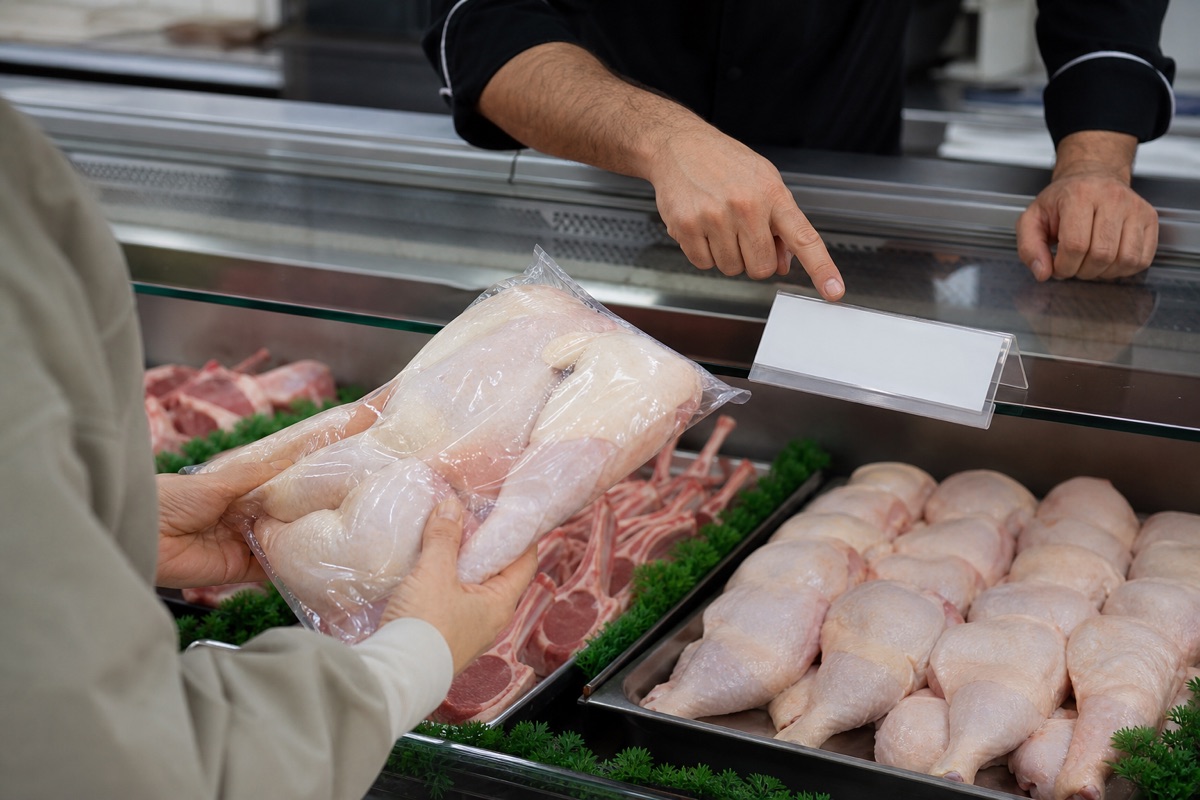
A sign that says ‘halal’ is the beginning of the conversation, not the whole conversation. Ask who supplies or certifies the meat, whether all meat sold there is halal, and how halal and non-halal products are stored and handled when both are present. For packaged meat, keep the label until the batch is cooked and portioned. For meat wrapped at the counter, ask whether the supplier or certifier information is available in writing.
New York’s Halal Foods Protection Act requires covered businesses representing food as halal to register with the Department of Agriculture and Markets. Restaurants, caterers, and food establishments selling food prepared under their control as halal must post a registration form where consumers can see it. Stores selling both halal and non-halal food or meat are subject to specific window-sign requirements, and the state registry publishes establishment and certifier filings.[4][5]
Registration improves transparency; it is not a universal religious ruling. The filing tells you who is making or certifying the claim and can include answers about suppliers, equipment, storage, and whether all meat is halal. Your household may still care about slaughter method, stunning, supervision, or a particular certifier. Use the registry to ask a better question, not to avoid asking one.
Let Queens diversity improve the plan—not multiply the workload
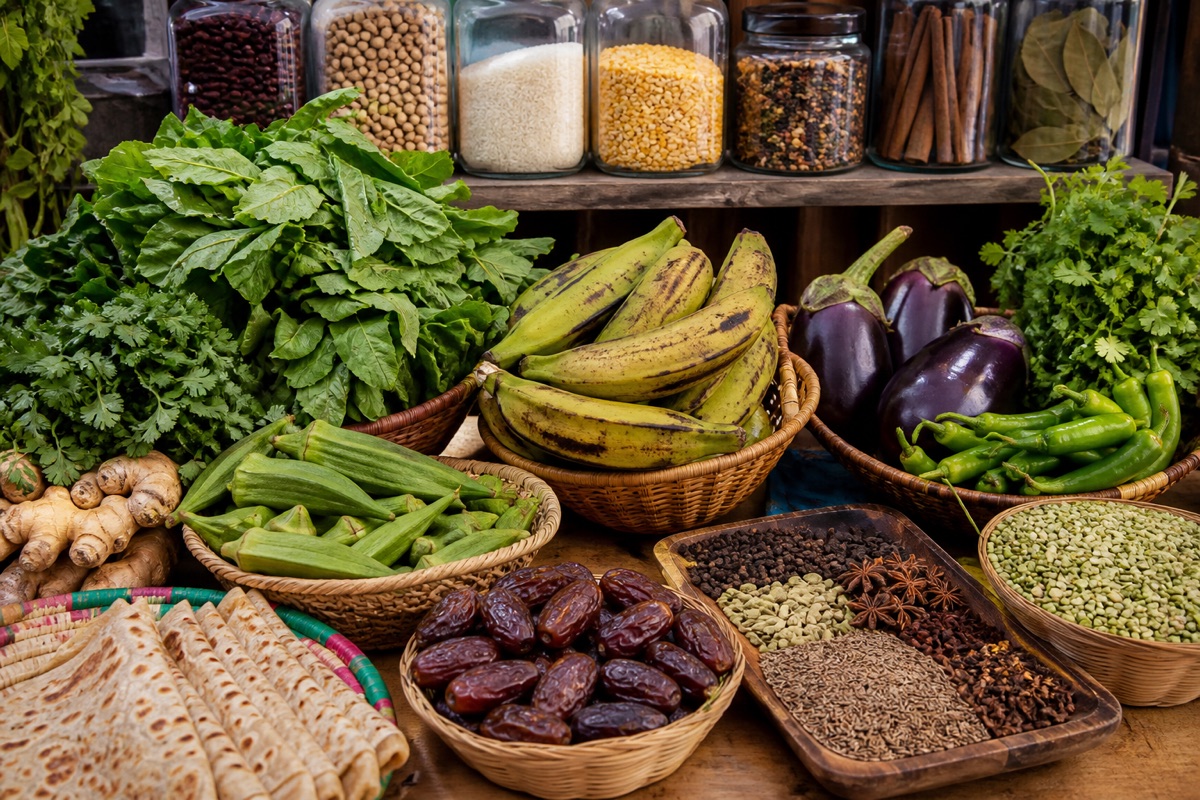
The most useful Queens basket crosses culinary borders without turning dinner into a confused mash-up. Think in components. Basmati rice can support a kebab bowl, a lentil plate, or a Guyanese-inspired curry. Cilantro, green chiles, ginger, garlic, yogurt, and citrus can move through several meals. Split peas, chickpeas, and lentils provide inexpensive pantry anchors. Okra, callaloo-type greens, eggplant, cabbage, and plantains add different textures without demanding separate shopping trips.
Keep each meal coherent even when the weekly shop is global. One night might use chicken, rice, cucumber, tomato, and yogurt sauce. Another might pair fish with greens and seasoned split peas. A third could turn chickpeas, eggplant, herbs, and flatbread into a meatless lunch. Variety lives across the week; it does not need to be forced into every container.
This is where Queens’ retail diversity has practical value. It makes substitution easier. If one vegetable is expensive or tired, another familiar to a different cooking tradition may do the same job. If a packaged sauce is unclear, whole spices, aromatics, yogurt, tomatoes, or tahini can build flavor from ingredients you understand.
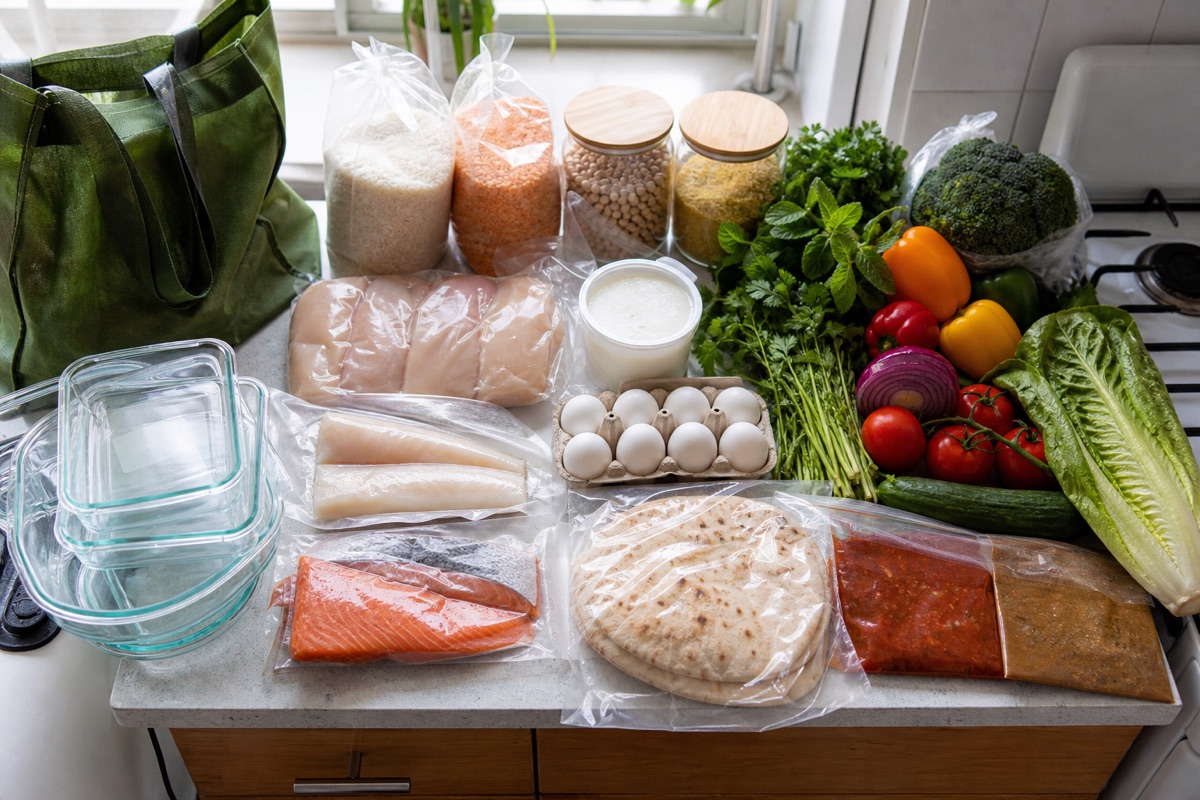
Build the list in five passes
A good list prevents the international market from becoming a two-hour museum visit. Before leaving home, inventory the refrigerator, freezer, and pantry. Then write the list in the order below. If an item does not belong to a meal or a reliable backup, leave it for another week.
Keep price comparison simple. Compare unit price only between products you will use, and remember that the cheapest large bag is expensive if half of it occupies a cabinet for a year. For meat, a clean trim and usable yield can matter more than the sticker price per pound.
- Protein: choose one or two verified options—such as chicken, fish, eggs, yogurt, tofu, beans, or lentils—and note the quantity your recipes require.
- Base: select one main grain, bread, noodle, or starchy vegetable rather than buying three competing plans.
- Produce: choose sturdy vegetables for later in the week and delicate herbs or greens for the first few days.
- Flavor: buy the aromatics, spices, and one or two sauces that connect the meals; check broths, flavorings, cooking alcohol, gelatin, and animal-derived ingredients.
- Backup: add one freezer or pantry meal that has already passed your halal and allergen checks for the day the schedule breaks.
Use a one-corridor, one-protein-source rule
The classic Queens shopping mistake is trying to visit Jackson Heights, Astoria, Jamaica, and Flushing in one afternoon. Unless grocery tourism is the point, choose one corridor for produce and pantry goods and one trusted source for the week’s meat or poultry. They may be the same store. If not, keep the second stop close enough that frozen and refrigerated food does not spend the day sightseeing with you.
Call ahead when the trip depends on a specific cut, brand, certifier, or bulk size. Bring an insulated bag for meat, seafood, dairy, and frozen food. Shop shelf-stable goods first, cold items last, and go home before adding unrelated errands. A smart route protects both time and temperature.
When you unpack, separate the work immediately: refrigerate or freeze proteins, wash only the produce you plan to prep now, and keep labels from unfamiliar products. Then update a short ‘verified and useful’ list on your phone. The next Queens trip gets faster because you are building knowledge, not starting over.
What a Queens market cannot decide for you
More choice does not create one universal halal standard. Families may differ on certifiers, slaughter methods, shared equipment, cheese enzymes, shellfish, or products containing small amounts of flavor carriers. A store serving Muslim customers may stock items that meet several standards, items that meet one standard, and items making no halal claim at all.
Decide your non-negotiables before shopping. If you follow a particular certifier or scholarly opinion, save that information on your phone and explain the exact question politely. Do not ask an employee to settle an entire religious debate when what you need is a supplier name, ingredient panel, or handling answer.
For the shopper, Queens’ advantage is not certainty on every shelf. It is the possibility of finding several workable routes to the same dinner. Pair that abundance with a clear list and a calm verification habit, and halal grocery shopping becomes less of a scavenger hunt and more of a repeatable weekly system.
Sources and further reading
- QuickFacts: Queens County, New YorkU.S. Census BureauAccessed Aug 8, 2026
- Patterns of Residence of the Foreign-born Population — The Newest New Yorkers, 2026New York City Department of City PlanningAccessed Aug 8, 2026
- Jackson Heights Commercial District Needs AssessmentNew York City Department of Small Business ServicesAccessed Aug 8, 2026
- Halal Foods RegistrationNew York State Department of Agriculture and MarketsAccessed Aug 8, 2026
- Halal Establishment RegistrationsNew York State Department of Agriculture and MarketsAccessed Aug 8, 2026
We review articles for clarity and update them when guidance, products, or local information changes. Always verify current certification and food-safety information with the relevant primary source.
Read our editorial policy →NYHMP Editorial Team
Practical, evidence-aware guidance for healthy halal living in New York.