
A practical guide for reading U.S. halal labels, checking certification marks, understanding chemical ingredients, and shopping confidently in New York.
What this guide covers
- 01The United States has no single federal halal seal; identify the organization behind each claim.
- 02A USDA inspection mark, organic claim, vegan logo, or kosher symbol is not a substitute for halal certification.
- 03Scientific-sounding ingredients are not automatically haram; source and processing determine what needs verification.
- 04Gelatin, enzymes, flavors, glycerin, emulsifiers, and certain processing aids may require a certifier or manufacturer answer.
- 05New York’s halal registry helps identify sellers and certifiers, but readers still choose the religious standard they follow.
- 06Save verified products by exact name, flavor, UPC, certifier, and date because formulas can change.
Start with one important truth: a halal label is not a universal government seal
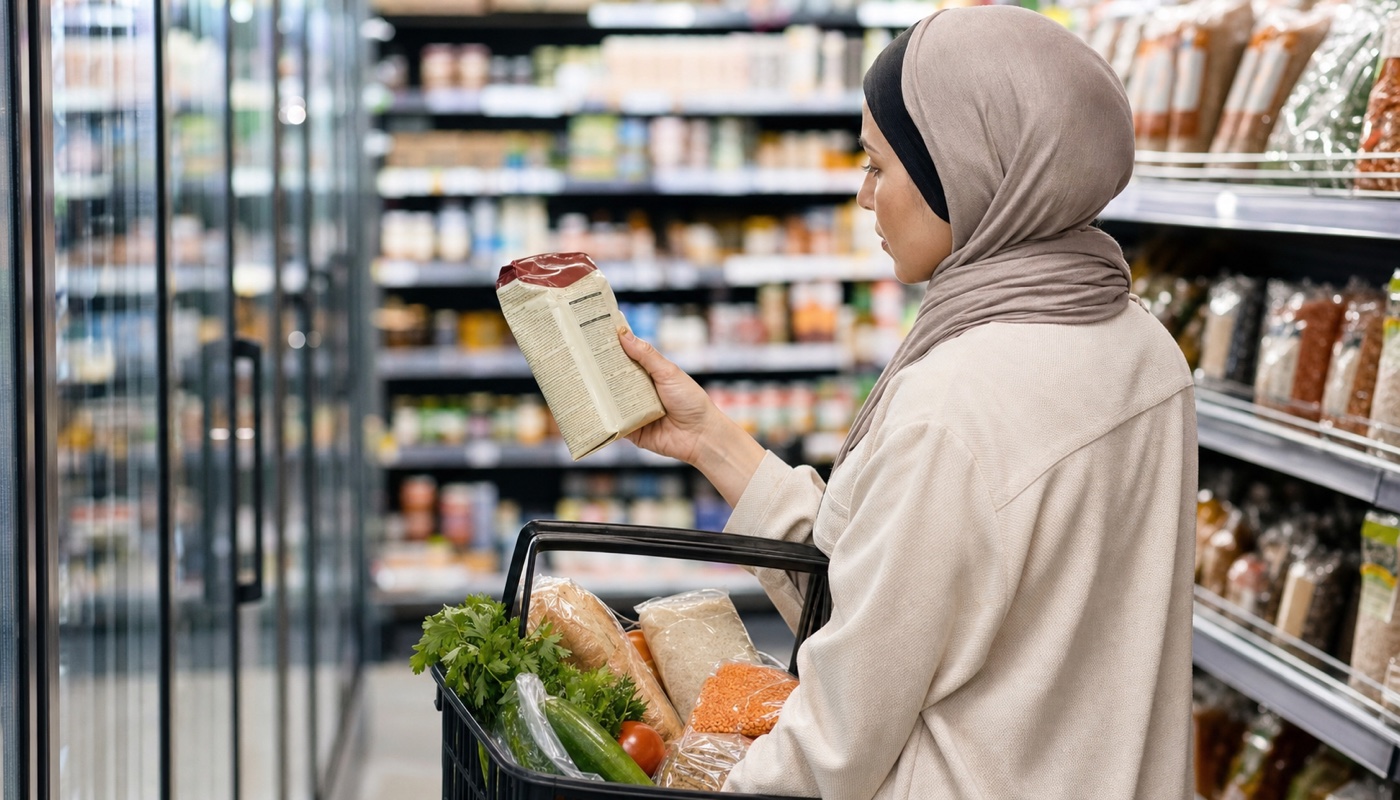
If you have just arrived in New York, the American grocery aisle can feel familiar and foreign at once. You may recognize the chicken soup, cheese, cookies, and frozen meals—but not the certification logos or ingredient conventions. Start by separating three things: the company’s halal claim, the certifier’s mark, and the ingredient list.
The United States does not have one federal halal logo comparable to the USDA Organic seal. Private religious or technical organizations generally certify halal products, while government agencies regulate whether labels are truthful and required information is present. USDA says federally inspected meat and poultry labeled “Halal” or “Zabiah Halal” must be handled according to Islamic law and under Islamic authority [1]. The USDA inspection mark itself, however, is not a halal certificate.
Certification can answer questions a retail ingredient list cannot, including slaughter, processing aids, and shared production lines. Still, check the scope: formulas, suppliers, facilities, and packaging can change.
The American halal-label story did not begin on one date
Halal labels did not arrive on one national start date. Muslim families long relied on neighborhood butchers, imported products, direct questions, and community trust. As packaged foods became more complex, consumers needed answers about enzymes, flavors, emulsifiers, and global supply chains that a local relationship could not always provide.
A useful marker came in the early 1980s. IFANCA says scholars, scientists, and industry executives began organizing in 1980, published halal food information in 1981, and incorporated the nonprofit in Illinois in 1982 [6]. This was not the legal birth of halal food in America, but it shows when modern technical certification and consumer education became more organized.
States later added consumer protections. New Jersey enacted its Halal Food Consumer Protection Act in 2000 [8]. California’s current law prohibits false halal representations and requires disclosure when halal and nonhalal food are sold together; the relevant section took effect in 2004 [7]. New York’s Halal Foods Protection Act followed in 2005 with registration and disclosure requirements for covered sellers and certifiers [9].
Today’s system is layered: federal labeling rules, state consumer-protection laws, and private certifiers applying religious and technical standards. Identifying who makes the claim matters as much as finding the word “halal.”
A 30-second method for reading a halal food label
Do not begin by decoding every unfamiliar chemical name. Begin with the structure of the package. A calm first pass usually answers whether you can place the product in your cart, need a quick verification, or should choose a clearer alternative.
- Find the exact halal claim. Does the package say “halal,” “halal certified,” “made with halal chicken,” or nothing at all?
- Identify who stands behind the claim. Look for the certifier’s name or logo, not only a crescent, Arabic-style design, or the word “halal.”
- Read the complete ingredient list. U.S. labels generally list ingredients from greatest to least by weight [2].
- Read sub-ingredients inside parentheses. A sauce, chocolate chip, seasoning blend, or broth may contain its own multi-part formula.
- Check the “Contains” statement for major allergens, but remember that an allergen declaration is not a halal declaration.
- If a source-dependent ingredient remains and there is no certification you trust, verify it with the manufacturer or select another product.
Front-of-package symbols: useful clues, not substitutes
A USDA inspection legend does not independently mean halal. “Organic,” “natural,” “non-GMO,” and “gluten-free” answer other questions. Vegan can reduce uncertainty about animal ingredients but does not evaluate alcohol carriers or halal production. Kosher follows a different religious standard and is not automatic halal approval.
The strongest signal is a clear product-level halal claim connected to a certifier whose identity and current directory you can verify.
Read ingredients by source, not by how scientific the name sounds
Everything we eat is made of chemicals, including water, protein, salt, and vitamins. A long name is not evidence that an ingredient is haram or unsafe. FDA explains that additives can preserve freshness, prevent separation, build texture, control acidity, or add flavor [3]. Halal review asks a different question: what is the source and how was it processed?
Sort ingredients into three groups: straightforward for your standard; an explicit conflict such as pork or lard; and source-dependent, where the name alone does not reveal whether the material came from a plant, animal, microbe, or synthetic process.
Source-dependent ingredients worth pausing over
The following names are not automatically forbidden. They are prompts to look for trusted product certification or ask a more specific question. The answer can differ by manufacturer, product line, and even country of production.
- Gelatin — may come from pork, cattle, fish, or another source; a package that says only “gelatin” does not identify the animal.
- Enzymes, rennet, chymosin, and lipase — may be microbial, plant-derived, or animal-derived and are common in cheese and dairy processing.
- Mono- and diglycerides — emulsifiers that can be produced from vegetable or animal fats; “vegetable mono- and diglycerides” is more informative.
- Glycerin or glycerol — can be plant-derived, animal-derived, or synthetic and appears in bars, baked goods, beverages, supplements, and flavor systems.
- Stearic acid and magnesium stearate — may be sourced from vegetable or animal fats; common in candy and dietary supplements.
- L-cysteine — a dough conditioner that may be produced through different raw materials and manufacturing methods.
- Natural or artificial flavors — collective terms that may not disclose every flavor component or carrier on the consumer label.
- Shortening, stock, broth, meat flavor, and animal fat — need a named source and, when relevant, halal verification.
- Whey and cheese powders — dairy itself is not the entire question; the cheese-making enzymes used upstream may matter to your standard.
- Carmine or cochineal extract and confectioner’s glaze or shellac — animal- or insect-associated ingredients about which halal standards may differ.
What “natural flavor,” processing aids, and incidental additives can hide
U.S. rules allow terms such as “natural flavor,” “artificial flavor,” “spices,” or “color added.” FDA also notes that some incidental additives can be exempt from declaration [2][5]. The consumer label is therefore not always a complete technical formula with the origin of every carrier or processing aid.
For halal shoppers, the issue is missing source information—not the word “chemical.” A flavor can be legally labeled while two words still do not reveal whether a carrier contains ethanol or an upstream component is animal-derived. A certifier may review confidential formulations and production records that are absent from the box.
Ask a narrow question: “Does the natural flavor in this exact product contain an animal-derived component or ethanol used as an ingredient or carrier, and are any undeclared processing aids animal-derived?” Include the product name, UPC, lot code, and country of manufacture.
Allergen statements help—but they answer a different question
FDA recognizes milk, egg, fish, crustacean shellfish, tree nuts, peanuts, wheat, soybeans, and sesame as the nine major food allergens [4]. The “Contains” line may reveal milk or fish, but it will not flag pork, non-halal meat, gelatin, alcohol, animal-derived emulsifiers, or every processing aid.
“May contain” and shared-facility language addresses possible allergen cross-contact, not complete halal segregation. Read it for safety, then return to the halal claim and ingredient sources.
How to check whether a halal certification mark is meaningful
Copy the certifier’s name exactly and use its official directory rather than a reposted logo chart. Confirm that the listing covers the same company, facility, product family, and market. A factory certificate does not necessarily cover every item or flavor.
Check whether the logo is printed on the original package or added by a seller. Compare the product name, UPC, factory code, and country of origin when available. Keep a label photo until meal prep is finished.
- Who is the certifier?
- Can the product or facility be found in the certifier’s current official directory?
- Does certification cover the whole product or only one meat ingredient?
- Is the logo part of the original package?
- Has the formula, facility, supplier, or country of manufacture changed?
What New York adds to the label-reading process
New York’s system is especially useful for a newcomer because it creates a public trail. Covered manufacturers, producers, packers, distributors, retailers, restaurants, caterers, and food carts representing food as halal may have registration obligations. Certifiers also register, and businesses selling both halal and non-halal food face disclosure and signage requirements [9]. The state publishes searchable registration information.
Registration improves transparency, but it does not create one religious standard for every Muslim. Use the record to learn who is certifying or making the representation, then decide whether that standard matches your household. At a butcher, restaurant, or prepared-food counter, look for the posted halal registration form and note the named certifier. If staff cannot explain who certifies the food, do not let a green sign or Arabic lettering do the answering.
How meal-prep and packaged-food companies handle halal claims
Companies use different models. A fully certified program may submit formulas, suppliers, processing aids, sanitation procedures, and facilities for review and audits. This is especially useful for a frozen meal, protein bar, sauce, or supplement with many upstream ingredients.
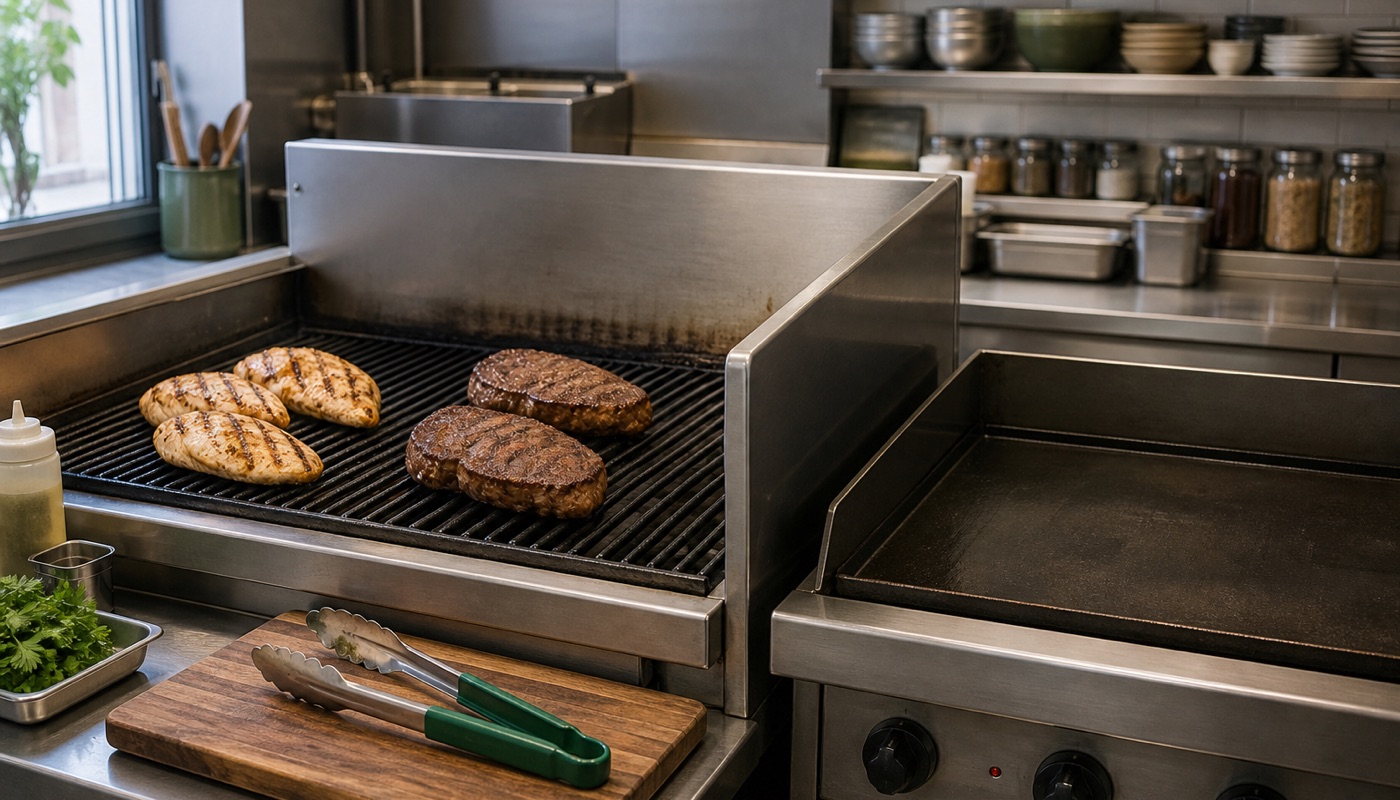
Another company may use halal-certified meat without certifying the finished meal. “Made with halal chicken” may accurately describe the chicken while the sauce, cheese, flavor system, or shared line still needs evaluation. Some businesses self-identify and disclose their practices; others make no halal claim.
Read the exact wording. “Halal meat used,” “halal menu,” “Muslim owned,” and “halal certified product” are not interchangeable statements.
Three real-world label-reading examples
An uncertified protein bar listing whey, glycerin, natural flavors, and mono- and diglycerides presents several source questions; check product-level certification or contact the manufacturer once about all four.
A cheese snack’s milk allergen statement confirms dairy, not the source of rennet, enzymes, or lipase. Certification can resolve that technical chain more efficiently than a short retail list.
For frozen rice and vegetables labeled “made with halal chicken,” read the full formula. Broth, sauce, cheese, gelatin, flavors, or cooking wine may determine whether the finished meal meets your standard.
A beginner’s decision tree for the New York grocery aisle
When you are new to the country, you do not need a private chemistry degree before buying lunch. Use a repeatable decision tree and give yourself permission to choose the clearer product. Confidence grows from a system, not from memorizing hundreds of ingredient names.
- Trusted product-level halal certification and no obvious mismatch? Record the product and continue.
- No certification, but a short plant-based ingredient list with no broad flavors or source-dependent additives? Decide according to your household’s standard.
- Halal meat claim but a complex finished meal? Verify whether the claim covers the complete product.
- Unspecified gelatin, animal fat, meat stock, enzymes, emulsifiers, glycerin, or flavors? Check the certifier or ask the manufacturer.
- Company gives an unclear or contradictory answer? Choose an alternative and do not build a full week of meal prep around uncertainty.
- Formula or package changes later? Recheck instead of assuming the old answer still applies.
Build a personal verified-food list
Once you verify a product, save the full name, flavor, package size, UPC, certifier, and date checked. Separate “certified,” “manufacturer confirmed,” and “ingredient list reviewed” so you remember what kind of evidence you had. Families can keep the list in a shared note; meal-prep managers can attach it to purchasing records.
Review the list when a logo disappears, ingredients move, the package says “new formula,” or the country of origin changes. Keep two dependable options in each category you buy often—broth, sauce, cheese, tortillas, snacks, and supplements—so one reformulation does not derail the week.
Good halal label reading should make shopping calmer over time. You are not trying to fear every unfamiliar syllable. You are learning which claims answer which questions, where labels have legal limits, and when certification or a direct inquiry provides the missing piece.
Frequently asked questions
Does a USDA inspection mark mean meat is halal?
No. The USDA inspection mark shows that the product was produced under federal inspection. A separate halal claim or certification identifies religious handling. USDA states that federally inspected products labeled Halal or Zabiah Halal must be handled according to Islamic law and under Islamic authority.
Are ingredients with chemical names automatically haram?
No. Many chemical-sounding names describe vitamins, acids, preservatives, emulsifiers, or compounds found naturally in food. Halal review focuses on the ingredient’s source and processing. Some ingredients are clearly plant-based, while others such as gelatin, glycerin, enzymes, and mono- and diglycerides can be source-dependent.
Is vegan or kosher labeling the same as halal certification?
No. Vegan and kosher marks answer different questions and follow different standards. They can provide useful clues, but neither evaluates every halal concern or replaces a halal certification trusted by the reader.
What should I ask a manufacturer about natural flavors?
Name the exact product and ask whether the flavor contains animal-derived components, ethanol used as an ingredient or carrier, or source-dependent processing aids. Include the UPC, lot code, and country of manufacture when possible.
How can I verify a halal restaurant or butcher in New York?
Look for the establishment’s posted halal registration information, identify the named certifier, and check New York State’s current halal registration records. Registration helps establish who makes or certifies the claim, but you should still confirm that the stated practices meet the standard you follow.
Sources and further reading
- Meat and Poultry Labeling Terms: Halal and Zabiah HalalUSDA Food Safety and Inspection ServiceAccessed Jul 27, 2026
- Types of Food IngredientsU.S. Food and Drug AdministrationAccessed Jul 27, 2026
- Food Additives and GRAS Ingredients: Information for ConsumersU.S. Food and Drug AdministrationAccessed Jul 27, 2026
- Food AllergiesU.S. Food and Drug AdministrationAccessed Jul 27, 2026
- Food Labeling GuideU.S. Food and Drug AdministrationAccessed Jul 27, 2026
- IFANCA at 40: The Early History of Halal Certification in AmericaIslamic Food and Nutrition Council of AmericaAccessed Jul 27, 2026
- California Penal Code Section 383cCalifornia Legislative InformationAccessed Jul 27, 2026
- New Jersey Halal Food Consumer Protection Act OverviewNew Jersey Office of the Attorney GeneralAccessed Jul 27, 2026
- Halal Foods RegistrationNew York State Department of Agriculture and MarketsAccessed Jul 27, 2026
We review articles for clarity and update them when guidance, products, or local information changes. Always verify current certification and food-safety information with the relevant primary source.
Read our editorial policy →NYHMP Editorial Team
Practical, evidence-aware guidance for healthy halal living in New York.