
Learn which seafood is halal according to the Hanafi, Maliki, Shafi‘i, Hanbali, and Ja‘fari schools, plus practical U.S. label and restaurant checks.
What this guide covers
- 01Recognizable fish are halal across the four Sunni schools; a prepared fish dish still needs an ingredient and cooking-method check.
- 02The Maliki, Shafi‘i, and Hanbali schools generally permit common sea animals, including shellfish.
- 03The mainstream Hanafi rule permits fish and generally excludes non-fish sea creatures; the soundest Hanafi position permits shrimp and prawns, though stricter views exist.
- 04Under Ayatollah al-Sistani’s published Ja‘fari rulings, fish with scales and shrimp are permitted, while other shellfish are not.
- 05Beer batter, cooking wine, meat stock, sauces, imitation seafood, and shared equipment are separate questions from the species itself.
- 06This guide reports recognized positions rather than issuing a personal fatwa; follow the qualified scholar or school trusted by your household.
The quick answer: fish is the easy part; shellfish is where the schools differ
A grilled salmon fillet rarely starts a family debate. Put crab legs, lobster, mussels, or calamari on the table, however, and dinner can turn into an unexpected fiqh seminar. The short answer is that ordinary fish is halal across the four Sunni schools. The main disagreement concerns sea creatures that are not classified as fish.
The Maliki, Shafi‘i, and Hanbali schools generally permit sea animals, including common shellfish. The mainstream Hanafi rule is narrower: fish are permitted, while non-fish sea creatures generally are not. Shrimp and prawns have an important Hanafi detail, because the soundest position described by contemporary Hanafi scholars treats them as fish and therefore permits them.[3][4] In Ja‘fari Shia jurisprudence, the rule commonly followed under Ayatollah al-Sistani permits fish with scales and shrimp, while excluding other shellfish.[6]
That is the clear map, but it is not a personal fatwa. This article reports named scholarly positions so readers can understand why sincere Muslims may order differently from the same menu. If your family follows a particular school or scholar, use that standard consistently and ask a qualified scholar about a borderline species rather than relying on a food blog alone.
How we prepared this guide: the NYHMP Editorial Team compared the Qur’anic text, a cited hadith, official fatwa institutions, a school-specific Hanafi explanation, and Ayatollah al-Sistani’s published rulings. AI-assisted tools supported the original illustrations and drafting workflow; the distinctions, quotations in substance, and links were checked against the named sources. The five images are illustrative and do not depict a certified product, restaurant, or historical event.
Why the Qur’an sounds broad—and why the rulings still differ
The starting point is Qur’an 5:96, which permits the game and food of the sea.[1] A well-known hadith also describes seawater as purifying and what dies in it as lawful to eat.[2] The majority of Sunni jurists read those texts broadly, which is why the Maliki, Shafi‘i, and Hanbali schools generally include fish, crustaceans, mollusks, and other creatures that live only in water.[3][5]
Hanafi jurists did not ignore those texts; they interpreted their scope differently. In the Hanafi method, the sea-food permission applies to what counted as fish—samak—in the relevant Arabic usage. That legal classification is why a Hanafi answer can be ‘yes’ to salmon and ‘no’ to lobster without treating the Qur’anic permission as meaningless.[4]
This is a real difference in legal interpretation, not proof that one family is more serious about halal than another. A useful guide should explain the disagreement without staging a winner-take-all argument between recognized schools.
Fish is the shared Sunni baseline
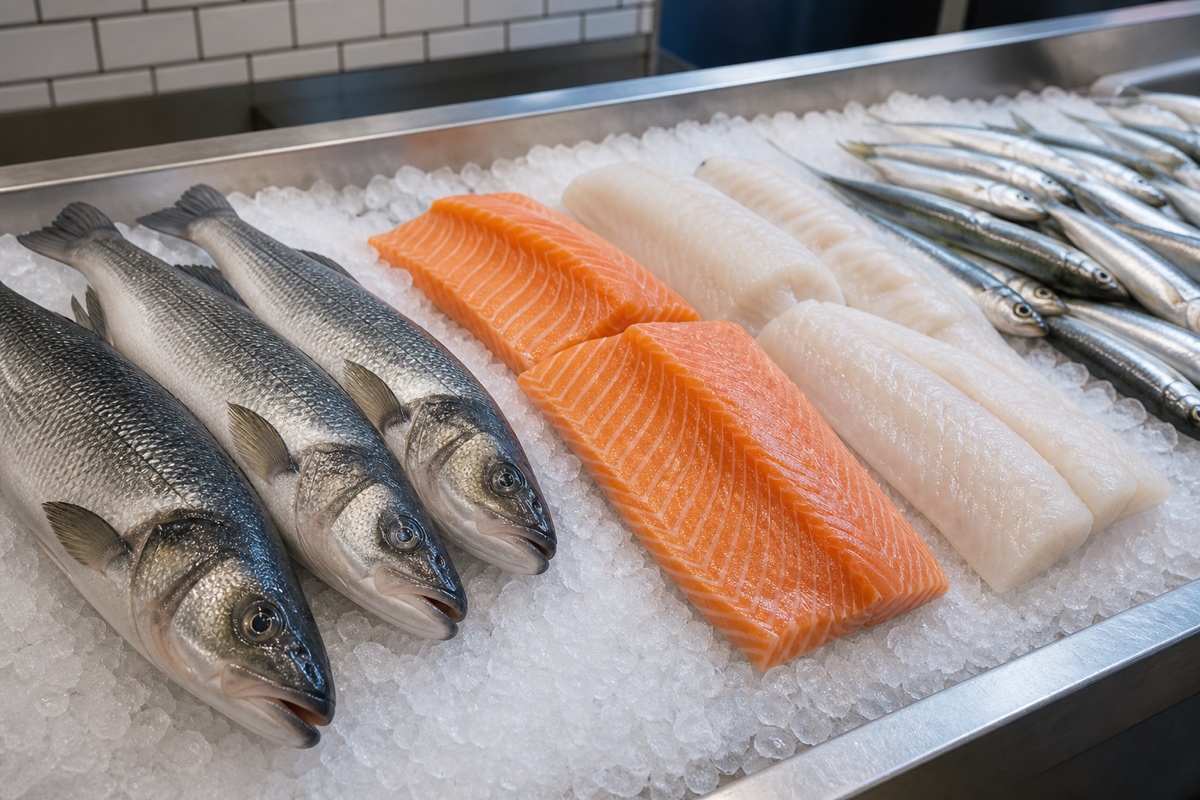
Salmon, cod, haddock, tilapia, sardines, sea bass, and tuna are recognizable fish, so the four Sunni schools treat them as halal in principle. Hanafi law does not require a fish to have visible scales in the same way the Ja‘fari rule described below does; the key Hanafi category is whether the creature is regarded as fish.[4]
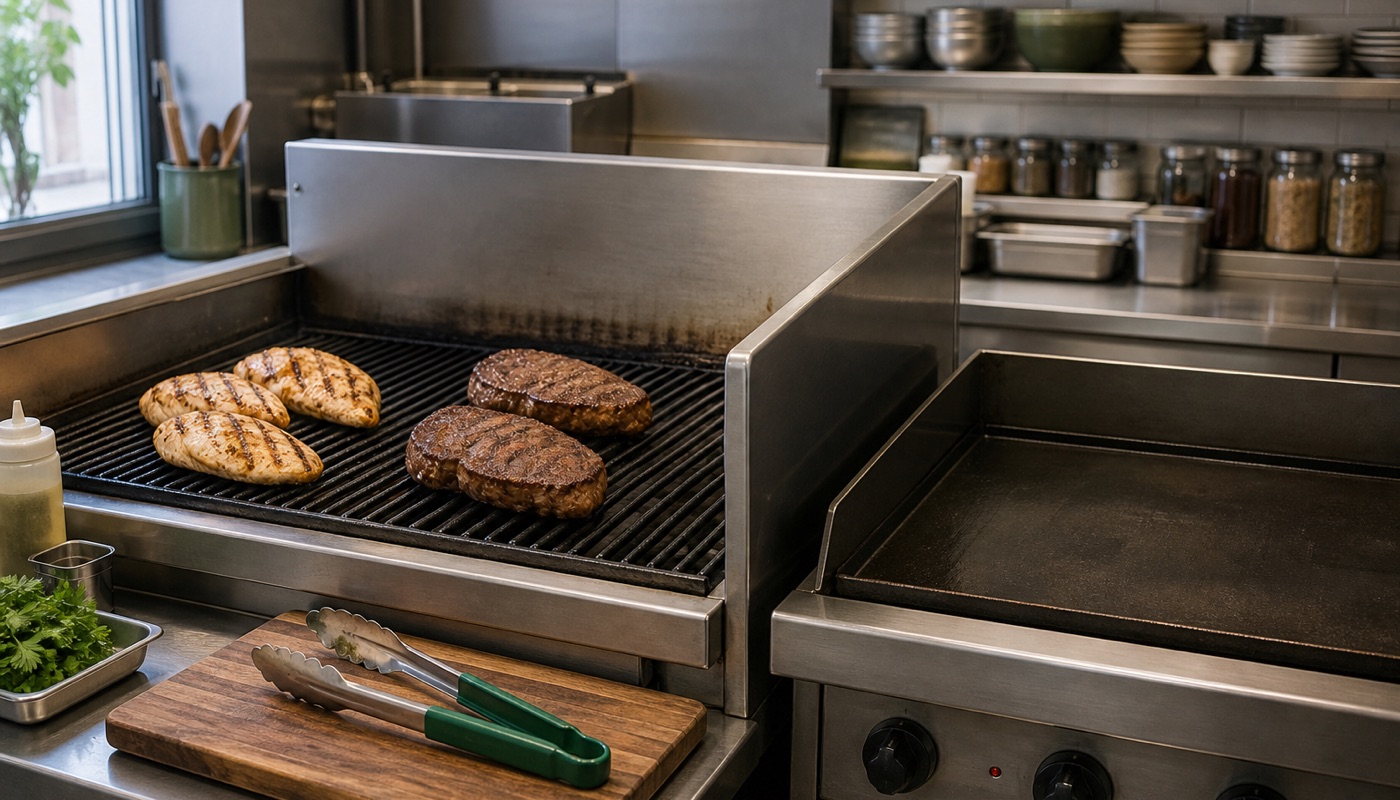
‘Halal in principle’ still leaves the recipe to inspect. Fish fried in beer batter, finished with a white-wine sauce, cooked on a pork-seasoned surface, or served with a stock containing non-halal meat raises a different question from the fish itself. The species may be permitted while the completed dish is not suitable for your standard.
At a fish counter, get the real species name when the label is vague. At home, plain fillets with ingredients you already understand are the least complicated route. You can make the food interesting with lemon, herbs, garlic, chiles, olive oil, tahini, yogurt, or verified spice blends without turning every dinner into an investigation.
Seafood rulings by school: a practical comparison
The table below is a map for common grocery and restaurant choices, not a substitute for a school-specific ruling. ‘Generally halal’ reflects the broad rule; unusual, harmful, poisonous, or genuinely amphibious animals can have additional qualifications. Translating centuries of jurisprudence into five rows inevitably removes detail, so use the linked authorities when a specific animal matters to you.
| Seafood | Hanafi | Maliki | Shafi‘i | Hanbali | Ja‘fari (al-Sistani) |
|---|---|---|---|---|---|
| Recognizable fish | Halal | Halal | Halal | Halal | Fish with scales |
| Shrimp / prawns | Permitted in the soundest position; stricter views exist | Generally halal | Generally halal | Generally halal | Permitted |
| Crab / lobster | Not permitted under the mainstream rule | Generally halal | Generally halal | Generally halal | Not permitted |
| Mussels / oysters / clams | Not permitted under the mainstream rule | Generally halal | Generally halal | Generally halal | Not permitted |
| Squid / octopus | Not permitted under the mainstream rule | Generally halal | Generally halal | Generally halal | Not permitted |
Summary based on MUIS, Egypt’s Dar al-Ifta, SeekersGuidance’s Hanafi explanation, and Ayatollah al-Sistani’s published rulings.[3–6] Ask a qualified scholar about a species or circumstance not covered here.
The shrimp question deserves its own paragraph
Shrimp is the small creature that creates a surprisingly large amount of internet confusion. The Maliki, Shafi‘i, and Hanbali positions are straightforward: shrimp falls under their broad permission for sea animals. Ayatollah al-Sistani’s published Ja‘fari rulings also identify shrimp as permitted.[3][6]
Within the Hanafi school, respected scholars have discussed whether shrimp falls inside the classical category of fish. SeekersGuidance explains that the soundest Hanafi position treats shrimp and prawns as fish according to the Arabic usage relevant to the legal texts, making them lawful. It also acknowledges that stricter Hanafi views exist.[4] So ‘Hanafis never eat shrimp’ is too blunt, while ‘there is no Hanafi disagreement’ is also too blunt.
If you follow Hanafi fiqh and have always avoided shrimp, this article is not telling you to reverse a family practice over lunch. Ask the scholar you rely on which position they apply and then enjoy the clarity of a consistent answer.
Crab, lobster, mussels, oysters, squid, and octopus
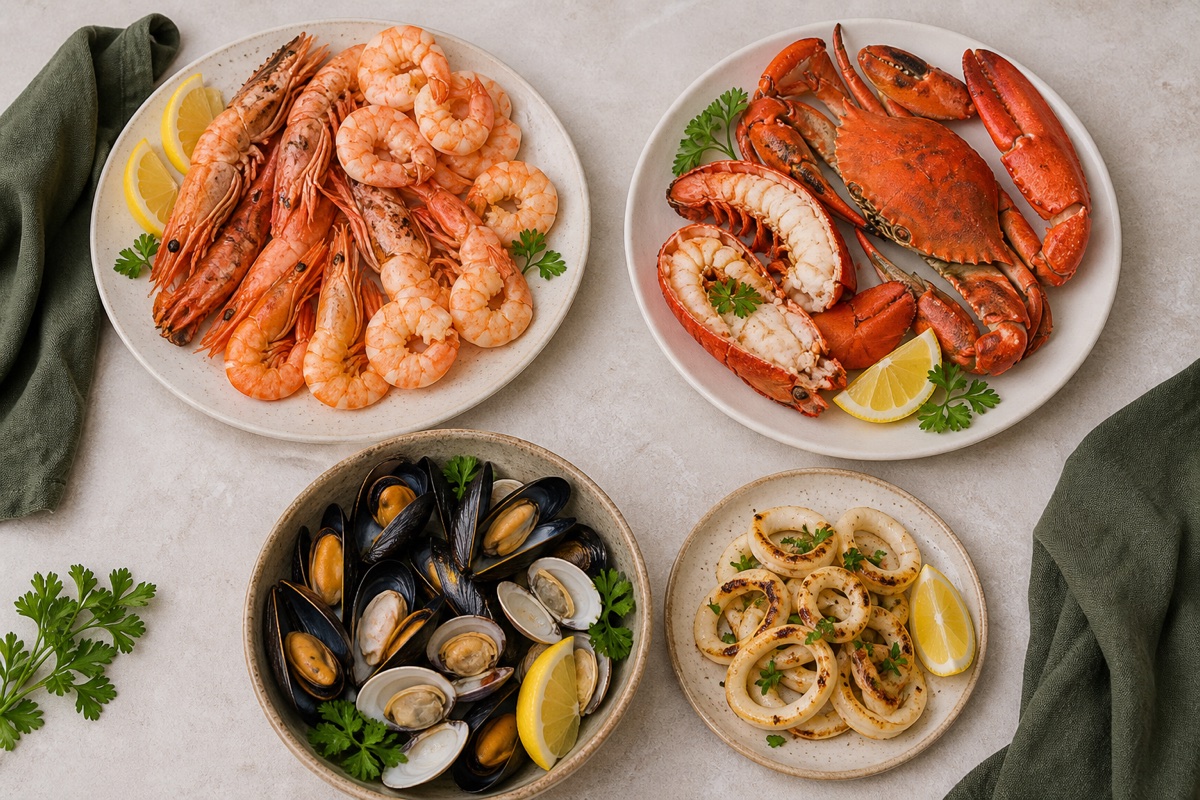
For the majority Sunni position represented by the Maliki, Shafi‘i, and Hanbali schools, these sea creatures are generally permitted. Singapore’s official Islamic council summarizes those three schools as allowing sea animals, while Egypt’s Dar al-Ifta likewise reports that the majority of Sunni scholars permit marine creatures.[3][5]
The mainstream Hanafi rule does not place crab, lobster, bivalves, squid, or octopus in the fish category, so they are not permitted under that approach.[4] Under the Ja‘fari rulings published by Ayatollah al-Sistani, shellfish other than shrimp are not permitted, and permissible fish must be of a type that has scales.[6]
This difference explains a scene many New Yorkers recognize: one Muslim friend orders lobster, another chooses cod, and both are acting deliberately. The respectful move is to ask what standard a shared meal needs to meet—not to turn the seafood boil into a courtroom.
Do not force frogs, turtles, and amphibious animals into the shortcut
‘It lives near water’ is not a useful legal category. Frogs, turtles, crocodilians, and animals that move between land and water raise separate questions involving species, harm, predation, and how each school classifies the animal. Even authorities that state a broad majority rule for marine life flag frogs and turtles as disputed or excluded cases.[3][5]
The practical solution is wonderfully unexciting: do not guess from a social-media chart. Look up the exact creature with a scholar or recognized fatwa institution connected to the school you follow. A narrow answer to a real species is more useful than a dramatic universal list assembled from screenshots.
At an American grocery store, the seafood may be simple while the package is not
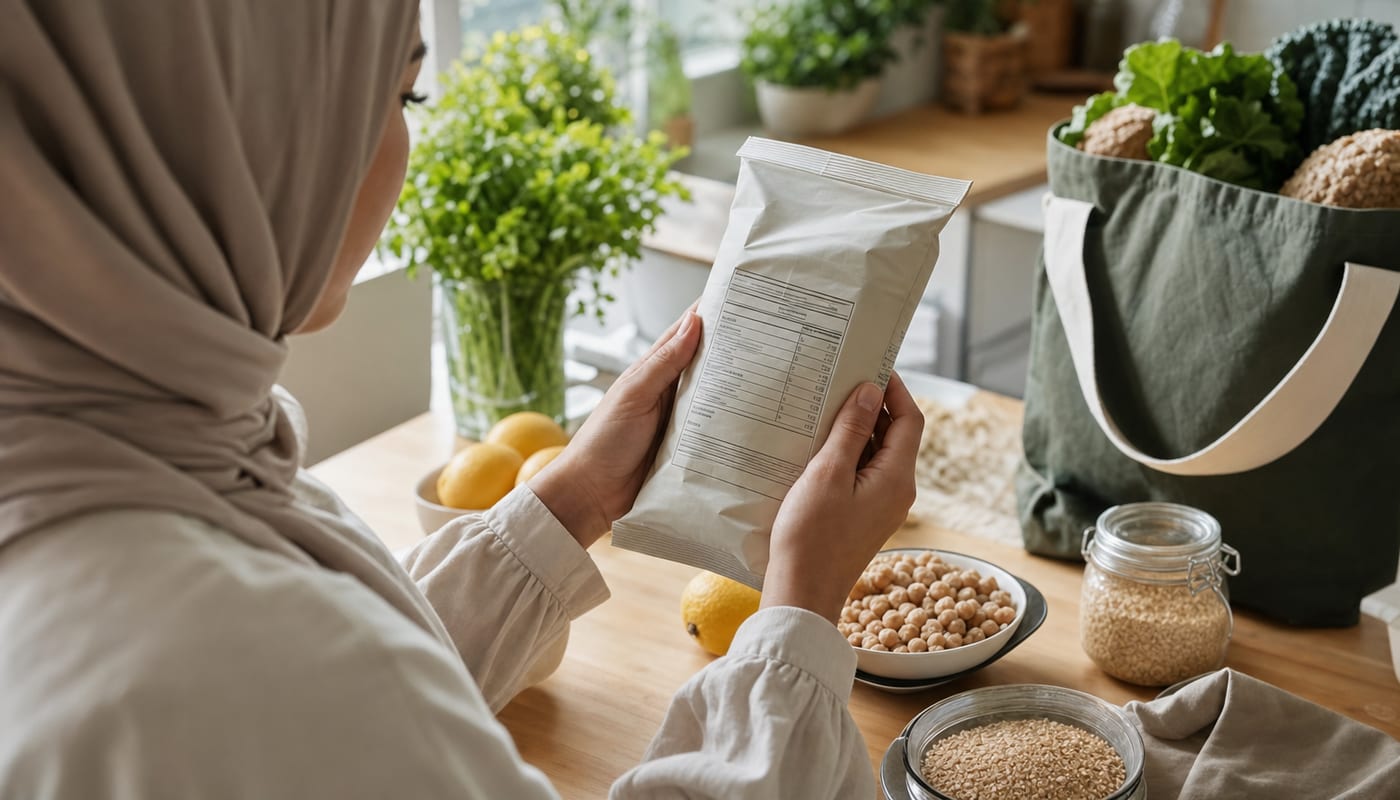
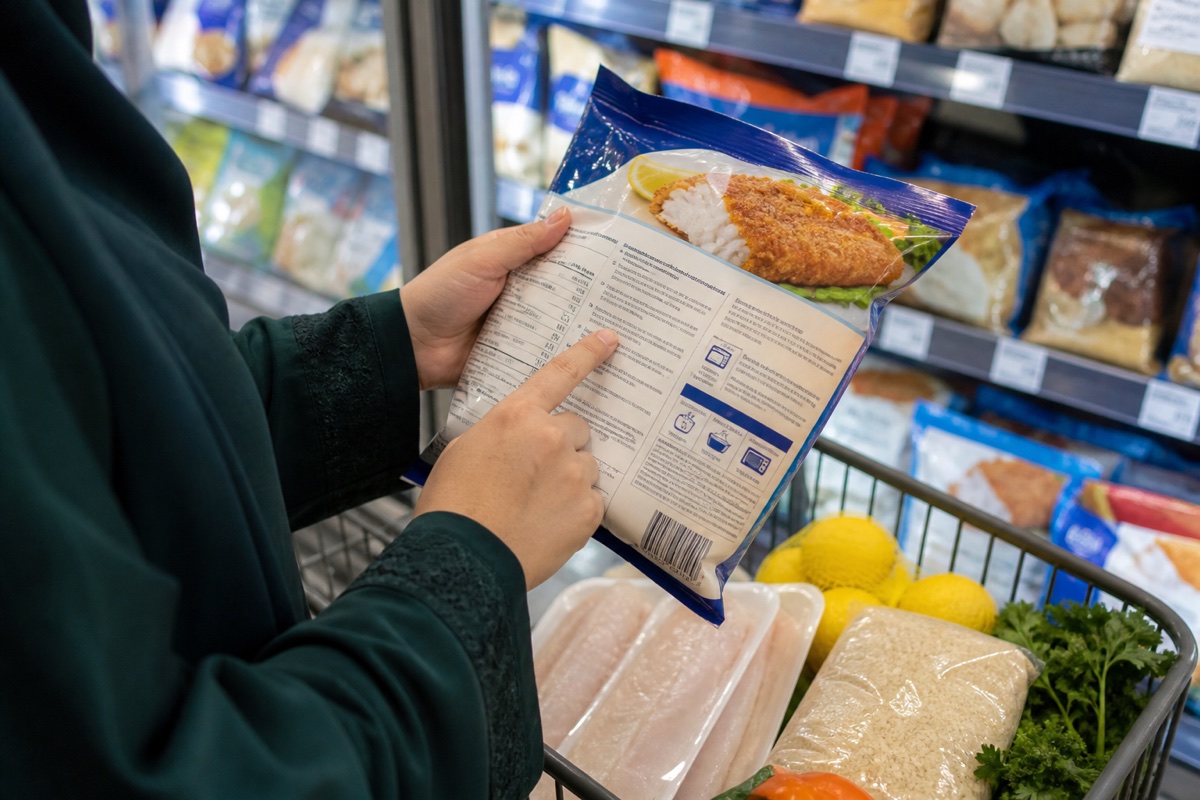
A plain frozen cod fillet has one obvious ingredient. Breaded fish sticks, imitation crab, seafood dumplings, chowders, bisques, flavored tuna pouches, and frozen shrimp meals are different products. They may include cooking alcohol, meat stock, gelatin, cheese enzymes, flavor systems, shortening, or sauces that need their own review.
Read the exact ingredient panel instead of letting a picture of a fish answer for the entire formula. ‘Imitation crab’ is commonly made with processed fish, but the remaining ingredients still matter. A halal logo, when present, should be tied to the exact product and current certifier rather than assumed from another item by the same brand.
New York’s halal registration system can help identify businesses and certifiers making halal representations in the state, but it does not decide the underlying madhhab question for your household.[7] Registration is a transparency tool; religious classification still comes from the standard you follow.
Five useful questions at a New York seafood restaurant
Restaurant seafood often looks uncomplicated until the batter, broth, sauce, and fryer enter the conversation. You do not need to deliver a lecture to the server. Ask the shortest questions that could actually change your order.
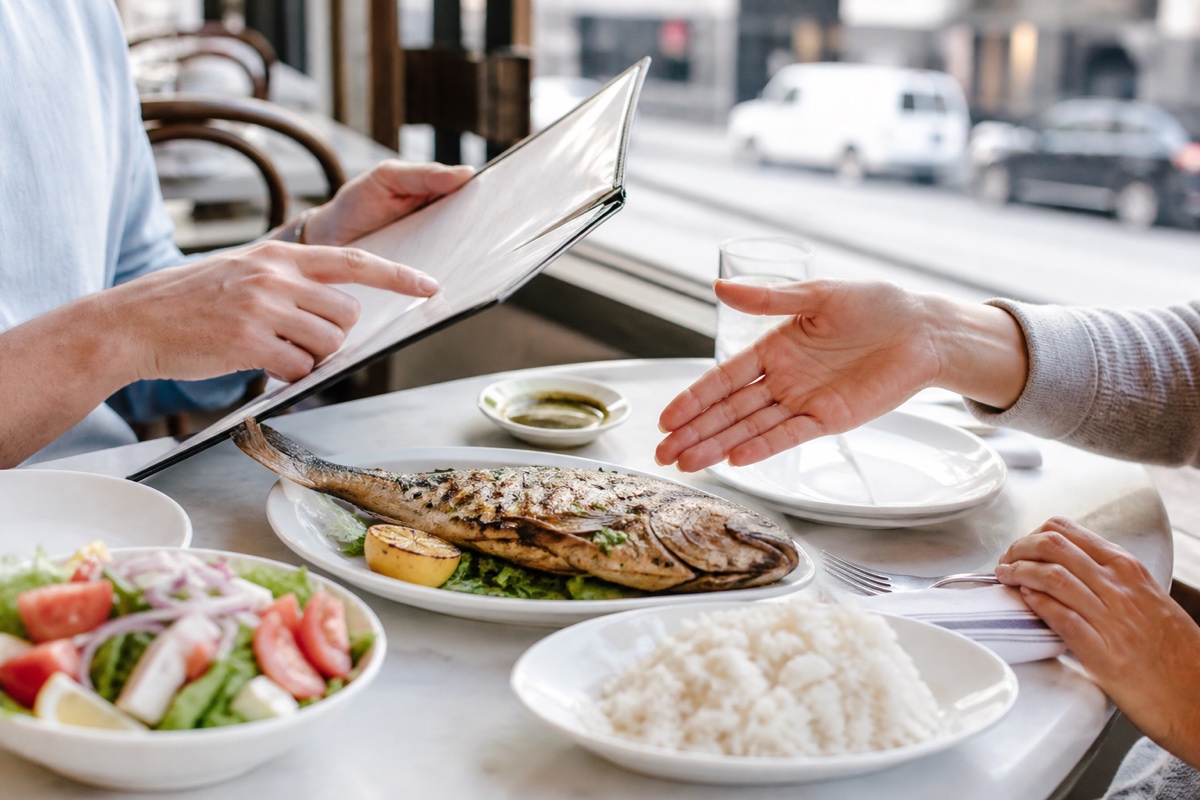
- What is the exact seafood species? This matters when your school distinguishes fish, scaled fish, shrimp, or other sea creatures.
- Does the batter, marinade, sauce, risotto, or soup contain beer, wine, mirin, meat stock, or gelatin?
- Is the seafood cooked on the same surface or in the same oil as pork or other non-halal meat? Decide how your household treats shared equipment.
- Is an imitation or mixed seafood product being used? Ask what the base and added ingredients are.
- Can the kitchen serve it simply—grilled or baked with lemon, oil, herbs, rice, and vegetables—if the prepared version is unclear?
A calm decision method you can actually remember
Start with the creature: fish, shrimp, crustacean, mollusk, cephalopod, or something amphibious. Apply the school or scholar your household follows. Then inspect the finished dish—ingredients, alcohol, stock, batter, sauce, and shared preparation. These are three separate checks, and mixing them together is what makes the question feel harder than it is.
If you cook for a mixed group, choose the broadest shared comfort zone. A simply seasoned fish dish is usually easier than asking guests to debate crab or squid at the table. If shellfish is being served, label it clearly for both religious practice and allergy safety. Hospitality is not only about proving that your own view is valid; it is also about making the other person able to eat with confidence.
Most of the time, the answer can be both firm and peaceful: yes, ordinary fish is halal across the Sunni schools; yes, the majority Sunni view permits common shellfish; no, the Hanafi and Ja‘fari rules are not identical to that majority; and yes, the recipe can still introduce a separate problem. Know which question you are answering, and dinner becomes much simpler.
Sources and further reading
- Surah Al-Ma'idah 5:96Quran.comAccessed Aug 4, 2026
- The sea's water is purifying and its dead animals are lawful — Bulugh al-Maram 1Sunnah.comAccessed Aug 4, 2026
- Is it permissible to eat seafood that has no blood or spine such as shrimp?Majlis Ugama Islam Singapura (MUIS)Accessed Aug 4, 2026
- How Does the Hanafi School Classify Shrimp and Other Seafood?SeekersGuidanceAccessed Aug 4, 2026
- Are we allowed to eat sea creature while we know that some fish eat other fish?Egypt's Dar Al-IftaAccessed Aug 4, 2026
- Fish — Questions and AnswersOffice of His Eminence Al-Sayyid Ali Al-Husseini Al-SistaniAccessed Aug 4, 2026
- Halal Foods RegistrationNew York State Department of Agriculture and MarketsAccessed Aug 4, 2026
We review articles for clarity and update them when guidance, products, or local information changes. Always verify current certification and food-safety information with the relevant primary source.
Read our editorial policy →NYHMP Editorial Team
Practical, evidence-aware guidance for healthy halal living in New York.