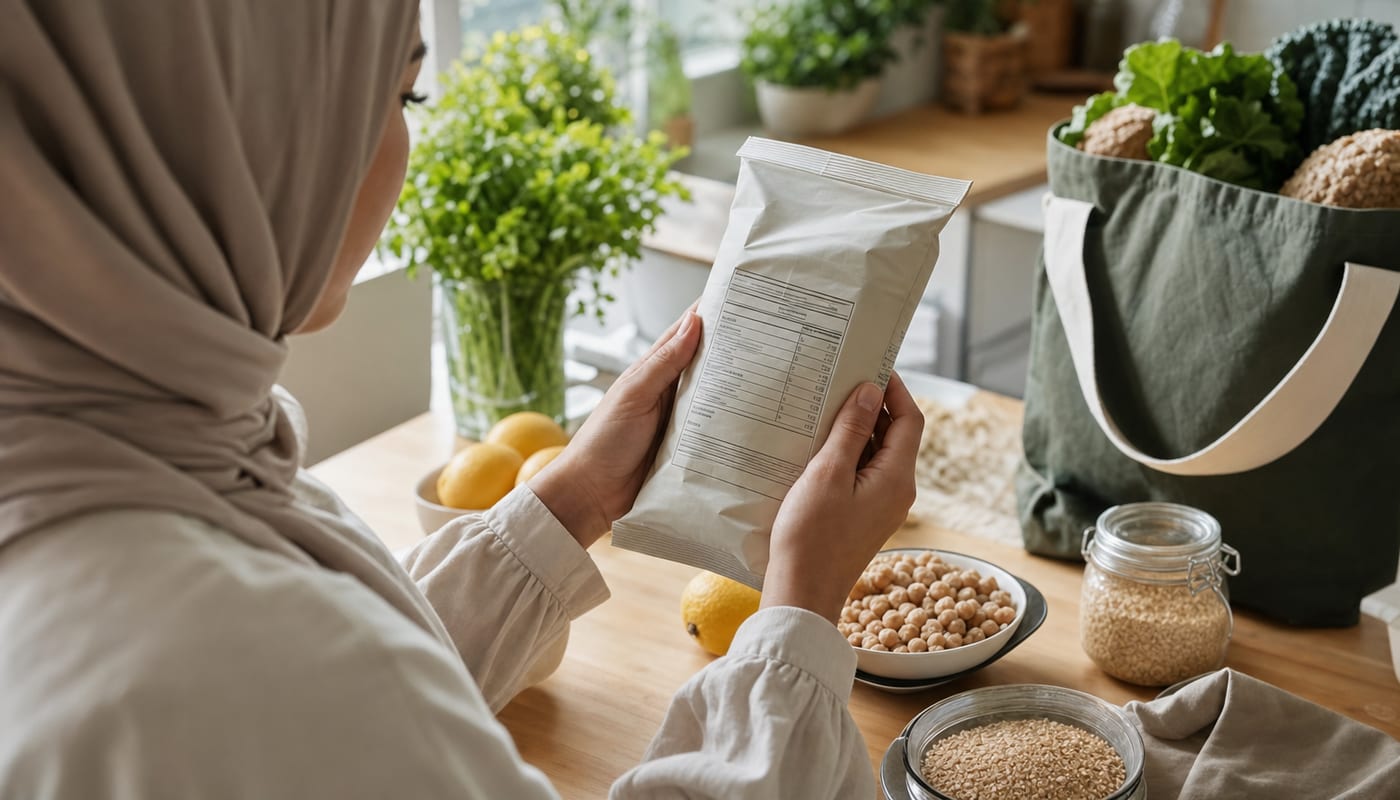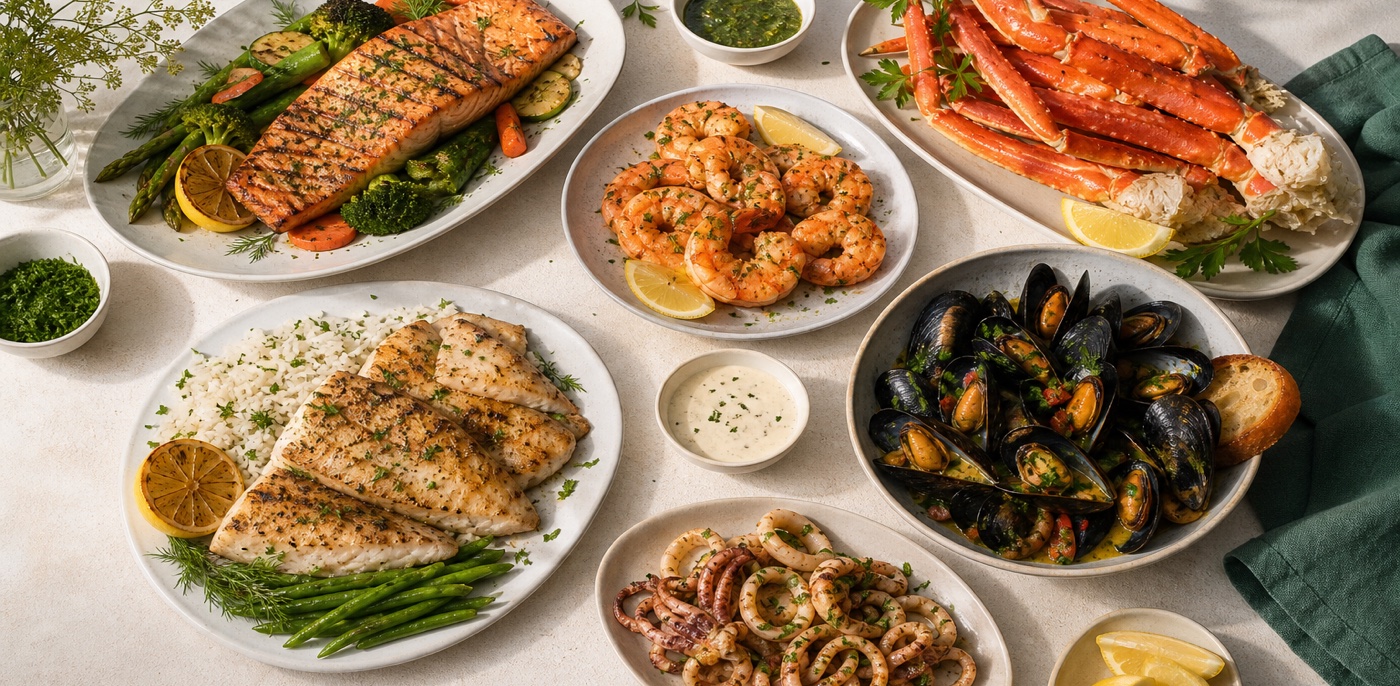

Learn when chicken or steak from a shared restaurant kitchen remains halal, when pork residue changes the answer, and what to ask before ordering.
What this guide covers
- 01Pork appearing elsewhere in the same restaurant does not automatically make every dish haram; actual preparation and transfer matter.
- 02Halal-slaughtered chicken or steak should not be cooked in pork fat, shared fryer oil, or on an unwashed surface carrying pork residue.
- 03The hadith on utensils establishes both caution around known impurity and the possibility of using equipment after proper washing.
- 04Named Hanafi scholars distinguish a properly cleaned utensil from one that is merely hot, scraped, or still greasy.
- 05A dedicated grill, fryer, utensils, prep area, and traceable certification provide the clearest restaurant answer.
- 06New York's halal registry identifies who makes or certifies a claim; it does not issue a religious ruling on every kitchen process.
The short answer: the same kitchen is not the same as the same grease
A restaurant can serve pork and still prepare a particular chicken breast or steak in a way that avoids it. Being under one roof does not automatically make every plate haram. But halal-slaughtered meat does not get a free pass once it reaches the kitchen. If it is cooked in pork fat, on a hotplate carrying pork residue, in the same fryer oil, or with an unwashed knife or tongs that transfer pork to it, the preparation has introduced a separate halal problem.
That distinction matters because diners often ask only, “Is the chicken halal?” A useful answer must cover two stages: where the meat came from and what touched it after delivery. A box with halal certification can settle the first stage while a shared, greasy grill undermines the second.
This guide reports Islamic texts, named scholarly answers, and certification practice. It does not issue a personal fatwa for every kitchen. If your madhhab, certifier, or trusted local scholar applies a more specific purification standard, follow that standard.
The Prophetic starting point: a used utensil can be cleaned
Abu Tha‘labah al-Khushani asked the Prophet Muhammad about eating from the utensils of the People of the Book. The response recorded in Sahih al-Bukhari 5478 and Sahih Muslim 1930a says to use other vessels when available; when they are not, wash the vessels and eat from them [3][4]. A version discussed by jurists connects the concern to vessels used for pork and wine.
Two principles emerge. First, known residue is not ignored. Second, a utensil does not become permanently unusable simply because it once held something prohibited. Cleaning matters. That is why “this kitchen also serves pork” and “this chicken was cooked in pork residue” are not interchangeable claims.
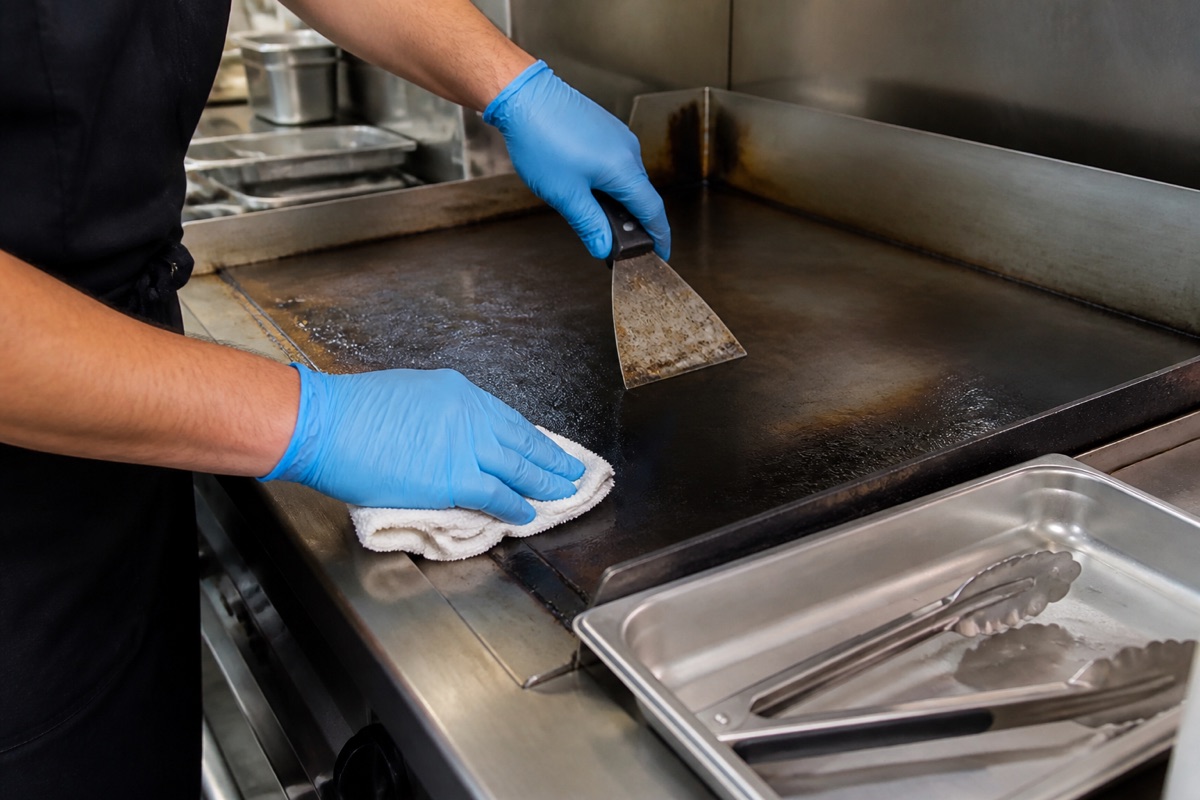
A commercial flat-top is more complicated than a dinner plate. Grease can sit in seams, collect along the edge, migrate across zones, and remain on scrapers or tongs. The hadith gives the foundation; the restaurant still needs a credible procedure that removes the material rather than a quick cosmetic wipe.
The Permanent Committee: not on the same unwashed hotplate or knife
A 2024 answer published by Islam Question & Answer quotes Saudi Arabia's Permanent Committee for Scholarly Research and Ifta on the exact restaurant scenario. The committee said beef should not be eaten when grilled on the same hotplate as pork, and applied the same answer to a shared knife [5]. The answer then distinguishes the situation where the worker washes hands and the knife before touching the permissible food.
This is the clear case: when pork and halal meat share an unwashed contact surface, or are cooked together while fat and residue move between them, calling the raw meat halal does not resolve the finished plate.
Mufti Ebrahim Desai: heat alone is not a cleaning method
In a Hanafi answer about a grill previously used for impermissible meat, Mufti Ebrahim Desai rejected the idea that simply burning the remains makes them pure. His practical instruction was that the grill must be thoroughly washed before use [6]. This matters in restaurants that say, “The grill is very hot, so it burns everything off.” Heat may change the appearance of residue; the cited ruling does not treat that claim as a substitute for cleaning.
Shaykh Faraz Rabbani: cleaned utensils are usable—do not feed waswasa
Shaykh Faraz Rabbani gives the other half of the Hanafi picture. In an answer about dishes and pans used for pork and other non-halal food, he states that washing removes najasah when no trace remains; hand washing or a dishwasher can render the utensils pure and usable [7]. He also warns against turning purity questions into endless investigation and baseless misgivings.
Together, these Hanafi answers do not say “shared never matters” or “once used, ruined forever.” They say visible or transferable impurity must be removed, after which the item can be used. The hard restaurant question is factual: did the kitchen actually do that between pork and your order?
Six restaurant setups, with six different answers
“Shared kitchen” is too broad to answer the question. Ask which of these setups describes the order in front of you.
| Kitchen setup | Main halal issue | Practical conclusion |
|---|---|---|
| Dedicated grill, fryer, utensils, and prep area | Halal meat and all other ingredients still need verification | Strongest shared-building setup when separation is real |
| Pork and chicken cooked together on one hotplate | Fat and residue can transfer directly | Do not treat the chicken as halal |
| Same fryer oil used for pork and chicken or fries | The cooking medium is shared | Choose another item or a verified dedicated fryer |
| Same grill, thoroughly cleaned before the halal order | Whether the cleaning removed transferable impurity | May be usable under cited scholarly guidance; verify the actual procedure and follow your standard |
| Same grill, only scraped or wiped while greasy | Residue may remain even if no pork pieces are visible | Not equivalent to a properly cleaned surface |
| Separate pans in the same oven or kitchen | Spills, shared racks, utensils, sauces, and handling | Same room alone is not automatic contamination; verify separation |
A dedicated zone is meaningful only if grease, utensils, hands, storage, and cooking media are also controlled.
What professional halal separation looks like
The Islamic Religious Council of Singapore, MUIS, offers a useful example of how a halal certifier turns religious principles into kitchen controls. Its consumer guidance says halal food should be prepared with equipment and facilities free from cross-mixing with non-halal substances [8]. Its certification conditions require dedicated and clearly demarcated areas, equipment, utensils, and dishwashing facilities within the certified scope [9].
MUIS does not certify New York restaurants, so its document is not a local certificate or a binding fatwa for every diner. It is valuable because it shows what a serious operational answer sounds like: dedicated, identified, segregated, traceable, and auditable. “We cook it on the clean side” is much weaker when the same scraper, grease channel, fryer oil, or tongs cross the line.
A restaurant with a credible current halal certificate may already have controls defined by its certifier. Confirm that the certificate covers the establishment and menu item you are ordering, especially when pork remains elsewhere on the menu.
Five questions to ask without turning dinner into an interrogation
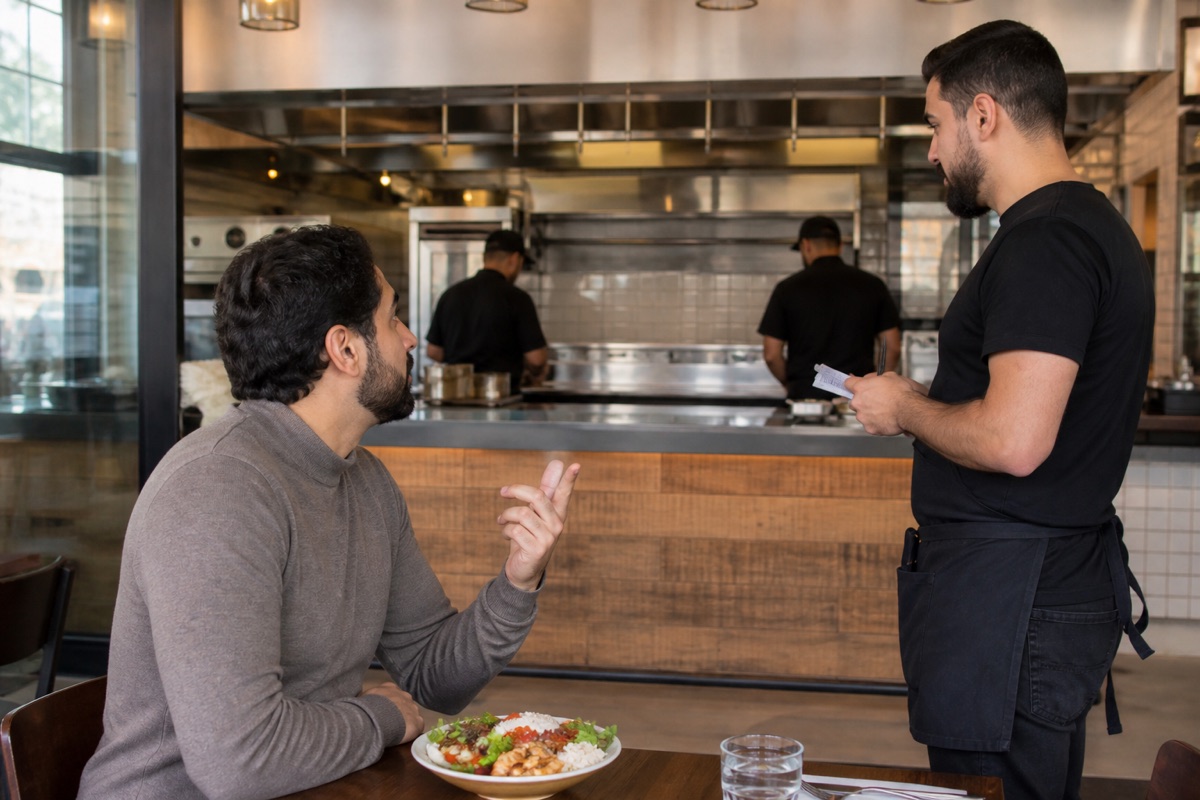
Ask the server or manager calmly and specifically. “Is it halal?” often produces a confident answer about the supplier while leaving the kitchen untouched. These five questions are easier to answer accurately:
- Who certifies the chicken or steak, and can I see the current supplier or certificate information?
- Does this item have a dedicated grill or pan that never cooks pork?
- Are its knife, board, tongs, gloves, and holding tray separate or washed before use?
- Does it share fryer oil, sauce brushes, stock, gravy, or bacon grease with pork items?
- Does your halal certificate cover this location and this preparation process, or only the meat supplier?
How to read the answer
A clear answer may be: “The chicken is certified by X, it is cooked in a dedicated pan with green-handled tongs, and the fries have a separate fryer.” A vague answer may be: “The meat arrives halal, but everything goes on the same flat-top.” Those are not equivalent.
If staff do not know, do not force them to improvise theology. Choose a sealed item, a vegetarian dish whose preparation you can verify, or a restaurant with a clearer process. Vegetarian is not automatically halal if it shares pork fat, fryer oil, alcohol-based sauces, or unwashed utensils.
“No pork” and “halal meat available” are not the same as a halal restaurant
“No pork” removes one major concern but says nothing by itself about slaughter, alcohol, other non-halal meat, or certification. “Halal chicken available” usually describes one ingredient. “Halal restaurant” should describe a broader sourcing and preparation claim, but you still need to know who makes or certifies it and what the claim covers.
New York's Halal Foods Protection Act is built around disclosure. Businesses representing food as halal must register information about the person or organization making or certifying the claim, and the state maintains searchable establishment records [10]. The registry helps identify who stands behind the representation; New York does not choose a religious standard for your household or guarantee that a listing answers every shared-kitchen detail.
Look for posted information, match the location, identify the certifier, and review the establishment's disclosed practices. If the restaurant self-certifies, ask what its separation and cleaning rules are. A named, current process is more useful than décor, cuisine, ownership assumptions, or a delivery-app filter.
A decision rule you can actually remember
Start with halal meat. Then ask whether pork or non-halal residue can reach it through the cooking surface, oil, utensil, hand, sauce, or storage. If the answer is yes, do not order it. If the kitchen uses a genuinely dedicated setup, or properly cleans the relevant equipment so no transferable impurity remains under the standard you follow, the fact that pork exists elsewhere in the building does not automatically decide your plate.
When the facts remain unclear, there is no need to accuse the restaurant or announce a universal ruling. Choose the option with better evidence. The goal is neither casual indifference nor exhausting suspicion; it is a clean chain from supplier to plate that you can explain in ordinary language.
Frequently asked questions
Is halal chicken still halal if it is cooked on the same grill as pork?
Not when it is cooked on an unwashed surface carrying pork fat or residue, or alongside pork in a way that transfers that material. If the grill and utensils are properly purified so no transferable impurity remains, cited scholarly guidance allows previously used equipment to become usable again. Follow the cleaning standard trusted by your household or certifier.
Does a restaurant become non-halal simply because pork is cooked in the same kitchen?
The same building alone does not establish contact with every dish. A restaurant may use dedicated storage, prep areas, pans, grills, fryers, utensils, and dishwashing controls. Verify the exact meat, ingredients, separation process, and certification scope rather than deciding from the menu alone.
Are fries halal if the fryer also cooks pork?
A separate basket does not create separate oil. When pork items and fries share the same fryer oil, the cooking medium is shared. Choose fries from a verified dedicated fryer or another preparation method.
Does high heat burn away the halal problem on a grill?
Mufti Ebrahim Desai's cited Hanafi answer says burning haram residue does not by itself make it pure and calls for thorough washing. A restaurant's quick scrape or high-heat burn-off should not automatically be treated as the equivalent of proper cleaning.
What should I ask a restaurant that offers halal meat and pork?
Ask who certifies the meat, whether your item uses a dedicated or properly cleaned grill and utensils, whether it shares fryer oil or sauces with pork, and whether the restaurant's halal certificate covers the location and preparation process rather than only the supplier.
Sources and further reading
- Surah Al-An'am 6:145Quran.comAccessed Aug 15, 2026
- Permissibility of Mixing Pork Fat in FoodEgypt's Dar Al-IftaAccessed Aug 15, 2026
- Sahih al-Bukhari 5478 — Utensils of the People of the BookSunnah.comAccessed Aug 15, 2026
- Sahih Muslim 1930a — Washing Shared UtensilsSunnah.comAccessed Aug 15, 2026
- Is It Permissible to Eat Pizza Cut with a Knife Used for Pork?Islam Question & AnswerAccessed Aug 15, 2026
- Does Fire Purify a Grill Previously Used for Haram Meat?AskImam — answer by Mufti Ebrahim Desai, archived by IslamQA.orgAccessed Aug 15, 2026
- Are Dishes Used for Pork Made Pure by Washing?SeekersGuidance — answer by Shaykh Faraz RabbaniAccessed Aug 15, 2026
- Basic Halal Principles for ConsumersMajlis Ugama Islam SingapuraAccessed Aug 15, 2026
- Halal Certification Conditions — Food Preparation Area SchemeMajlis Ugama Islam SingapuraAccessed Aug 15, 2026
- Overview of the Halal Foods Protection ActNew York State Department of Agriculture and MarketsAccessed Aug 15, 2026
We review articles for clarity and update them when guidance, products, or local information changes. Always verify current certification and food-safety information with the relevant primary source.
Read our editorial policy →NYHMP Editorial Team
Practical, evidence-aware guidance for healthy halal living in New York.