
Understand what halal means, how Muslim food practice developed, what science and certification can verify, and how to check halal claims in America.
What this guide covers
- 01Halal means permitted; it is broader than food and is not the same as a nutrition score.
- 02Modern certification documents old religious principles across complex industrial supply chains.
- 03U.S. inspection, ingredient labeling, manufacturer claims, and religious certification answer different questions.
- 04Laboratory methods can test narrow composition questions but cannot certify an entire religious process by themselves.
- 05New York’s halal registry helps identify who makes or certifies a claim; it is a transparency tool, not a religious ruling.
- 06The most reliable habit is to identify the exact product, the claimant, the current scope, and the standard you follow.
The short answer: halal means permitted
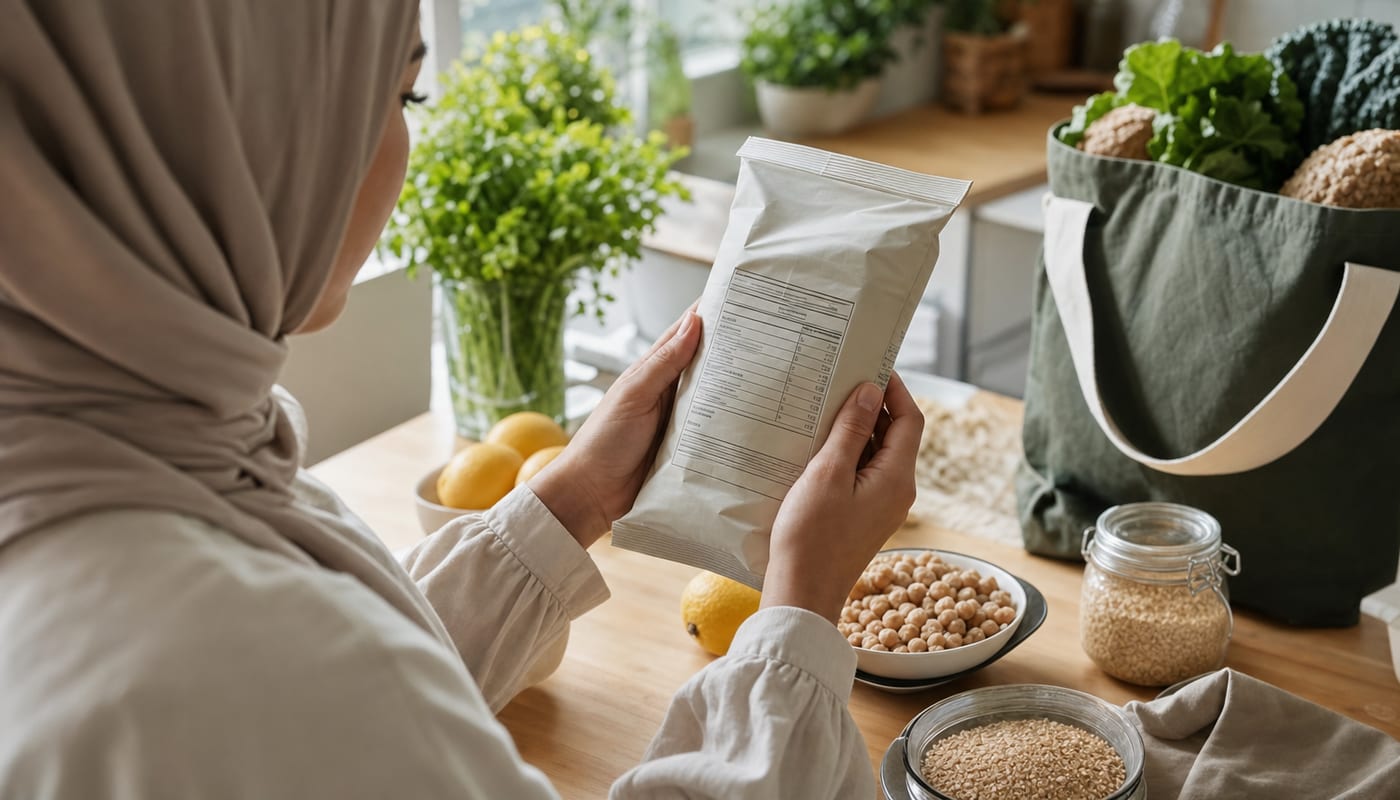
Walk through a New York grocery store and you may see the word halal on a butcher sign, a frozen dinner, a candy package, and a restaurant window. The word is the same; the information behind it may be very different. One claim may cover the meat only. Another may come from an independent certifier that reviewed ingredients, equipment, cleaning, storage, and records. A third may simply be the seller’s own statement.
In Arabic, halal means permitted or lawful. Its opposite is haram: prohibited. Food is only one part of a much broader ethical and legal vocabulary in Islam, but it is the part most people meet in everyday shopping. The Qur’an tells people to eat what is lawful and good, and it names several prohibited categories.[1][2] That gives the subject a religious foundation; it does not turn every modern ingredient list into an easy yes-or-no puzzle.
You may also hear the word tayyib, often translated as good, wholesome, or pure. Halal and tayyib belong in the same conversation, yet they are not interchangeable nutrition labels. A soda or candy can meet a halal standard while still being an occasional food. A bowl full of vegetables can be nutritious while a sauce or cooking process still requires halal verification. Think of religious permissibility, nutrition, and food safety as three related checks—not one magic badge.
Before certification logos, halal lived in daily practice
Halal did not begin with a symbol printed beside a barcode. The core food principles appear in Islam’s foundational texts, and Muslim jurists, families, merchants, cooks, and communities have applied them across changing places and technologies for centuries. A recent academic overview of Islamic food studies describes food as a long-standing part of Muslim social, religious, and economic life—not merely a modern consumer category.[3]
That history also explains why there is no single ‘halal cuisine.’ Rice cooked in Queens, couscous in North Africa, biryani in South Asia, soup in the Balkans, and noodles in Southeast Asia can all be halal. The cuisine tells you about culture and place; halal tells you about permissibility, ingredients, and process.
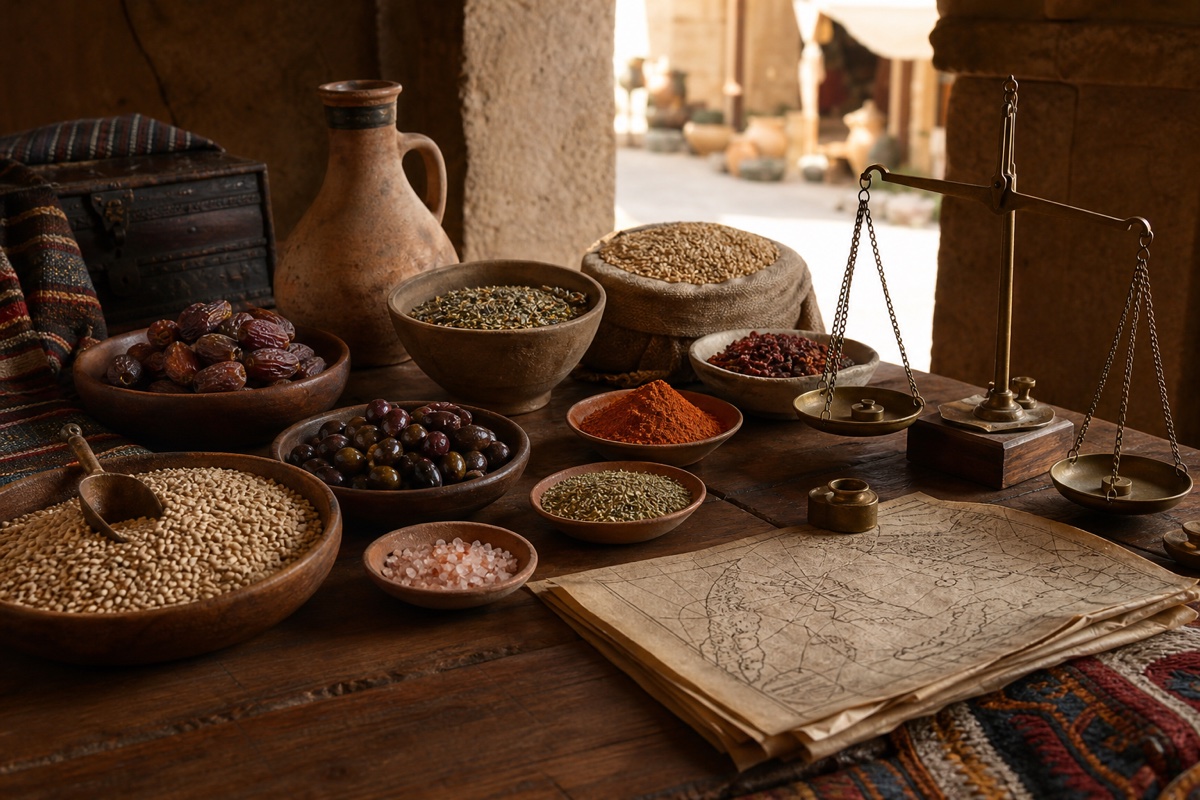
For most of history, buyers often knew the butcher, cook, or market community directly. Trust traveled through relationships and local knowledge. Industrial food changed that equation. A modern frozen meal may contain ingredients from several countries, processing aids not obvious from the front label, and equipment shared across many products. Certification emerged as one practical way to make a complex supply chain more visible.
How an old principle met the American food system
Muslims were eating halal in America long before national certifying organizations appeared. What changed in the late twentieth century was scale: more packaged food, longer supply chains, wider distribution, and growing demand for documentation that manufacturers and importers could understand.
One useful marker—not the beginning of halal in America—is the institutional history reported by the Islamic Food and Nutrition Council of America. IFANCA says the group formed in 1980, began public education work in 1981, and incorporated as an Illinois nonprofit in 1982.[4] Other certifiers and community systems developed their own histories and standards. The important lesson is that today’s logo is a modern verification tool serving much older religious principles.
That distinction keeps us from turning a certifier into the religion itself. A certification body interprets a written standard, reviews evidence, and decides whether a product falls within its program. A household then decides whether that standard matches the scholarly guidance it follows.
What halal food verification is actually asking
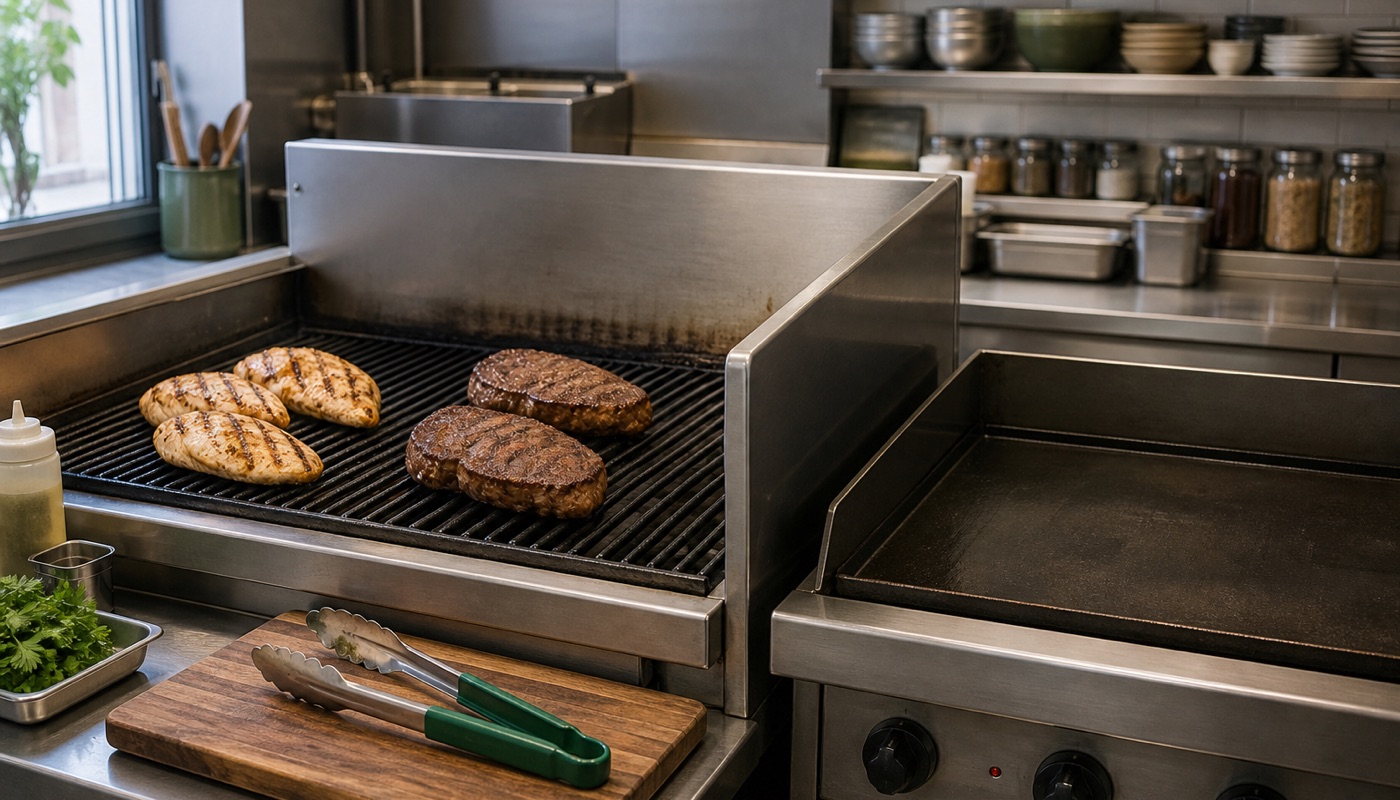
At the simplest level, halal food practice excludes clearly prohibited foods such as pork, blood, carrion, and intoxicants, and it places religious requirements on the slaughter of permitted land animals.[2] Real products add more layers. Gelatin can come from different species. Enzymes and emulsifiers can be plant, microbial, or animal derived. A flavor may use a carrier that is not obvious on the front of the package. Shared equipment can matter to some standards.
A serious check therefore asks more than ‘Does it contain pork?’ It asks what the ingredients are, where source-dependent ingredients came from, how meat was slaughtered, whether processing introduced prohibited material, how the product was stored and transported, and who is accountable for the claim.
Not every food needs the same level of investigation. A bag of plain dried lentils is usually a simpler question than marshmallows, meat stock, cheese enzymes, a restaurant sauce, or a multi-ingredient frozen dinner. Good verification is proportional: spend the most attention where the source or process can realistically change the answer.
What science can check—and what it cannot
Modern laboratories can help answer narrow factual questions. DNA-based methods can test for species material in certain samples. Chromatography, spectroscopy, and other analytical techniques can investigate particular fats, alcohols, proteins, or contaminants under suitable conditions. A scientific review of halal-authentication methods explains both the growing toolkit and its limits.[9]
But a laboratory result is not a complete halal ruling. A test cannot reconstruct every step in a supply chain, establish the intention or invocation at slaughter, prove how equipment was cleaned, or decide which scholarly view a family should follow. Results also depend on sampling, detection limits, processing, and the exact question the method was designed to answer.
Science is strongest here as evidence inside a broader system: documents, supplier records, site audits, traceability, and a clearly stated religious standard. That is more useful than either extreme—believing every logo without checking, or assuming one home ‘test’ can settle an entire production process.

Why the American grocery aisle can feel confusing
The United States does not have one national religious authority that defines a single halal standard for every product. Private halal certification bodies operate with their own written requirements, scholars, auditors, recognition networks, and logos. A 2023 U.S. study found multiple certifying bodies and noted practical challenges including differing standards, expired certificates, and forged documents.[5] Difference does not automatically mean dishonesty; it means the name behind the mark matters.
Government agencies answer different questions. The USDA Food Safety and Inspection Service says federally inspected meat and poultry products labeled ‘Halal’ or ‘Zabiah Halal’ must be handled according to Islamic law and under Islamic authority.[6] That is meaningful label oversight, but the inspection legend itself is not a halal certificate. FDA ingredient rules help shoppers read packaged-food labels, while some ingredients may legally appear under collective terms such as flavors or spices.[8] A legal ingredient list is essential information, not always the complete religious verification record.
In plain English: food-safety inspection, an ingredient declaration, a manufacturer’s halal statement, and third-party religious certification are four different kinds of evidence. They may work together, but one should not be mistaken for another.
A calm five-step method for checking a halal claim
You do not need to interrogate every grocery item for twenty minutes. Use the same short sequence each time, and save what you verify. Consistency beats grocery-aisle panic.
- Identify the exact item. Brand, flavor, package size, UPC, restaurant location, and country of manufacture can matter.
- Identify who makes the halal claim. Is it the producer, restaurant, butcher, or a named independent certifier?
- Check the current scope. Confirm that the certificate covers this product or facility and has not expired; a company-wide logo may not cover every line.
- Review ingredients and processing questions. Pay extra attention to meat, gelatin, enzymes, flavors, emulsifiers, stocks, sauces, and shared preparation.
- Save the evidence and recheck after change. Formulas, suppliers, owners, and certificates can change, so record the date instead of relying on an old screenshot forever.
What New Yorkers can verify locally
New York gives shoppers an extra transparency tool. Under the state’s Halal Foods Protection Act, certain manufacturers, packers, distributors, retailers, restaurants, and certifiers making halal representations must register, and establishments representing food prepared on the premises as halal must post a registration form.[7] The state provides a searchable registry.
Use that record to answer practical questions: Who says the food is halal? Is a certifier named? Does the business describe what it represents as halal? Then compare that information with the standard you follow. Registration improves accountability; it is not a theological verdict from New York State, and it does not replace current product-level verification.
At a restaurant or butcher, a respectful question is often more useful than a vague ‘Is everything halal?’ Ask who supplies the meat, whether all meat or only certain items are covered, who certifies it, and how non-halal ingredients or shared cooking areas are handled. A clear business should be able to explain its claim without making you feel unreasonable for asking.
Five shortcuts that do not settle the question
Shoppers understandably use quick clues, especially when hungry. The problem begins when a clue is treated as proof.
- ‘No pork’ does not address alcohol, meat slaughter, source-dependent ingredients, or processing.
- A vegan label can remove many animal-source questions, but it does not evaluate every halal concern or production standard.
- A kosher symbol follows a different religious framework; it can be useful information but is not automatic halal certification.
- Muslim ownership can support trust and conversation, but ownership alone does not document every ingredient or supplier.
- USDA or FDA compliance addresses public regulation; it does not by itself establish halal status.
Why sincere Muslims may reach different conclusions
Some halal questions have more than one recognized scholarly position. Stunning before slaughter, machine slaughter, seafood categories, meat associated with People of the Book, trace alcohol, transformation of ingredients, and shared equipment can be evaluated differently. A short website article should not pretend those disagreements vanish if we phrase the answer confidently enough.
The practical response is not to accuse everyone else of carelessness. Follow a qualified scholar or certifier whose method you understand, read the written standard when a disputed issue matters to you, and apply it consistently. If a product page says only ‘halal’ but does not identify the basis, ask for the missing information rather than inventing certainty.
For a new Muslim or someone newly arrived in the United States, this may feel like a lot at first. Start with clearly understood foods and transparent sellers. Build a short list of trusted products and suppliers. Learn one category at a time. Confidence grows faster from a repeatable method than from trying to memorize every additive in one weekend.
The bottom line
Halal is an enduring religious idea expressed through everyday choices: what we eat, how it was produced, and whose evidence we trust. In a modern American food system, that often means combining scripture and scholarly guidance with labels, certification records, supplier questions, audits, and—when appropriate—laboratory evidence.
Keep the method calm. Identify the exact product, identify the person or organization behind the claim, verify the current scope, and follow the standard trusted by your household. You do not need suspicion toward every meal. You need transparent information, honest limits, and a process you can repeat.
Sources and further reading
- Surah Al-Baqarah 2:168Quran.comAccessed Aug 3, 2026
- Surah Al-Ma'idah 5:3Quran.comAccessed Aug 3, 2026
- Islamic Food StudiesOxford BibliographiesAccessed Aug 3, 2026
- IFANCA at 40: A Halal JourneyIslamic Food and Nutrition Council of AmericaAccessed Aug 3, 2026
- Perceived challenges in implementing halal standards by halal certifying bodies in the United StatesPLOS ONEAccessed Aug 3, 2026
- Meat and Poultry Labeling Terms: Halal and Zabiah HalalUSDA Food Safety and Inspection ServiceAccessed Aug 3, 2026
- Halal Foods RegistrationNew York State Department of Agriculture and MarketsAccessed Aug 3, 2026
- Types of Food IngredientsU.S. Food and Drug AdministrationAccessed Aug 3, 2026
- Advances and challenges in conventional and modern techniques for halal food authentication: A reviewJournal of Agriculture and Food ResearchAccessed Aug 3, 2026
We review articles for clarity and update them when guidance, products, or local information changes. Always verify current certification and food-safety information with the relevant primary source.
Read our editorial policy →NYHMP Editorial Team
Practical, evidence-aware guidance for healthy halal living in New York.