
Build a compact halal pantry with 12 versatile staples, four flexible weeknight meals, small-kitchen storage advice, and clear label checks.
What this guide covers
- 01Stock ingredients by the job they perform, not by the size of an aspirational shopping list.
- 02Twelve compatible staples can support four different weeknight meal formulas.
- 03Bouillon, spice blends, flavored fish, and prepared sauces deserve careful halal verification.
- 04Use older packages first and follow product-specific storage directions after opening.
- 05Start with six staples that match meals you already cook, then expand only when useful.
Start with one shelf, not a stockpile
A useful pantry should solve the 6:30 p.m. problem: you are hungry, the refrigerator looks uninspiring, and another grocery run is not happening. It does not need to resemble a warehouse. In a New York apartment, one dependable shelf can be more valuable than a cabinet packed with ingredients you bought for one ambitious recipe.
The twelve staples below were chosen by role. Each can support more than one meal, works with fresh or frozen vegetables, and earns its space without requiring a particular cuisine. This is not a universal list of what a Muslim kitchen should contain. Keep the foods your household actually cooks and replace anything that does not fit your taste, allergies, budget, or halal standard.
How the twelve earned their place
We used four practical filters: the ingredient must be shelf-stable before opening, work in at least two different dinners, combine easily with perishable food, and be easy to replace in an ordinary U.S. grocery store. We also avoided assigning fixed prices because neighborhood, package size, brand, promotion, and delivery fees can change the cost quickly.
Think of the list as a meal system rather than a shopping command. If your family uses couscous instead of bulgur, black beans instead of chickpeas, or a South Asian masala instead of za’atar, make that substitution. A pantry becomes useful when it reflects the person opening the door.
Three bases that can carry dinner
The first three staples provide structure. They can sit beneath a stew, absorb a sauce, stretch a smaller amount of protein, or turn a handful of vegetables into a complete-feeling meal.
- 1. Long-grain rice: useful for bowls, pilafs, lentil dishes, and quick fried-rice-style meals made with leftovers.
- 2. Bulgur: a fast-cooking option for warm bowls, pilaf, stuffing, or a room-temperature salad when fresh herbs are available.
- 3. Pasta: a familiar emergency base for tomatoes, chickpeas, tuna or salmon, roasted vegetables, and pantry sauces.
Three proteins that do not depend on the freezer
Shelf-stable proteins are what turn a starch and sauce into dinner when the planned chicken is still frozen. They also make the pantry useful for meatless nights and weeks when the grocery budget needs more breathing room.
- 4. Red lentils: they cook quickly, soften into soups and stews, and can thicken a tomato-based pot without a separate sauce.
- 5. Canned chickpeas: drain them for bowls and salads, or simmer them with tomatoes and spices for a warm meal.
- 6. Plain canned tuna or salmon: useful for pasta, rice bowls, patties, or a quick sandwich filling; check flavored varieties and added sauces rather than assuming every version has the same ingredients.
Four ingredients that build flavor
These four do the quiet work. Tomatoes supply body, tomato paste brings concentration, olive oil carries flavor, and tahini can become a sauce in the time it takes to stir in water and lemon. None is exciting alone; together they prevent the staples above from tasting like emergency food.
- 7. No-salt-added canned tomatoes: a flexible beginning for soup, stew, pasta sauce, shakshuka-style dishes, and braised chickpeas.
- 8. Tomato paste: a spoonful deepens a quick sauce or lentil pot; tubes can be convenient when you rarely finish a full can.
- 9. Olive oil: use it to start a pot, dress a bowl, or loosen a sauce. Choose the bottle size you can finish while the flavor is still fresh.
- 10. Tahini: whisk it with water, lemon, and salt for a creamy sauce without relying on a refrigerated dressing.
Two small items that change the whole shelf
The final two staples provide direction. One creates a savory cooking liquid; the other decides whether tonight leans smoky, warm, herby, or bright.
- 11. Halal-verified bouillon or shelf-stable broth: useful for rice, bulgur, lentils, and soup. This is one of the products most worth checking carefully because meat bases, flavors, and processing standards vary.
- 12. One spice blend you genuinely use: za’atar, curry powder, ras el hanout, taco seasoning, or another household favorite. Read blends individually because formulas and added flavors differ.
Four dinners hiding on that one shelf
You do not need four formal recipes. Use these as flexible meal formulas, then add the onion, garlic, lemon, yogurt, frozen spinach, eggs, herbs, or leftover vegetables you already have. Taste as you go and adjust the liquid according to the package directions for your grain or lentils.
Tomato-red lentil rice pot
Cook tomato paste briefly in olive oil with your chosen spice blend. Add rinsed red lentils, canned tomatoes, verified broth or water, and enough rice for the texture you want. Simmer until everything is tender, adding water when the pot becomes too thick. Finish with lemon or yogurt if available. It lands somewhere between soup, dal, and a soft pilaf—and that flexibility is the point.
Chickpea-tahini bulgur bowl
Prepare bulgur, season chickpeas with olive oil and spices, then whisk tahini with cold water until smooth. Add lemon and salt if you have them. A handful of frozen vegetables can cook beside the chickpeas; chopped cucumber or herbs can go on top when the refrigerator is better stocked.
Tuna and tomato pantry pasta
Warm canned tomatoes and a little tomato paste in olive oil, loosen the sauce with pasta water, and fold in drained tuna or salmon near the end. The result is fast, savory, and much better with black pepper, chili flakes, capers, olives, or parsley—but it still works without them.
Spiced chickpea rice skillet
Warm chickpeas and leftover cooked rice in olive oil with your spice blend. Add tomato paste and a splash of water so the seasoning coats rather than burns. Frozen peas, spinach, or mixed vegetables can join the same pan. A tahini drizzle turns the skillet into a meal instead of a collection of leftovers.
What actually needs halal verification
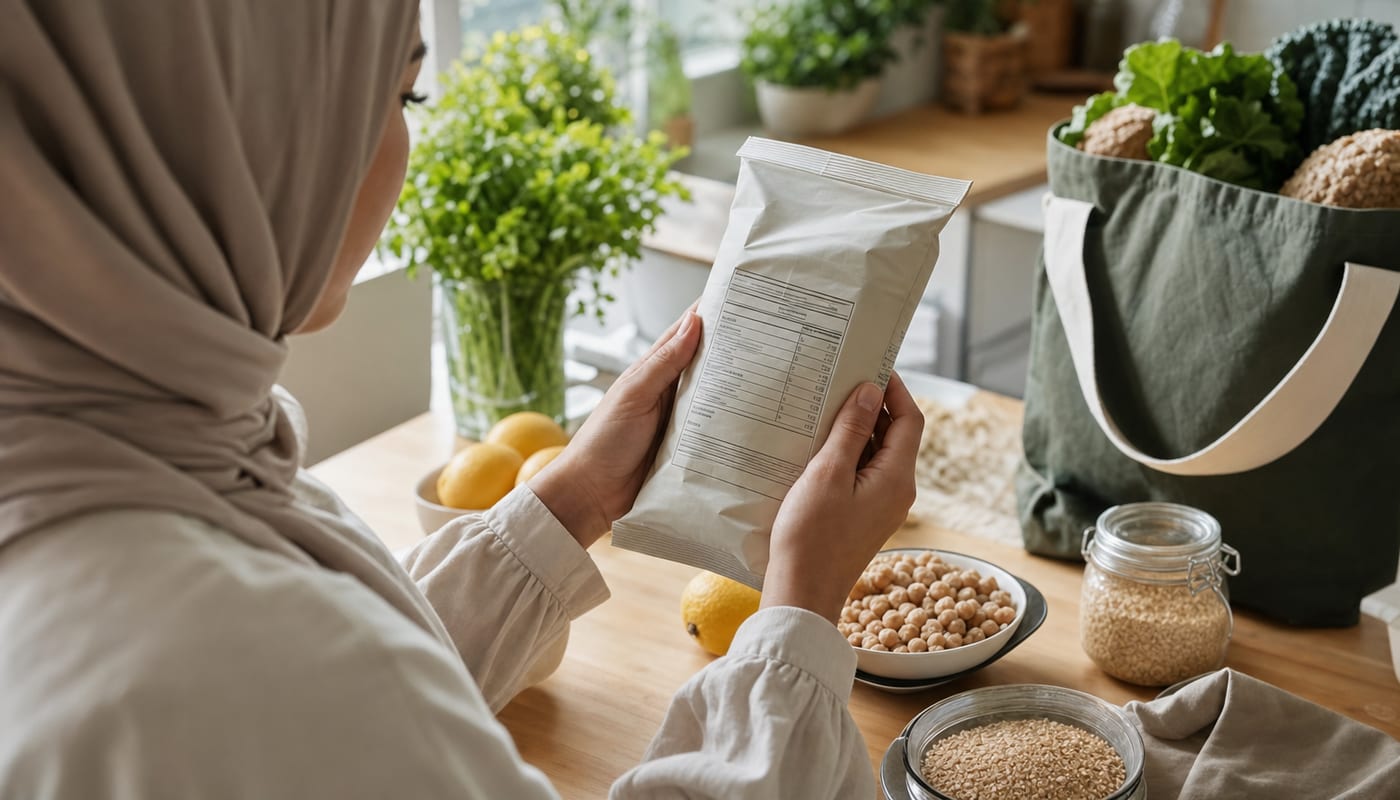
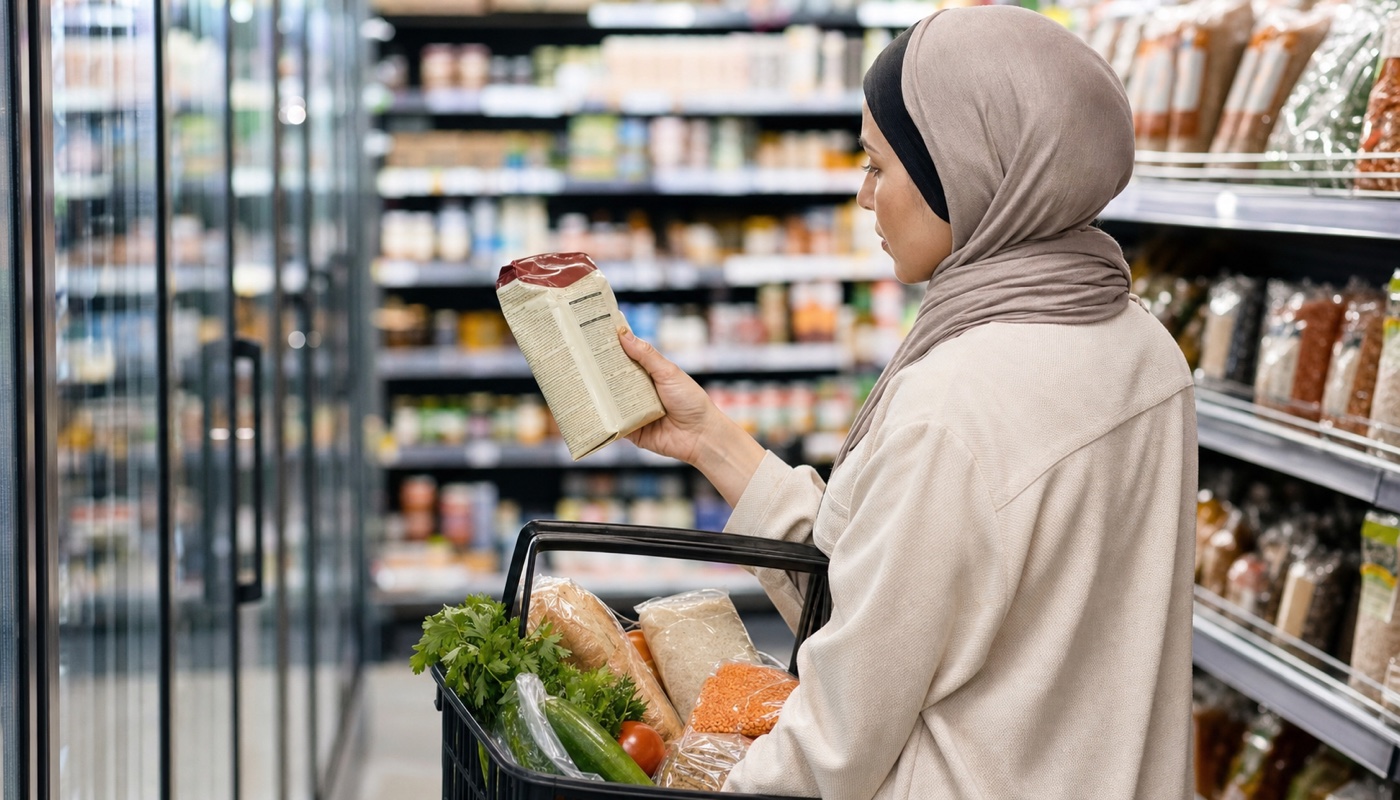
Rice, lentils, tomatoes, and olive oil may look straightforward, but a familiar ingredient category does not verify every packaged version. Flavored rice mixes, bouillon, broth, spice blends, pasta fillings, canned fish with sauces, and prepared tahini dressings may contain source-sensitive flavors, meat ingredients, enzymes, alcohol-derived carriers, or other additions. Read the exact package you are buying rather than relying on the product name.
FDA requires most ingredients in packaged foods to be listed, although certain ingredients may appear under collective terms such as “flavors” or “spices” [3]. When the source matters and the label does not answer the question, identify the certifier or ask the manufacturer. A vegan, kosher, organic, or USDA inspection mark answers a different question; none automatically substitutes for the halal standard followed by your household.
New York’s halal registry can help consumers identify businesses and certifiers associated with foods represented as halal [4]. It provides transparency about who is making or supporting a claim, but it does not decide which religious standard an individual should follow.
Keep the shelf safe and visible
Shelf-stable means a product can be stored safely at room temperature before opening; it does not mean every package lasts forever or can stay in the cabinet after opening. USDA advises keeping canned foods away from heat and damp areas and avoiding cans that are bulging, leaking, badly rusted, or deeply dented [1]. Follow “Keep Refrigerated” directions and the manufacturer’s instructions on the exact package.
Arrange the shelf so older packages stay in front, write the opening date on products you tend to forget, and check the pantry before shopping. The federal FoodKeeper tool provides product-specific storage guidance when a date or opened package leaves you unsure [2]. When food looks damaged, has been stored improperly, or seems unsafe, do not turn dinner into an experiment.
Use the pantry before buying more
Once a week, choose one base, one protein, one flavor direction, and the fresh or frozen produce that needs attention first. If those four pieces already make a meal, the pantry is doing its job. Buy a replacement only when an item is nearly finished—not because an attractive storage jar is empty.
Our Pantry Meal Finder can turn the ingredients already in your kitchen into flexible meal ideas. It is a starting point, not a halal certification or food-safety check, so verify packaged foods and use ingredients that have been stored safely.
Bottom line
A small halal pantry does not need fifteen sauces or a month of emergency food. It needs a few dependable ingredients that can become dinner in more than one way, plus a verification habit for the products whose sources and processing matter.
Begin with six items from this list that match meals you already enjoy. Add the rest only when you can name the dinner they will help you make. One working shelf beats an overflowing cabinet every time.
Frequently asked questions
Does every pantry staple need a halal certification logo?
Not every household applies the same verification standard to every packaged food. Plain plant ingredients may be straightforward, while bouillon, flavors, spice blends, meat or fish products, and prepared sauces can raise source or processing questions. Read the exact label, identify the certifier when present, and follow the standard trusted by your household.
What should I buy first if I have very little pantry space?
Choose one base, one legume, canned tomatoes, olive oil, one verified flavor builder, and the seasoning you use most. These six items are more useful than twelve products selected for meals you rarely cook.
Can I use pantry food after the date printed on the package?
The answer depends on the product, the type of date, package condition, and storage history. Follow safety and refrigeration instructions on the label, discard damaged or suspect packages, and use the federal FoodKeeper resource for product-specific guidance rather than applying one rule to every food.
Sources and further reading
- Shelf-Stable Food SafetyUSDA Food Safety and Inspection ServiceAccessed Aug 1, 2026
- FoodKeeper AppFoodSafety.govAccessed Aug 1, 2026
- Types of Food IngredientsU.S. Food and Drug AdministrationAccessed Aug 1, 2026
- Halal Foods RegistrationNew York State Department of Agriculture and MarketsAccessed Aug 1, 2026
We review articles for clarity and update them when guidance, products, or local information changes. Always verify current certification and food-safety information with the relevant primary source.
Read our editorial policy →NYHMP Editorial Team
Practical, evidence-aware guidance for healthy halal living in New York.