
Build practical halal snack boxes for work, school, and New York commutes with flexible combinations, label checks, and safe cold packing.
What this guide covers
- 01Build around an anchor plus produce, then add crackers, pita, popcorn, or another extra when needed.
- 02Halal verification and nutrition labeling answer different questions; check both without treating either as a shortcut.
- 03Longer, more complex ingredient lists deserve closer source and certification review.
- 04Use serving size, added sugars, sodium, saturated fat, fiber, and allergen information to compare packaged snacks.
- 05Perishable snacks need an insulated bag and cold sources throughout a New York commute.
- 06Prepare three flexible combinations rather than forcing an identical seven-day lineup.
The short version: build a snack, not a miniature candy break
A useful snack does not need a perfect macro split or a dozen ingredients. Start with two jobs: something that brings substance, and something fresh or crunchy that makes you want to eat it. Apple and sunflower-seed butter works. So do hummus and vegetables, yogurt and berries, or dates and walnuts. Add crackers or pita when the gap until your next meal is longer.
That simple pairing lines up with the current U.S. emphasis on whole, nutrient-dense foods and with USDA's practical suggestion to combine food groups for a more satisfying snack [1][2]. It also solves a familiar New York problem: the snack must survive a backpack, fit beside a laptop, and still look appealing when a delayed train turns 3:30 into 4:15.
Halal is a separate check. Fruit is not made more halal by an attractive crescent on the front of a package, and a protein bar is not automatically suitable because it says 'clean.' Verify the ingredients and the claim according to the standard your household follows. Nutrition language and halal verification answer different questions.
Use the anchor + produce + extra formula
Instead of shopping from a rigid list, give each part of the box a role. The anchor is the part that makes the snack feel substantial: plain yogurt, hummus, nuts, seeds, a verified cheese, roasted chickpeas, an egg, or a clearly verified meat snack. Produce brings freshness, color, and texture. The optional extra—whole-grain crackers, pita, popcorn, or a small sweet item—changes the size of the snack without forcing you to rebuild it.
You do not need all three parts every time. A piece of fruit and a handful of nuts may be enough before dinner. A longer afternoon may call for yogurt, berries, and crackers. Appetite, allergies, age, activity, medication, and the timing of meals all matter; this is a packing framework, not a medical portion prescription.
| Box | Anchor | Produce or fresh element | Optional extra |
|---|---|---|---|
| Crisp and creamy | Sunflower-seed or verified nut butter | Apple or pear wedges | Whole-grain crackers |
| Hummus crunch | Hummus | Cucumber, carrots, and bell pepper | Pita triangles |
| Yogurt break | Plain yogurt | Berries or sliced peach | Walnuts or pumpkin seeds |
| Sweet-savory | Walnuts or almonds | Two or three dates | Plain popcorn |
| Pantry backup | Roasted chickpeas | Whole orange or clementines | Seed crackers |
| Cold lunch-box snack | Verified cheese or halal turkey roll-ups | Grapes and sliced peppers | Crispbread |
Check allergens, halal-sensitive packaged ingredients, and refrigeration needs for the exact products you use. School and workplace allergy policies may rule out nuts even when they work at home.
Halal verification gets more important as the ingredient list gets longer
A whole apple does not present the same verification puzzle as a cheese cracker, gummy, meat stick, or flavored yogurt. Complex snacks may contain gelatin, enzymes, animal-derived fats, flavor systems, emulsifiers, coatings, or meat ingredients whose source is not obvious from the front panel. A credible halal certification that covers the exact product can answer questions the ingredient list alone cannot.
Read the package in your hand rather than trusting a screenshot from last year. Formulas, factories, suppliers, and certifications can change. If a mark is unfamiliar, identify the certifier and check its current product listing when one is available. In New York, the Department of Agriculture and Markets also maintains halal registration information that can identify the person or organization behind covered halal representations [6]. Registration improves transparency; it does not choose a religious standard for your family.
When the package remains unclear, ask the manufacturer a narrow question: Is this exact product and size currently halal-certified, by whom, and does the certification cover the complete formula and production line? Save the reply with the product name and date. 'No pork in the recipe' is useful information, but it is not the same answer.
Read the Nutrition Facts panel without turning snack time into accounting
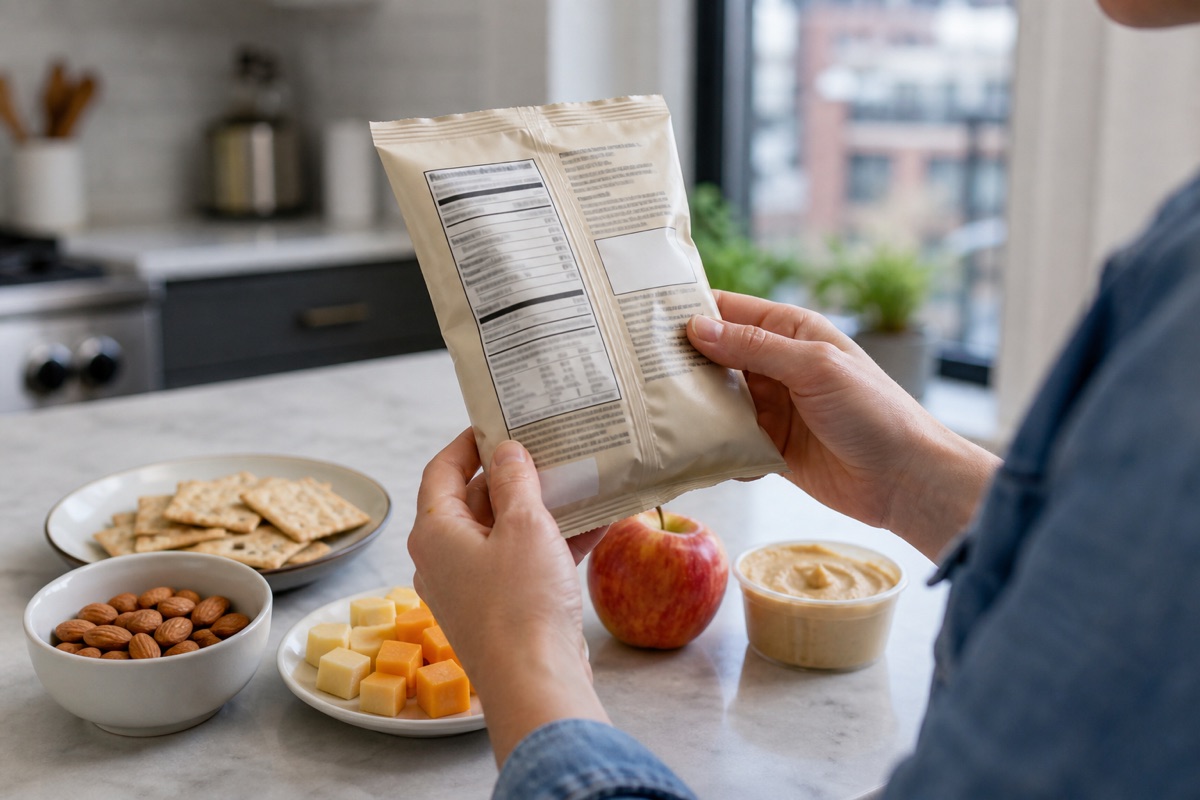
Start with serving size and servings per container. Those two lines tell you whether the numbers describe the amount you will probably eat or only a fraction of the bag. Then compare products using the same amount. FDA's label guidance explains that the % Daily Value can help show whether a nutrient is relatively low or high in one labeled serving [3].
For a packaged everyday snack, look at added sugars, sodium, saturated fat, and dietary fiber in the context of the whole day. The current Dietary Guidelines prioritize minimally processed, nutrient-dense foods and recommend limiting highly processed foods high in added sugars and sodium [1]. That does not turn an occasional cookie or gummy into a moral crisis. It simply makes fruit, vegetables, yogurt, nuts, seeds, legumes, and other recognizable foods a practical default more often.
Allergen labeling deserves its own glance. FDA requires covered packaged foods to identify the nine major food allergens, but cross-contact statements such as 'may contain' are voluntary [4]. If an allergy is involved, follow the person's medical plan and the exact school or workplace policy; do not treat a halal mark as an allergen guarantee.
Pack the subway version safely
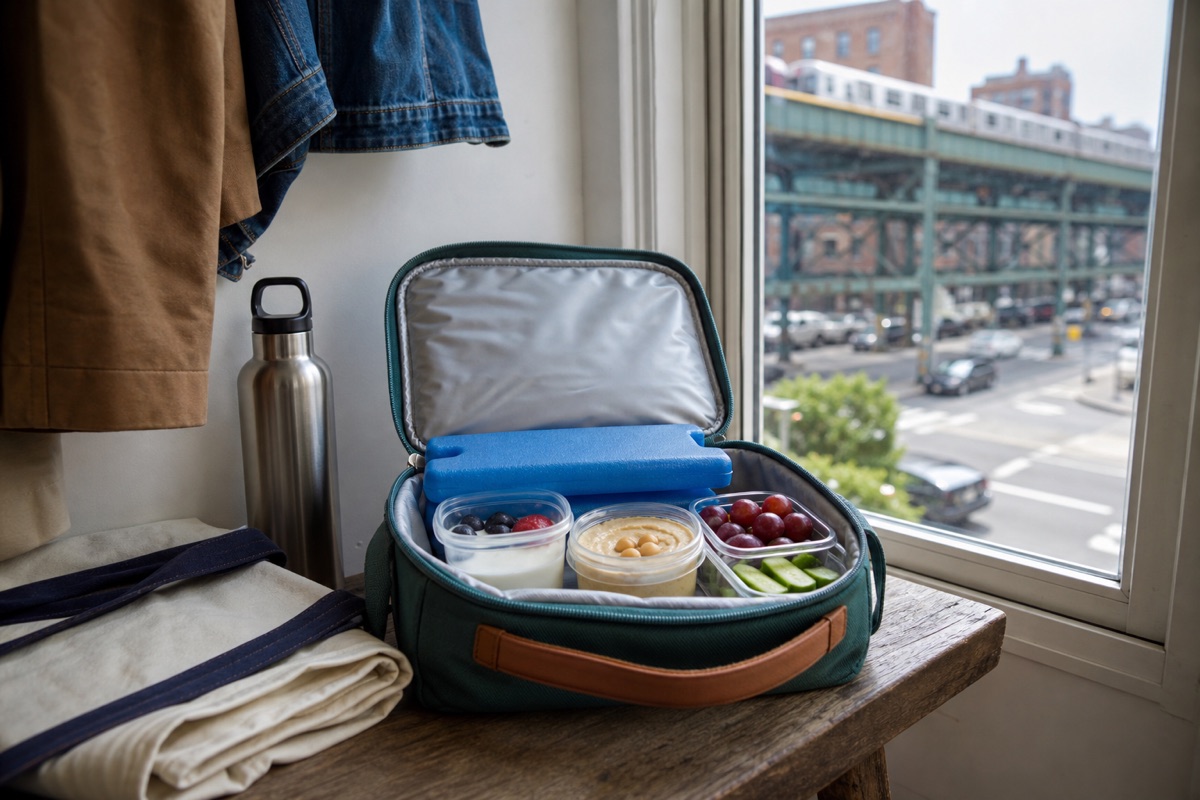
Whole fruit, unopened shelf-stable food, crackers, and many nuts or seeds are easy commuters. Yogurt, hummus, cut fruit, deli meat, eggs, and many cheeses need cold control. USDA advises an insulated bag with at least two cold sources for perishable lunches, placed above and below the food [5]. Put the bag in a refrigerator when one is available.
Perishable food should not sit at room temperature for more than two hours, or more than one hour when the temperature is above 90°F [5]. The clock includes the walk to the station, the train, the desk, and the trip to the park. A cold pack is not decorative; it is what makes the convenient box a safe one.
If refrigeration will be impossible, choose the shelf-stable version on purpose: whole fruit, unopened nut or seed butter, crackers, roasted chickpeas, or another product labeled for room-temperature storage. Follow the package after opening, because shelf-stable before opening does not always mean shelf-stable afterward.
A 15-minute setup that makes the good option the easy option
Wash whole produce under running water, dry it, and portion only what benefits from advance work. Keep apples and pears whole until the day you pack them if browning bothers you. Divide crackers and roasted chickpeas into dry containers, put dips in leak-resistant cups, and leave the cold parts together on one refrigerator shelf.
Prep three combinations, not twenty-one identical boxes. For example: hummus boxes for Monday, yogurt and fruit for Tuesday, and a shelf-stable pantry kit for Wednesday. Repeat the foods you already enjoy, then change one element the following week. The best snack system is not the most photogenic one; it is the one that prevents an expensive, unsatisfying emergency purchase without making you dread Sunday evening.
Frequently asked questions
What should I put in a halal snack box?
Choose one substantial anchor such as hummus, plain yogurt, nuts, seeds, roasted chickpeas, verified cheese, or a clearly verified meat snack. Add fruit or vegetables, then include crackers, pita, popcorn, or another extra when the gap to your next meal is longer.
Does every packaged snack need a halal certification mark?
Households apply different verification standards. A simple single-ingredient plant food is not the same question as a gummy, meat snack, cheese cracker, or product with complex flavors and coatings. When source or processing details matter, current certification for the exact product is the clearest answer.
How do I keep yogurt or hummus cold on the subway?
USDA recommends an insulated bag with at least two cold sources for perishable lunches, positioned above and below the food. Refrigerate the bag on arrival when possible, and keep the total time at room temperature within federal food-safety limits.
Are these snack boxes designed for weight loss?
No. They are flexible packing examples, not calorie prescriptions or individualized medical advice. Amounts should reflect appetite, age, activity, health needs, allergies, and the timing of the next meal.
Sources and further reading
- Dietary Guidelines for Americans, 2025–2030U.S. Departments of Health and Human Services and AgricultureAccessed Aug 15, 2026
- Healthy Snacking With MyPlateU.S. Department of AgricultureAccessed Aug 15, 2026
- How to Understand and Use the Nutrition Facts LabelU.S. Food and Drug AdministrationAccessed Aug 15, 2026
- Food Allergies: What You Need to KnowU.S. Food and Drug AdministrationAccessed Aug 15, 2026
- Keeping ‘Bag’ Lunches SafeUSDA Food Safety and Inspection ServiceAccessed Aug 15, 2026
- Overview of the Halal Foods Protection ActNew York State Department of Agriculture and MarketsAccessed Aug 15, 2026
We review articles for clarity and update them when guidance, products, or local information changes. Always verify current certification and food-safety information with the relevant primary source.
Read our editorial policy →NYHMP Editorial Team
Practical, evidence-aware guidance for healthy halal living in New York.