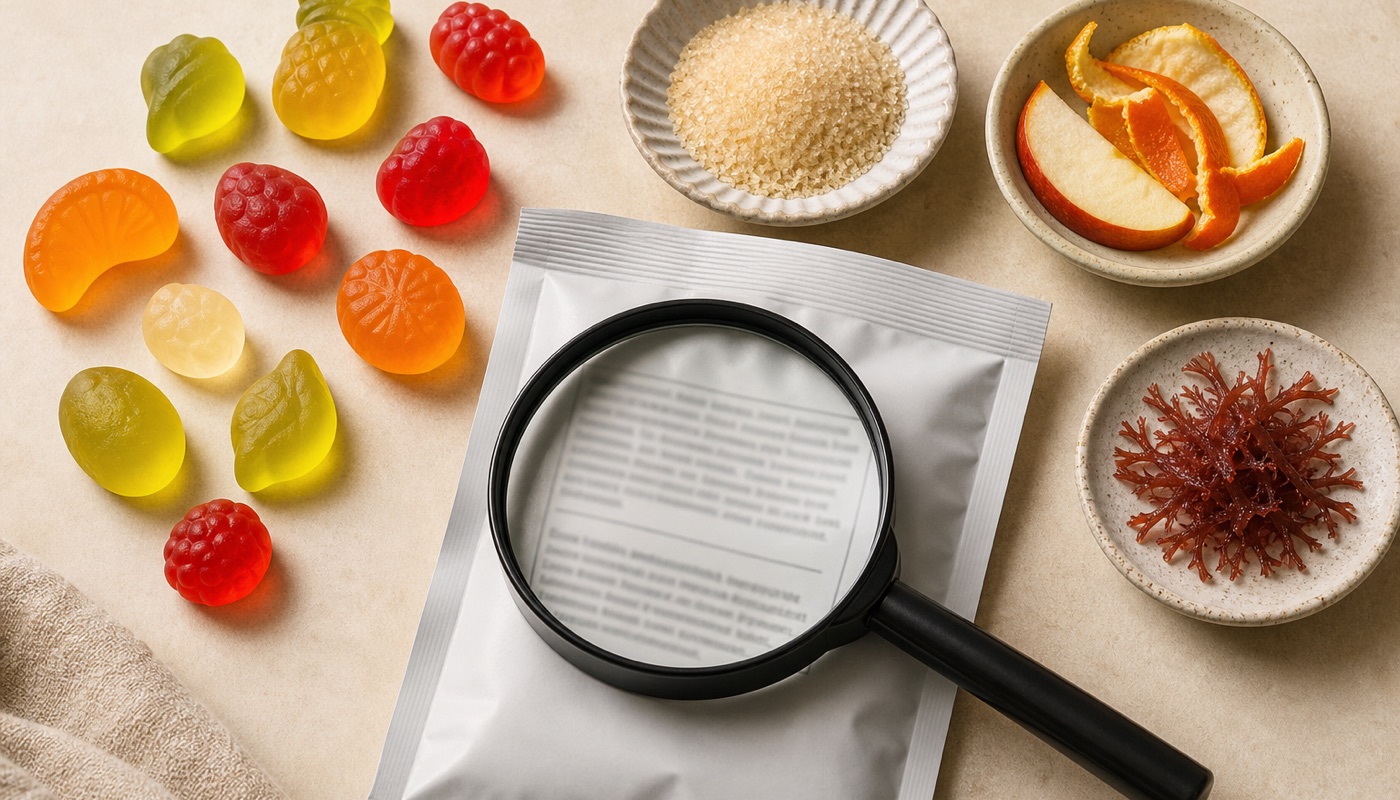

Learn which snacks may contain gelatin, what porcine, bovine, fish, and unspecified sources mean, and how to verify the exact product.
What this guide covers
- 01Porcine gelatin is a clear conflict for a halal diet; set that product aside.
- 02Bovine gelatin identifies cattle as the source but does not prove halal slaughter, processing, or finished-product certification.
- 03Fish gelatin and plant-based gelling agents provide useful source information but do not certify every ingredient in the snack.
- 04Marshmallows, cereal treats, chilled desserts, whipped fillings, coated bars, and repacked bakery snacks can deserve the same label check as gummies.
- 05Current certification for the exact product, flavor, package, and U.S. market is stronger evidence than a brand-wide claim or old email.
- 06New York's public halal registry can identify who stands behind a halal representation, but it is not a religious ruling on every product.
The direct answer: gelatin is not one halal category
Gelatin in a snack deserves a source check because the ingredient is made from animal collagen. U.S. government references describe gelatin as material derived from animal skin, tendons, ligaments, and bones and used for thickening, stabilizing, and texturizing foods [1][2]. The label may say pork, bovine, fish, or simply gelatin. Those descriptions do not all lead to the same halal conclusion.
Porcine gelatin is the clear stop for a halal diet. Bovine gelatin gives you the species, but not necessarily the slaughter method, supply chain, or certification. Fish gelatin answers the species question more specifically, yet the exact finished product may still need verification under the standard you follow. When the panel says only “gelatin,” the animal source is unresolved.
This is a shopping guide, not a ruling on every brand. No product named here was tested or certified by our team. The most useful evidence is a current halal certification that covers the exact snack, flavor, package, and market—not a brand-wide assumption or an old customer-service screenshot.
Why gelatin appears in snacks that do not look alike
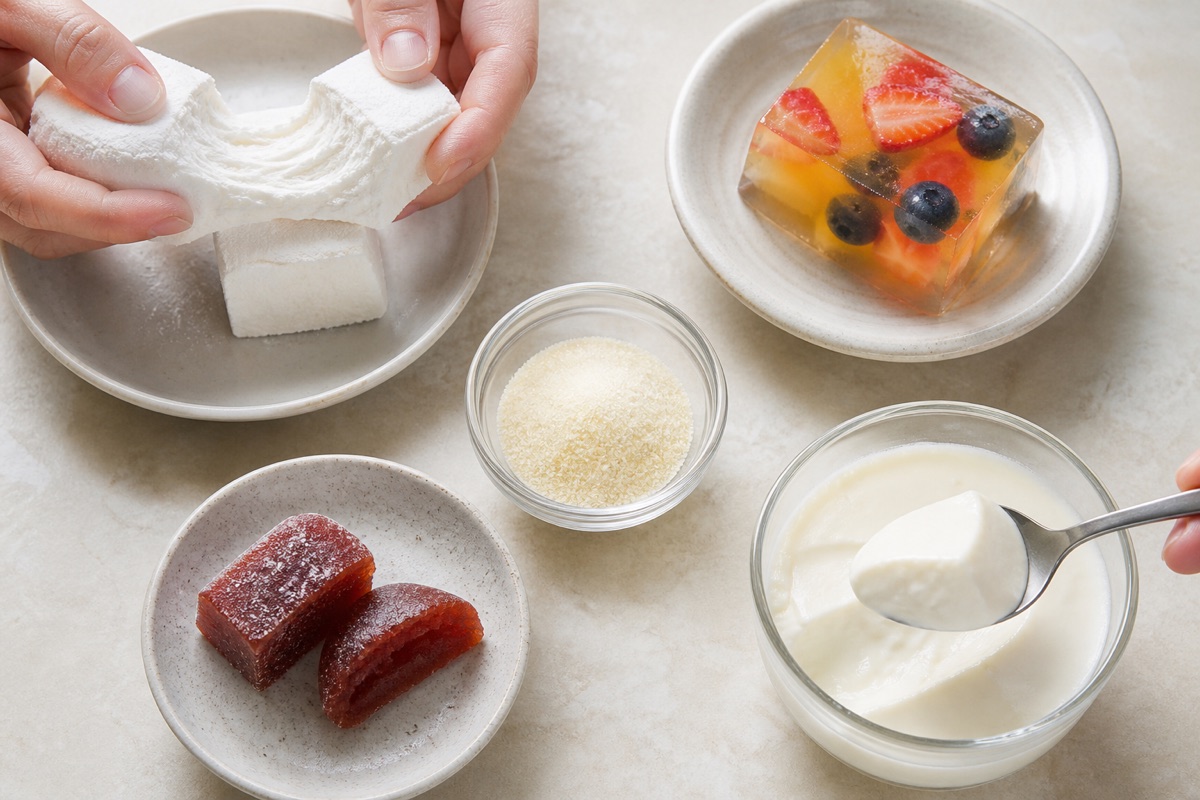
Gelatin can make a fruit chew springy, help a marshmallow hold air, set a chilled dessert, stabilize a creamy filling, or give a cereal treat its familiar pull. FDA's food-substance database lists functions including stabilizing, thickening, surface finishing, and texturizing [3]. That range is why a shopper who checks only gummy candy can miss the same ingredient elsewhere.
The practical lesson is not to suspect every soft food. It is to check products whose texture depends on a gel, foam, whipped structure, or flexible coating. Formulas vary even inside one category: one marshmallow may use gelatin, another a plant-based system, and a third may have a current halal certificate. The exact package in your hand wins over memory.
Four gelatin labels—and what each one actually tells you
Ingredient wording is evidence, but it has limits. Use the term you see to choose the next step rather than forcing a yes-or-no answer from incomplete information.
| Label wording | What it establishes | Practical response |
|---|---|---|
| Pork / porcine gelatin | The source is pig | Do not choose it for a halal diet |
| Beef / bovine gelatin | The source is cattle | Verify halal slaughter, processing, and product certification |
| Fish gelatin | The source is fish | Check the complete product and the standard or certifier you follow |
| Gelatin | An animal-derived ingredient is present, but the species may be unstated | Ask the manufacturer or choose a currently certified alternative |
A species label can narrow the question. It does not replace current product-specific certification.
Porcine gelatin: the warning that needs no detective work
If the ingredient list explicitly says pork gelatin or porcine gelatin, the source is clear. Set the product aside. A front-panel phrase such as “natural flavors,” an imported-product sticker, or a different certification system does not reverse that disclosed source.
Also watch for a replacement ingredient label placed over the original package. Imported foods sold in New York should provide the information required for the U.S. market, but a damaged, incomplete, or unreadable panel is a good reason to choose another sealed product. You should not have to reconstruct a formula at the checkout line.
Bovine gelatin: more information, but not the complete answer
“Bovine” means the gelatin came from cattle. It does not, by itself, tell you whether the animal was slaughtered according to halal requirements, whether the gelatin supply was segregated, or whether a certifier reviewed the complete snack. IFANCA's consumer guidance treats animal-derived gelatin as an ingredient whose source and processing require scrutiny [4].
Look for a credible halal mark and confirm it in the certifier's current directory when possible. Check the exact flavor and package; a company can sell certified and non-certified products under the same brand. If there is no certification, ask who supplies the gelatin and whether the finished product—not merely the gelatin ingredient—is currently halal-certified.
Fish gelatin: a helpful source disclosure, not a universal shortcut
Fish gelatin removes the pork and cattle-slaughter questions, which makes the label more informative. It still does not describe every flavor, color, carrier, processing aid, or shared line in the finished snack. Muslim consumers and certifiers may also apply different standards to species and processing, so we should not turn “fish gelatin” into a universal fatwa.
If the product carries current halal certification, verify its scope. Without certification, use the ingredient list as a starting point and take any unresolved religious question to the authority whose standard your household follows.
Unspecified gelatin: ask one focused question
When the panel says only “gelatin,” do not guess from the brand name, country, flavor, or package color. FDA rules generally require ingredients by their common or usual names, but the retail panel is not designed to answer every religious sourcing question [1]. The missing species is therefore a reason to verify, not proof that the product is pork-based and not permission to assume it is halal.
A useful manufacturer message is: “Does [full product name, flavor, size, and UPC] contain pork, bovine, fish, or another source of gelatin? Is the complete product currently halal-certified for U.S. sale, and if so, by which organization?” Include photographs of the ingredient panel and UPC. Save the date of the reply because formulas and suppliers can change.
Seven snack areas where gelatin can hide in plain sight
Not every item in these aisles contains gelatin. These are simply the places where the texture makes a back-label check worthwhile.

- Marshmallows and marshmallow-filled cookies: gelatin commonly supports the airy, elastic structure.
- Cereal treats and crispy rice squares: the binder may be a marshmallow formula containing gelatin.
- Fruit snacks and chewy candy: gelatin, pectin, agar, or starch may create a similar-looking chew.
- Gel cups and layered chilled desserts: a set layer may rely on gelatin even when fruit or dairy is the visual focus.
- Mousse, whipped fillings, and no-bake cheesecake bites: some commercial versions use gelatin for stability.
- Frosted, glazed, or coated snack bars: check the complete formula rather than assuming the grain base settles the question.
- Repacked bakery and bulk-counter snacks: ask for the original case label because the display card may omit the source details you need.
A calm red-yellow-green system for the snack aisle
A simple evidence ladder keeps caution from turning into panic. Red means the label gives a clear conflict. Yellow means the available information is incomplete. Green means you have strong, current evidence for the exact product—while remembering that halal status does not replace allergy, nutrition, or food-safety checks.
| Signal | Examples | Action |
|---|---|---|
| Red: clear conflict | Pork or porcine gelatin is disclosed | Leave the product |
| Yellow: unresolved | Unspecified gelatin; bovine gelatin without adequate verification; repacked snack without its source label | Ask, verify, or choose another product |
| Green: stronger evidence | Current product-specific halal certification covering the exact flavor, size, and U.S. market | Confirm the certifier and proceed under the standard you trust |
A logo copied onto a marketplace listing is weaker evidence than the package plus the certifier's current directory.
Pectin and agar can replace gelatin—but they certify only themselves
Pectin is a plant polysaccharide commercially extracted from materials such as citrus peel, apple pomace, or beet pulp [5]. Agar is derived from red algae and can function as a gelling agent [6]. Starches can also build body or chew. These alternatives are useful when you want to avoid animal gelatin.
Still, “gelatin-free” and “vegan” are not halal certifications. They can answer the animal-gelatin question while leaving flavors, carriers, colors, coatings, or production details outside their promise. Read the full panel and use current halal certification when the remaining details matter to your standard.
The same separation applies to nutrition. A halal-certified marshmallow can still be high in added sugar, and a pectin fruit chew does not become a serving of fruit. Halal verification answers permissibility; the Nutrition Facts panel answers a different set of everyday food questions.
New York shoppers have an extra transparency tool
New York's Halal Foods Protection Act requires covered manufacturers, packers, distributors, and food establishments that represent food as halal to register information about the person or organization certifying it. The Department of Agriculture and Markets maintains a public halal registry [7]. That can help you identify who stands behind a halal claim.
The registry is not a state religious ruling, and it does not make every snack in a registered store halal. Use it as one layer of transparency: identify the certifier, match the claim to the exact product, and contact that certifier when the scope is unclear.
The calm rule is simple. Read the source when it is stated, verify the exact product when it is not, and choose an easier alternative when the evidence stops short of the standard you follow. A snack should fit your day—not require a leap of faith about its label.
Frequently asked questions
Is bovine gelatin halal?
Bovine means the gelatin came from cattle. The word alone does not establish halal slaughter, ingredient processing, segregation, or certification of the finished snack. Verify the exact product with a credible certifier or obtain the details required by the halal standard you follow.
Is fish gelatin always halal?
Fish gelatin gives more source information and removes the pork and cattle-slaughter questions, but it does not certify every ingredient or production detail in the finished snack. Confirm the exact product under the religious standard or certifier you trust.
Which snacks can contain gelatin besides gummy candy?
Depending on the formula, gelatin may appear in marshmallows, cereal treats, gel desserts, mousse, whipped or no-bake fillings, coated snack bars, and some repacked bakery products. Not every item in these categories contains it, so read the exact ingredient list.
Does gelatin-free mean halal?
No. Gelatin-free resolves one ingredient question. Flavors, carriers, colors, coatings, processing aids, or shared production may still matter to the standard you follow. A current halal certification for the exact product provides broader evidence.
How should I ask a snack company about gelatin?
Provide the full product name, flavor, package size, UPC, and market. Ask for the gelatin species and source, whether the complete product is currently halal-certified, which organization certifies it, and whether the answer covers that exact U.S. product.
Sources and further reading
- Types of Food IngredientsU.S. Food and Drug AdministrationAccessed Aug 15, 2026
- Additives in Meat and Poultry ProductsUSDA Food Safety and Inspection ServiceAccessed Aug 15, 2026
- Gelatin — Substances Added to FoodU.S. Food and Drug AdministrationAccessed Aug 15, 2026
- Halal Consumer — Core Principles and Certification ScopeIslamic Food and Nutrition Council of AmericaAccessed Aug 15, 2026
- 21 CFR § 184.1588 — PectinsElectronic Code of Federal RegulationsAccessed Aug 15, 2026
- 21 CFR § 184.1115 — Agar-agarElectronic Code of Federal RegulationsAccessed Aug 15, 2026
- Halal Foods RegistrationNew York State Department of Agriculture and MarketsAccessed Aug 15, 2026
We review articles for clarity and update them when guidance, products, or local information changes. Always verify current certification and food-safety information with the relevant primary source.
Read our editorial policy →NYHMP Editorial Team
Practical, evidence-aware guidance for healthy halal living in New York.