
Learn how to check gummy candy for gelatin, pectin, agar, flavors, coatings, and current halal certification in the United States.
What this guide covers
- 01Some gummies are halal and some are not; shape, color, and a 'natural' claim do not answer the question.
- 02Gelatin is animal-derived, so its source and halal verification matter.
- 03Pectin comes from plant material and agar from red algae, but either gelling agent settles only one part of the formula.
- 04U.S. labels may group components under terms such as natural flavor, so a focused manufacturer question can be necessary.
- 05Vegan and kosher marks provide different information and should not be presented as halal certification.
- 06Verify the exact product, flavor, package, market, and current certifier rather than relying on a brand-wide assumption.
The direct answer: some gummy candies are halal, and the shape tells you nothing
A gummy bear can be made with animal-derived gelatin, plant-derived pectin, seaweed-derived agar, starch, or a combination of gelling agents. The same cheerful fruit shape can therefore represent very different ingredient and production questions. The fastest reliable answer is current halal certification for the exact product. Without that, the ingredient panel is the beginning of the investigation—not always the end.
Do not decide from color, country of origin, a 'natural' claim, or a front-of-pack 'gelatin-free' badge alone. Gelatin-free can remove one concern while leaving flavors, colors, coatings, processing aids, or shared production to check. Likewise, the word 'gelatin' usually does not tell an ordinary U.S. shopper the animal source on its own.
This guide explains how U.S. labels work and where they stop. It does not issue a ruling for every brand or settle scholarly differences about particular sources and processing. When an ingredient or certifier falls outside the standard you follow, take the exact product information to a trusted halal authority.
First, find the ingredient that creates the chew
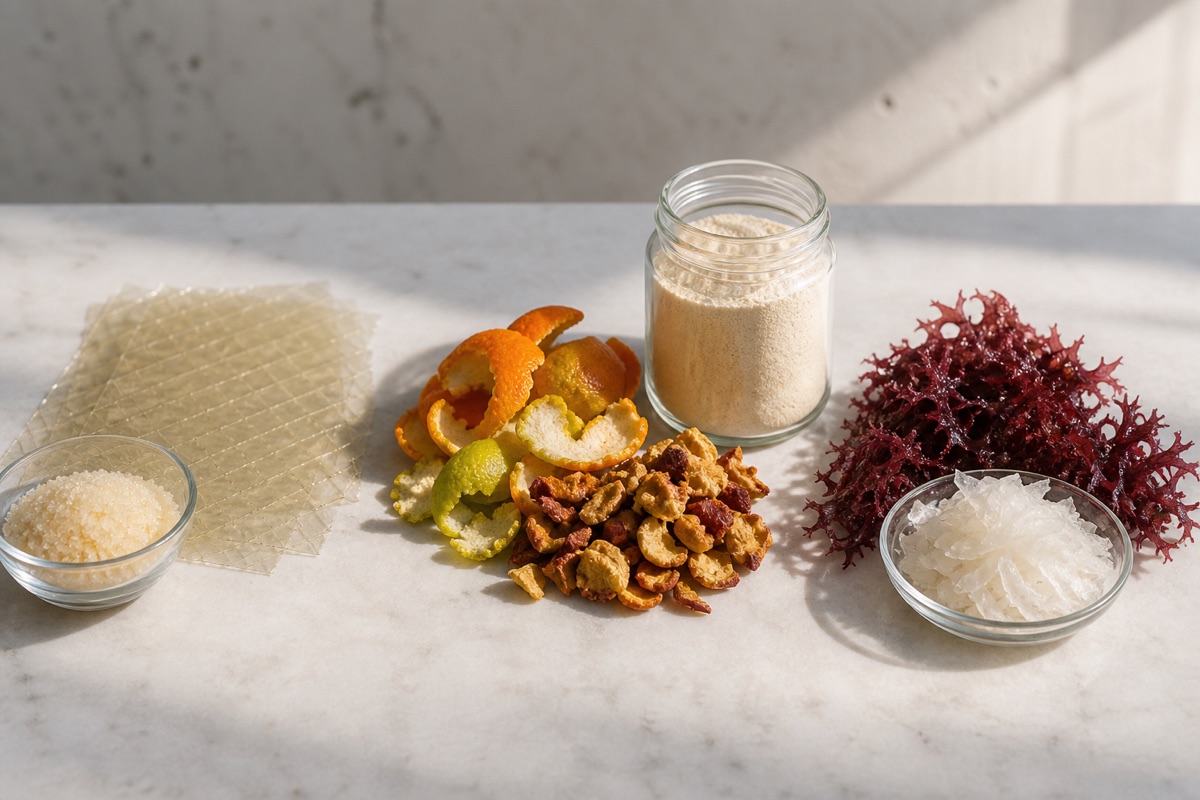
Gelatin is the classic gummy gelling agent. FDA materials identify gelatin as an ingredient used for functions including thickening and texturizing, and agency inspection guidance notes that gelatin is extracted from animal parts and tells inspectors to determine its source [1][2]. For a halal shopper, 'gelatin' without a verified source is therefore a question, not a green light.
Pectin is different. The federal regulation describes pectins as plant polysaccharides commercially extracted from citrus peel, apple pomace, or beet pulp [3]. Agar-agar is described as a polysaccharide extracted from red algae and may be used in soft candy [4]. Those origins make pectin and agar useful clues for people avoiding animal gelatin, but they do not certify the complete candy. A pectin gummy can still contain other ingredients or be produced under conditions your standard asks you to verify.
| Label term | Typical source described in U.S. references | Useful conclusion |
|---|---|---|
| Gelatin | Animal-derived material | Source and halal verification still matter |
| Pectin | Plants such as citrus peel, apple pomace, or beet pulp | The gelling agent is plant-derived; check the rest of the formula |
| Agar / agar-agar | Red algae | The gelling agent is seaweed-derived; check the rest of the formula |
| Modified starch | A processed starch ingredient | It may provide texture, but it does not establish halal certification |
Ingredient names describe the formulation, not the religious status of the full product or production system.
Why the U.S. ingredient list may not answer every halal question
FDA requires food ingredients to appear in descending order by weight and generally by their common or usual names [1]. That is why you can quickly see whether gelatin appears near the top of the list. But some components may be declared collectively as 'natural flavor,' 'artificial flavor,' 'spices,' or certain color terms rather than revealing every subcomponent [1]. This is legal label structure, not evidence that a hidden ingredient is automatically impermissible.
Treat broad terms as a reason for a focused question when they matter to your standard. Ask the manufacturer whether the exact product is certified and whether flavors, carriers, colors, or surface finishes fall within that certification. Do not turn every chemical-sounding word into danger. FDA notes that ingredients must meet the same safety standard whether they are naturally or artificially derived [1]; halal source and food safety are related to different kinds of evidence.
Also check the package every time a design or recipe changes. A statement from a customer-service representative in 2024 does not establish the formula in a bag purchased in 2026. Record the UPC, package size, lot code if relevant, and date of the answer so you know exactly what was confirmed.
Certification, vegan, and kosher are three different signals
A current halal certification for the exact candy is the clearest packaged answer because a certifier can review sources and production details that do not fit on the retail label. IFANCA's own consumer guidance lists gelatin among animal-derived ingredients requiring source scrutiny and describes flavors, colors, stabilizers, and thickeners as complex or multi-source ingredients that may also need review [5]. It also warns that a certified facility is not automatically proof that every item made there is individually certified.
A vegan label is useful evidence that the recipe is intended to exclude animal-derived ingredients, so it can rule out conventional animal gelatin. It is not the same as halal certification and may not address every flavor carrier, processing detail, or religious standard. A kosher symbol likewise represents a different certification system. Some shoppers use these marks as screening clues; neither should be presented as a substitute for halal verification.
If no certification appears, do not borrow certainty from a different product by the same brand. Certification can cover selected flavors, package sizes, plants, or markets. Search the certifier's current directory or contact the certifier with the exact product—not only the company name.
The 60-second gummy check in a New York store
Turn the bag over before it reaches the basket. This short sequence handles most situations without making the candy aisle feel like a research lab.
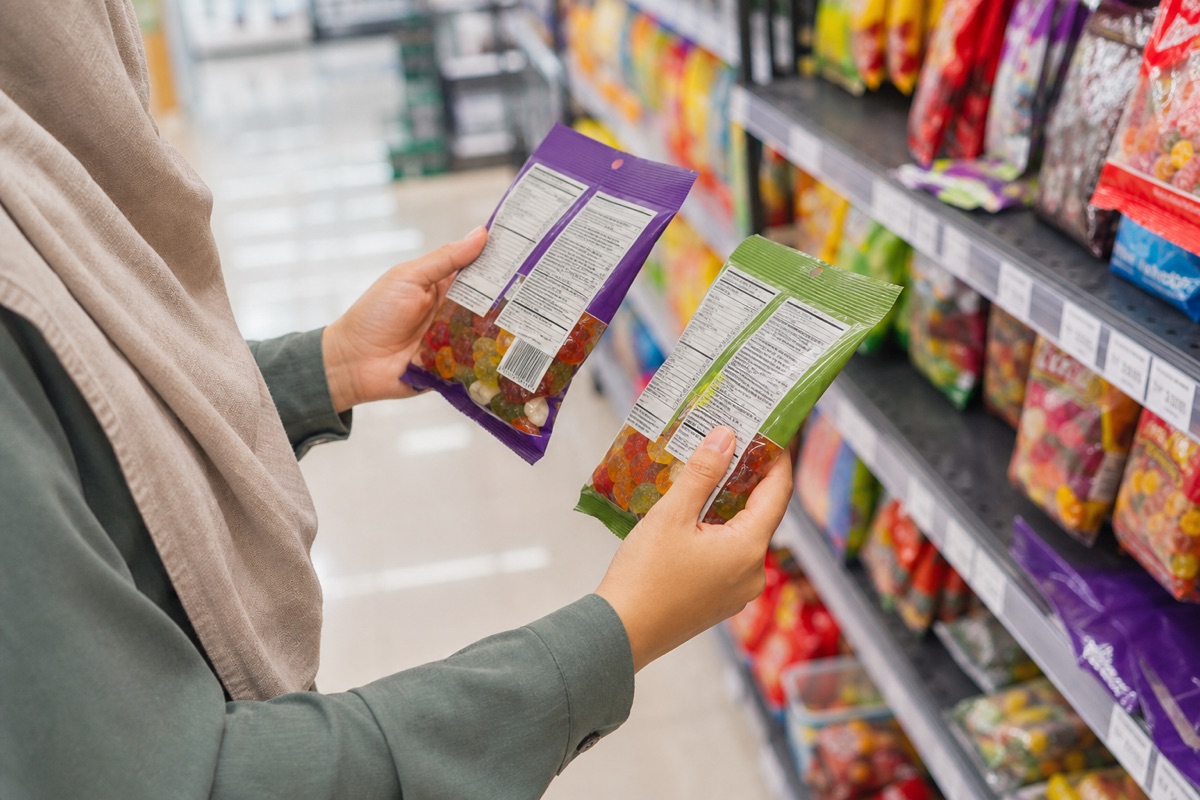
- Look for a recognizable halal mark and identify the certifier—not merely the word 'halal.'
- Confirm that the mark or directory listing covers the exact product, flavor, size, and current market.
- Read the ingredient list for gelatin first; if present, look for a declared source or certification that resolves it.
- If pectin or agar replaces gelatin, continue through flavors, colors, coatings, and other ingredients rather than stopping early.
- Check the allergen statement separately when an allergy is involved; halal certification is not allergen certification.
- Photograph the front, back, UPC, and lot code if you need to ask the manufacturer or a scholar later.
Bulk bins and repacked candy need more caution
A scoop of gummies in a clear deli tub can separate the candy from the information you need. Ask to see the original case label or manufacturer package, including the ingredient statement and any certification. A handwritten 'halal gummies' sign is a claim, but it does not identify the certifier or prove that the current batch matches an older one.
New York's Halal Foods Protection Act focuses on disclosure and registration for covered businesses and certifiers. The state registry can help consumers identify who stands behind a halal representation [6]. It is a transparency tool, not a state religious ruling and not a promise that every item in a mixed candy display has been traced correctly.
Shared scoops and neighboring bins can matter to families concerned about cross-contact. Ask how products are separated and whether the store can preserve the original product identity. If the answer is vague and certainty matters to you, a sealed, verifiable package is the easier choice.
What to ask a manufacturer
Send one precise message rather than asking only, 'Is this halal?' A useful version is: 'Is [full product name, flavor, size, UPC] currently halal-certified for sale in the United States? If yes, which organization certifies it, and does that certification cover the complete formula and manufacturing line? If it contains gelatin, what is the species and source?'
Depending on your standard, you may also ask whether flavor carriers or surface coatings use alcohol or animal-derived material, and whether non-halal gummies share equipment. The company may decline to disclose proprietary details. That is not proof of a problem; it simply means the available evidence may not meet your threshold.
The calm conclusion is not 'all gummies are suspicious.' It is simpler: favor an exact, current certification when available; understand what the gelling agent reveals; ask narrow questions when the label stops; and skip the product when the answer remains too uncertain for the standard you follow. Candy should be a small pleasure, not a guessing contest.
Frequently asked questions
Is gelatin in gummy candy halal?
The word gelatin identifies an animal-derived gelling ingredient but may not identify the species or halal status. Look for current certification that covers the exact product or obtain the source and processing details required by the halal standard you follow.
Are pectin gummies automatically halal?
Pectin is plant-derived, so it removes the animal-gelatin question. It does not certify flavors, colors, coatings, processing aids, shared equipment, or the complete formula. Check the rest of the label and current product certification.
Does vegan gummy candy count as halal?
A vegan claim is useful evidence that the recipe is intended to exclude animal ingredients, including conventional gelatin. Vegan and halal are different standards, so the claim should not be presented as a substitute for halal certification.
Is kosher gummy candy automatically halal?
No. Kosher certification follows a different religious standard. It may provide useful ingredient information, but it does not establish that the product meets the halal standard followed by a particular Muslim consumer.
How can I verify gummies sold from a bulk bin?
Ask to see the original manufacturer case or package, including the current ingredient list and certification. Preserve the product identity and ask how scoops and neighboring bins are handled. Choose a sealed, verifiable package when the bulk display cannot provide enough evidence.
Sources and further reading
- Types of Food IngredientsU.S. Food and Drug AdministrationAccessed Aug 15, 2026
- Miscellaneous Food Products — Gelatin Inspection GuidanceU.S. Food and Drug AdministrationAccessed Aug 15, 2026
- 21 CFR § 184.1588 — PectinsElectronic Code of Federal RegulationsAccessed Aug 15, 2026
- 21 CFR § 184.1115 — Agar-agarElectronic Code of Federal RegulationsAccessed Aug 15, 2026
- Halal Consumer — Core Principles and Certification ScopeIslamic Food and Nutrition Council of AmericaAccessed Aug 15, 2026
- Overview of the Halal Foods Protection ActNew York State Department of Agriculture and MarketsAccessed Aug 15, 2026
We review articles for clarity and update them when guidance, products, or local information changes. Always verify current certification and food-safety information with the relevant primary source.
Read our editorial policy →NYHMP Editorial Team
Practical, evidence-aware guidance for healthy halal living in New York.