
Build a flexible halal plate with vegetables, protein, grains, satisfying flavor, label checks, and practical examples for home, meal prep, and NYC takeout.
What this guide covers
- 01Halal verification and nutritional balance are two separate checks.
- 02Use vegetables or fruit, protein, a satisfying carbohydrate, and flavor as a flexible framework.
- 03Keep cultural dishes intact and add what the complete meal is genuinely missing.
- 04Vary protein foods instead of relying on meat at every meal.
- 05Use Nutrition Facts labels to compare similar foods, not to classify foods as good or bad.
- 06Adjust portions for appetite and circumstances; seek qualified advice when nutrition has clinical consequences.
The short answer: build a complete meal, not a perfect diagram
A balanced halal plate brings together four practical parts: vegetables or fruit, a protein food, a grain or starchy vegetable, and enough flavor or fat to make the meal satisfying. Dairy or a fortified alternative can sit beside the plate when it fits your preferences and needs. Halal verification is a separate step: check the meat, stock, sauce, cheese, flavorings, and preparation conditions that matter to your household.
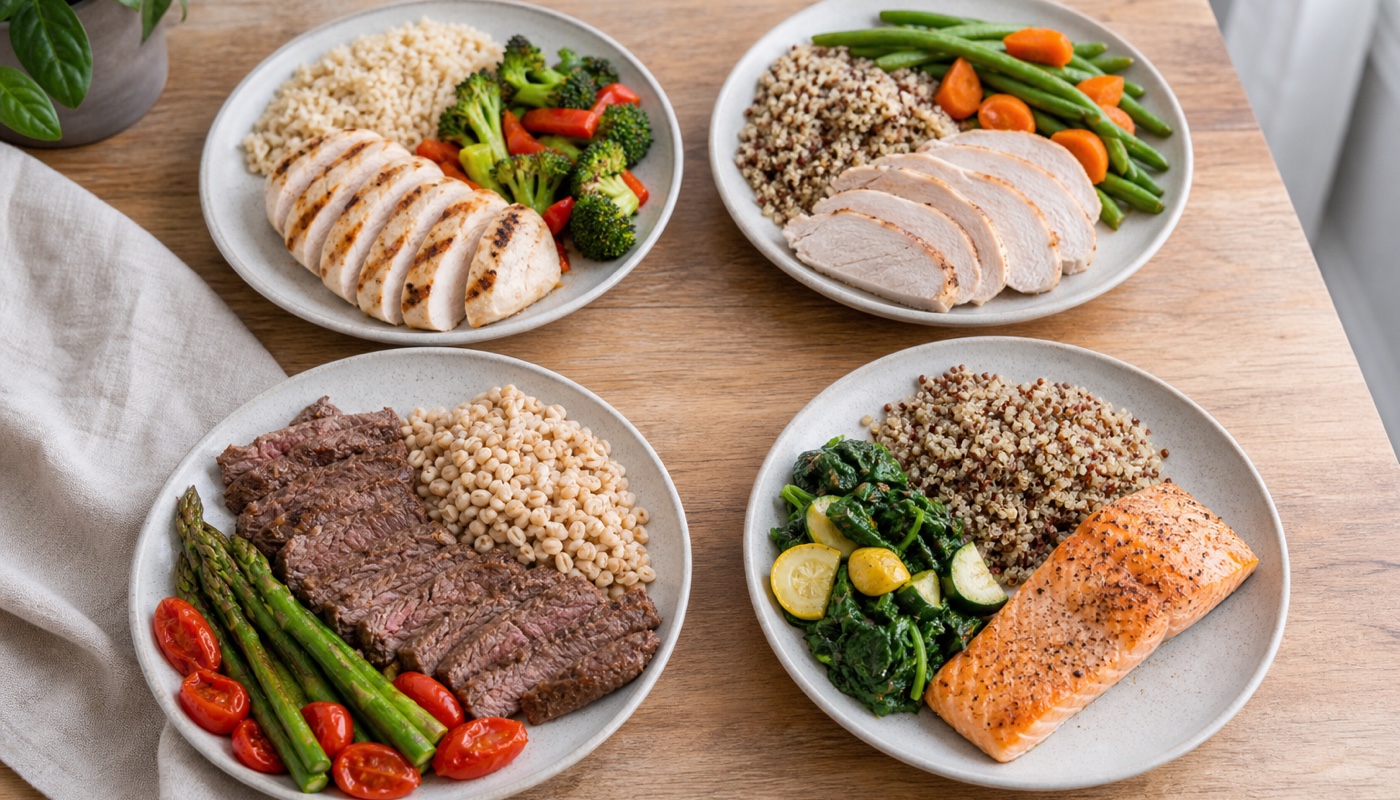
You do not need exact fractions at every meal. A useful visual starting point is to let vegetables and fruit occupy roughly half the plate, then share the remaining space between protein and grains or another satisfying carbohydrate. USDA MyPlate uses a similar food-group framework and recommends variety rather than one mandatory menu [2]. Treat the picture as a prompt, not a prescription.
- Produce: vegetables, fruit, or both—fresh, frozen, canned, or cooked all count.
- Protein: verified halal meat or poultry, seafood according to your standard, eggs, beans, lentils, tofu, nuts, or seeds.
- Carbohydrate: rice, bulgur, bread, pasta, potatoes, corn, plantain, or another familiar staple.
- Flavor and fat: olive oil, tahini, yogurt sauce, avocado, nuts, seeds, herbs, or a sauce whose ingredients you have checked.
Halal and balanced answer two different questions
Halal describes whether food and its handling meet the Islamic standard you follow. “Balanced” describes how the meal contributes to nourishment, variety, satisfaction, and your overall eating pattern. A food can be halal without supplying every food group, and a plate can look nutritionally varied while containing an ingredient that does not meet your halal standard.
That distinction keeps the process calm. First verify the ingredients and preparation. Then ask whether the meal has enough variety and substance for the situation. USDA states that federally inspected meat and poultry labeled Halal or Zabiah Halal must be handled according to Islamic law and under Islamic authority [6]. For packaged sauces, stocks, cheese, and composite foods, read the whole label and identify the certifier instead of assuming the meat claim covers the finished meal.
New York also maintains halal registration information for covered sellers and certifiers [7]. Registration can help identify who is making or verifying a claim, but it does not choose a religious interpretation for every Muslim household.
How this guide was researched
The NYHMP Editorial Team built this guide from the current 2025–2030 Dietary Guidelines for Americans, USDA MyPlate food-group resources, FDA label-reading guidance, federal halal-label information, and New York’s halal registration program [1–7]. The aim is a flexible planning method for ordinary meals—not a weight-loss plan, medical diet, religious ruling, or individualized calorie target.
The current Dietary Guidelines prioritize nutrient-dense foods across protein, dairy, vegetables, fruits, healthy fats, and whole grains while recommending less reliance on highly processed foods high in refined carbohydrates, added sugars, excess sodium, and less-helpful fats [1]. That broad direction can include familiar Muslim food traditions without turning every meal into grilled chicken, brown rice, and broccoli.
Build the plate in four decisions
Start with what you already cook. The method works best when it improves a familiar meal instead of replacing it with a menu you do not enjoy.
1. Give vegetables or fruit meaningful space
Aim for color and variety across the week, not a performance at every lunch. Roasted carrots, frozen spinach, tomato-cucumber salad, cabbage, okra, peppers, eggplant, green beans, or a piece of fruit can all contribute. USDA counts vegetables in fresh, frozen, canned, dried, raw, and cooked forms [4]. This matters in New York, where freezer space, season, price, and shopping frequency can change which form is realistic.
If half a plate of vegetables feels like a large jump, add one dependable portion first. Stir frozen spinach into lentils, roast a tray of mixed vegetables beside chicken, add chopped salad to a rice plate, or pack fruit for later. Consistency is more useful than an ambitious plate you do not want to repeat.
2. Choose a protein anchor
Protein foods can include verified halal meat and poultry, fish and shellfish according to the standard you follow, eggs, beans, peas, lentils, nuts, seeds, tofu, and other soy foods. USDA MyPlate recommends varying protein choices because different foods provide different combinations of nutrients [3]. A balanced halal plate does not require meat at every meal.
Portion needs differ with body size, age, activity, pregnancy, health conditions, and the rest of the day. Use a palm-sized serving only as a visual kitchen prompt, not a medical rule. If you need a closer recipe estimate, calculate from the actual product label or food database and keep the result labeled as an estimate.
3. Add the carbohydrate that makes the meal work
Rice, bulgur, whole-grain bread, couscous, pasta, potatoes, sweet potatoes, corn, plantain, and other staple foods can all belong. Whole grains can add fiber and variety, but the choice does not need to become all-or-nothing. You might mix brown and white rice, use bulgur on some days, or pair white rice with lentils and vegetables.
Carbohydrate portions often need to be larger for someone with a physically demanding day and smaller for someone whose meal already includes beans, bread, and a starchy vegetable. Look at the entire plate rather than declaring one ingredient good or bad.
4. Finish with flavor, texture, and optional dairy
A plate must be enjoyable enough to eat. Olive oil, tahini, avocado, nuts, seeds, yogurt, herbs, pickles, and sauces can add flavor and texture. These ingredients still contribute to the meal, so use an amount that supports rather than buries the other components.
Dairy is not required on the physical plate. Milk, yogurt, cheese, lactose-free dairy, or fortified soy alternatives may appear in the meal or elsewhere in the day. USDA notes that not every plant beverage has the same nutrient profile as dairy or fortified soy products [5]. Check both nutrition and halal details for cheese enzymes, gelatin, flavors, and fortified products when relevant.
Do not dismantle cultural meals to make them ‘balanced’
A mixed dish does not need to be separated into geometric sections. Biryani, maqluba, pilaf, stew, curry, lentil soup, couscous, pasta, and rice-and-bean dishes can be evaluated by their ingredients and the meal around them. Ask what is already present, then fill the genuine gap.
If chicken biryani already provides rice, protein, aromatics, and some vegetables, the useful addition may be cucumber salad and yogurt—not another protein. A lentil soup with bread may need a larger vegetable side or fruit. Beef kofta with salad may become more satisfying with bulgur, potatoes, or pita. The framework should preserve the meal’s identity, not flatten every cuisine into the same bowl.
Three balanced halal plate examples
These are flexible examples rather than nutrition prescriptions. Adjust amounts, seasonings, and ingredients for your appetite, budget, allergies, and halal standard.
- Shawarma-style plate: verified halal chicken, bulgur or rice, roasted broccoli and carrots, cucumber-tomato salad, and a checked yogurt-tahini sauce.
- Plant-forward plate: lentil stew, whole-grain bread or potatoes, sautéed greens, tomato salad, and fruit; add yogurt or a fortified alternative if desired.
- Kofta dinner: verified halal beef or turkey kofta, herbed rice, roasted eggplant and peppers, chopped salad, and a small portion of hummus or yogurt sauce.
A practical New York takeout and deli method
When lunch comes from a halal cart, deli, cafeteria, or fast-casual counter, work with what the menu allows. Start by confirming what the halal claim covers. Then build the order around one protein, choose rice or bread in an amount that matches your hunger, ask for salad or cooked vegetables, and put heavy sauces on the side when that helps you control texture and quantity.
Do not assume the word “halal” answers questions about every sauce, shared utensil, or preparation surface. Likewise, do not assume a large salad automatically makes an order balanced if it lacks enough energy or protein to carry you through the afternoon. The best lunch is one that meets your standard and leaves you comfortably satisfied.
Use the Nutrition Facts label as a comparison tool
For packaged foods, begin with serving size because every number underneath refers to that amount. FDA guidance uses percent Daily Value to help compare similar products: 5% DV or less is considered low and 20% DV or more is considered high for a nutrient [5]. Those reference values are not personalized targets, but they make side-by-side comparison easier.
Look for foods that contribute fiber and other useful nutrients, while noticing sodium, saturated fat, and added sugars across the full meal. A single high number does not make a food forbidden; it tells you what the product contributes. Compare products using similar serving sizes, then decide what fits the rest of your plate and day.
The Nutrition Facts panel does not establish halal status. Use it for nutrition information and the ingredient list, certification details, and manufacturer information for halal verification.
Turn the plate into a meal-prep system
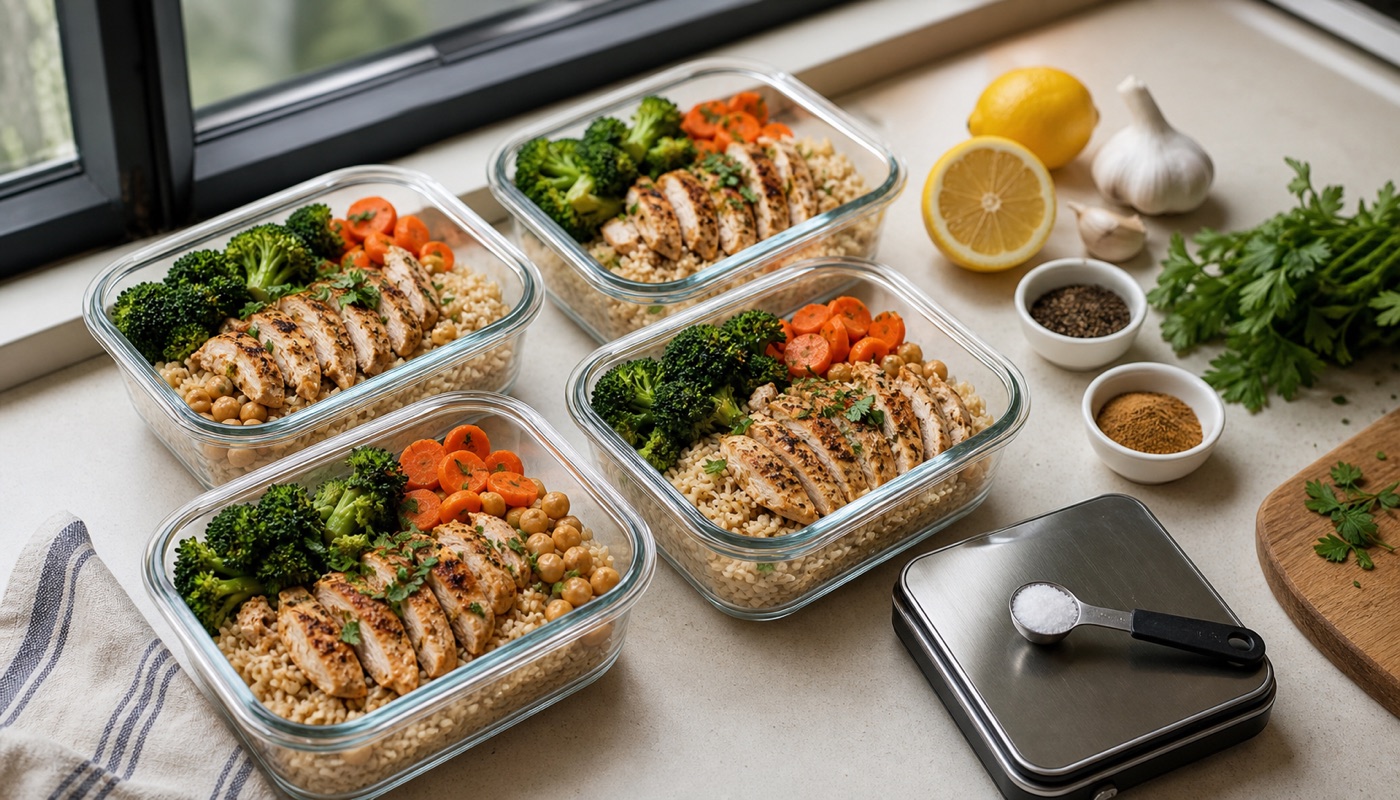
For three or four lunches, prepare one protein, one grain or starchy vegetable, two vegetables, and one sauce. Keep crisp vegetables and wet sauces separate until eating. Rotate the same components into a bowl, wrap, salad, or plated dinner so the week does not feel like four copies of Sunday’s meal.
Cool cooked food promptly and use shallow containers. USDA advises refrigerating leftovers within two hours—one hour when the temperature is above 90°F—and generally using refrigerated cooked leftovers within three to four days [8]. Freeze later portions soon after cooking rather than waiting until the end of the refrigerator window.
Adjust the framework when your needs are different
Children, older adults, athletes, pregnant or breastfeeding people, and people managing diabetes, kidney disease, digestive conditions, allergies, or therapeutic diets may need different portions or food choices. Hunger, energy, medication, and medical goals cannot be read from a photograph of a plate.
Use this framework for general planning only. A registered dietitian or other qualified healthcare professional can adapt it when nutrition has clinical consequences. Religious questions should go to a trusted scholar or certifier familiar with the exact ingredient or preparation practice.
Bottom line
A balanced halal plate is not a rigid ratio or a special cuisine. It is a repeatable way to check four things: halal verification, produce variety, a useful protein source, and enough carbohydrate and flavor for a satisfying meal.
Begin with a meal you already enjoy and make one helpful adjustment. Add vegetables, vary the protein, include a satisfying staple, or verify the sauce you buy every week. A practical pattern repeated often matters more than one photograph-perfect plate.
Sources and further reading
- Current Dietary Guidelines: 2025–2030U.S. Department of Health and Human Services, Office of Disease Prevention and Health PromotionAccessed Aug 1, 2026
- Create Your Own MyPlate MenuUSDA MyPlateAccessed Aug 1, 2026
- Protein FoodsUSDA MyPlateAccessed Aug 1, 2026
- VegetablesUSDA MyPlateAccessed Aug 1, 2026
- How to Understand and Use the Nutrition Facts LabelU.S. Food and Drug AdministrationAccessed Aug 1, 2026
- Meat and Poultry Labeling Terms: Halal and Zabiah HalalUSDA Food Safety and Inspection ServiceAccessed Aug 1, 2026
- Halal Foods RegistrationNew York State Department of Agriculture and MarketsAccessed Aug 1, 2026
- Leftovers and Food SafetyUSDA Food Safety and Inspection ServiceAccessed Aug 1, 2026
We review articles for clarity and update them when guidance, products, or local information changes. Always verify current certification and food-safety information with the relevant primary source.
Read our editorial policy →NYHMP Editorial Team
Practical, evidence-aware guidance for healthy halal living in New York.