
Learn how to budget sodium across a meal-prep batch, read labels, protect heart health, and build lower-sodium halal meals without losing flavor.
What this guide covers
- 01The U.S. Daily Value is less than 2,300 mg sodium per day; individual medical targets may be lower.
- 02A practical 500–600 mg main-meal budget can leave room elsewhere in a 2,300 mg day, but it is an editorial example, not a prescription.
- 03Calculate batch sodium from every label plus measured salt, then divide by the actual number of portions.
- 04Halal certification and sodium content answer different questions; a halal food is not automatically low in sodium.
- 05High blood pressure may have no symptoms and can damage arteries, the heart, brain, and kidneys over time.
- 06People with heart, vascular, or kidney disease should use a clinician-set target and check potassium salt substitutes before using them.
- 07Acid, aromatics, herbs, spices, browning, and texture can preserve flavor while salt is used more deliberately.
The short answer: plan the whole day, not one perfectly low-sodium box
For most adults, the U.S. Daily Value is less than 2,300 milligrams of sodium per day. The current U.S. Dietary Guidelines also tell people to reduce highly processed foods that bring excess sodium.[1][2] The World Health Organization uses a slightly lower population target: less than 2,000 milligrams of sodium, or less than 5 grams of salt, per day.[3] These are daily reference points—not a universal prescription for every body and not a rule that lunch must contain one exact number.
A practical starting point for someone using the 2,300-milligram reference is to keep each main meal around 500–600 milligrams when possible. Three meals in that range leave roughly 500–800 milligrams for breakfast extras, snacks, bread, milk, coffee-shop add-ons, and the sauce that somehow followed you home. That range is our editorial planning example, not an official per-meal limit.
The 2025 U.S. high-blood-pressure guideline recommends staying below 2,300 milligrams and moving toward an ideal limit of 1,500 milligrams a day for people working to prevent or treat high blood pressure.[5] If your clinician has set a lower limit because of hypertension, heart failure, kidney disease, swelling, medication use, or another condition, their plan replaces any generic calculation on this page.
How we prepared this guide: the NYHMP Editorial Team compared current FDA, CDC, WHO, U.S. dietary-guideline, cardiology-guideline, and Qur'anic sources; translated the public-health numbers into clearly labeled meal-prep examples; and checked every material health statement against the primary sources listed below.
How to calculate sodium per meal-prep portion
The easiest method is not to search for a perfect 'healthy recipe.' It is to total the sodium in the exact batch you are cooking, then divide by the number of portions you actually pack.
- For each packaged ingredient, multiply sodium per serving by the number of servings used.
- For salt added from a scale, multiply grams of salt by roughly 400 milligrams of sodium.
- Add the sodium in fresh or unlabeled ingredients from a reliable food database when you need a closer estimate.
- Divide the batch total by the number of finished portions—not the number you hoped the recipe would make.
- Add any sauce, pickle, cheese, bread, or topping packed separately; the container lid does not make those milligrams disappear.
A worked four-portion example
Imagine a four-portion chicken-and-bean bowl. The package values and quantities below are fictional round numbers chosen only to demonstrate the method; they are not a recipe or a promise about a real brand.
| Ingredient contribution | Illustrative batch sodium |
|---|---|
| Chicken shown on its package | 360 mg |
| No-salt-added beans | 160 mg |
| Lower-sodium broth | 560 mg |
| 2 g salt added during cooking | About 800 mg |
| Grain, vegetables, and other ingredients | 120 mg |
| Total batch | 2,000 mg |
| Per portion: 2,000 ÷ 4 | 500 mg |
Illustration only. Replace every value with the label, database entry, and measured quantity for your own ingredients.
Where sodium hides in a halal meal-prep kitchen
The salt shaker is visible; the broth cube is stealthier. FDA estimates that more than 70% of dietary sodium in the United States comes from packaged and prepared foods rather than salt added at the table.[1] In meal prep, several individually reasonable ingredients can stack into one unexpectedly salty bowl.
Halal deli turkey, beef sausage, marinated or solution-added poultry, bouillon, soy sauce, cheese, olives, pickles, canned beans, flatbreads, hot sauce, and bottled dressings can all make a useful recipe—but they deserve a label check. Halal certification addresses religious sourcing and processing under the certifier's standard. It does not mean low sodium, heart-healthy, organic, or minimally processed.
You may also see sodium in names such as monosodium glutamate, sodium bicarbonate, sodium nitrite, and sodium benzoate. Those ingredients do not all taste equally salty, but their sodium contributes to the number on the Nutrition Facts panel.[1] You do not have to become a food chemist: the total sodium line already does the arithmetic for that serving.
Read the label in this order
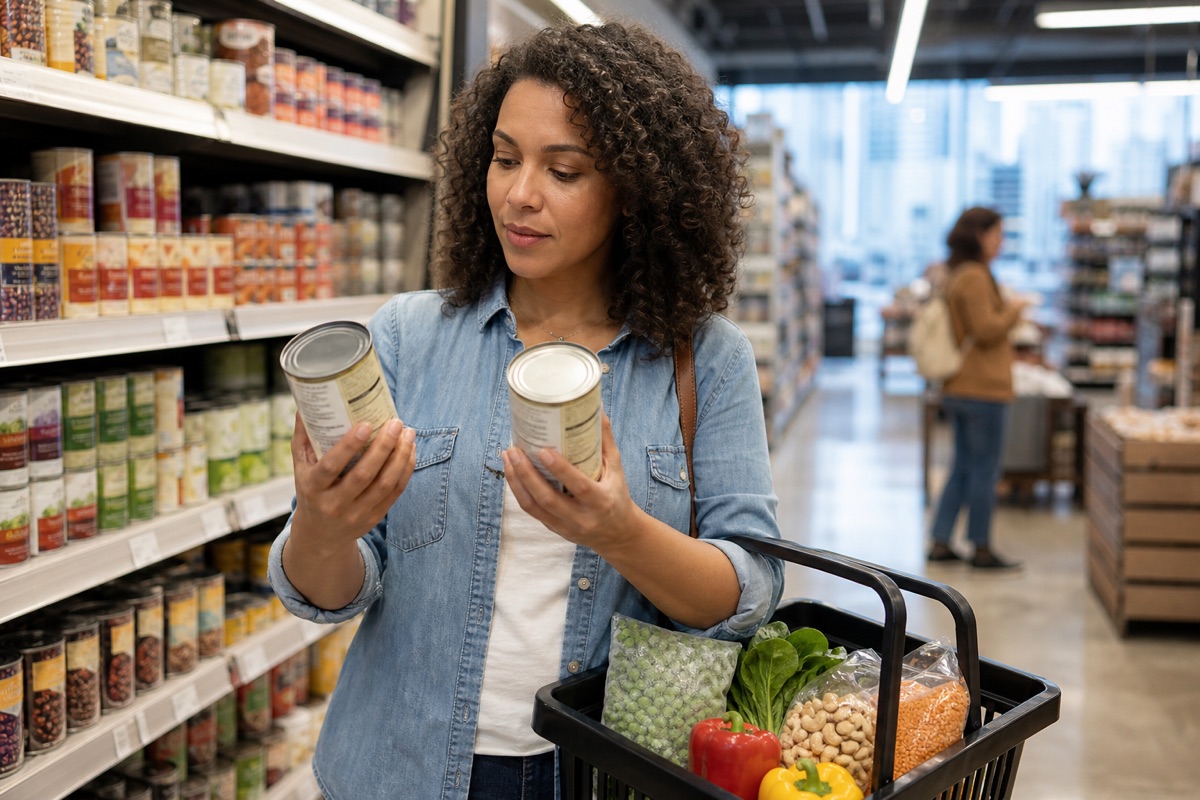
Start with serving size, because the sodium number belongs to that amount. Then read milligrams and % Daily Value. FDA considers 5% Daily Value or less per serving low and 20% or more high.[1] A 140-milligram sauce may look modest until you notice the serving is one teaspoon and you used four.
Compare like with like: two broths, two breads, or two canned beans with similar serving sizes. 'Reduced sodium' means at least 25% less than the product's regular version; it does not guarantee a low-sodium food. 'No salt added' also does not mean sodium-free, because the ingredients may contain sodium naturally or for another purpose.[1]
What sodium has to do with the heart and blood vessels
Sodium attracts water. When excess sodium increases water in the bloodstream, blood volume and blood pressure can rise, making the heart work harder.[1] High blood pressure often has no warning symptoms, yet over time it can damage arteries and increase the risk of heart disease, heart attack, stroke, peripheral artery disease, and kidney disease.[4] That is why a person can feel completely normal while their numbers still deserve attention.
A useful correction: sodium does not literally 'clog' an artery the way grease blocks a drain. Its better-established role is through blood pressure and vascular strain. Atherosclerosis—the buildup of plaque in artery walls—is a different process influenced by several factors. Reducing sodium can be one part of cardiovascular care, but it does not replace medication, cholesterol management, movement, diabetes care, sleep, or the plan made with a clinician.
CDC describes high blood pressure as readings consistently at or above 130/80 mm Hg under current U.S. definitions.[4] One hurried reading after running for the bus is not a diagnosis. If home readings are repeatedly high—or if you already have heart, vascular, or kidney disease—take the record to a qualified clinician instead of choosing a strict sodium target from social media.
If you have heart disease, hypertension, or kidney disease
Meal prep can help because it makes ingredients and portions visible, but the exact sodium goal may need to be individualized. Fluid restrictions, diuretics, heart failure, reduced kidney function, and other medications can change what is safe. Do not stop medication, sharply restrict food, or deliberately increase potassium without discussing the plan with your care team.
Potassium-based salt substitutes may lower sodium and help some adults, but they are not a universal swap. WHO's guidance excludes people with kidney impairment or other conditions or medicines that reduce potassium excretion, because excess potassium can become dangerous.[6] If a package uses potassium chloride and you have a relevant condition, show the label to your clinician or pharmacist before making it your everyday seasoning.
Make lower-sodium food taste like dinner, not discipline
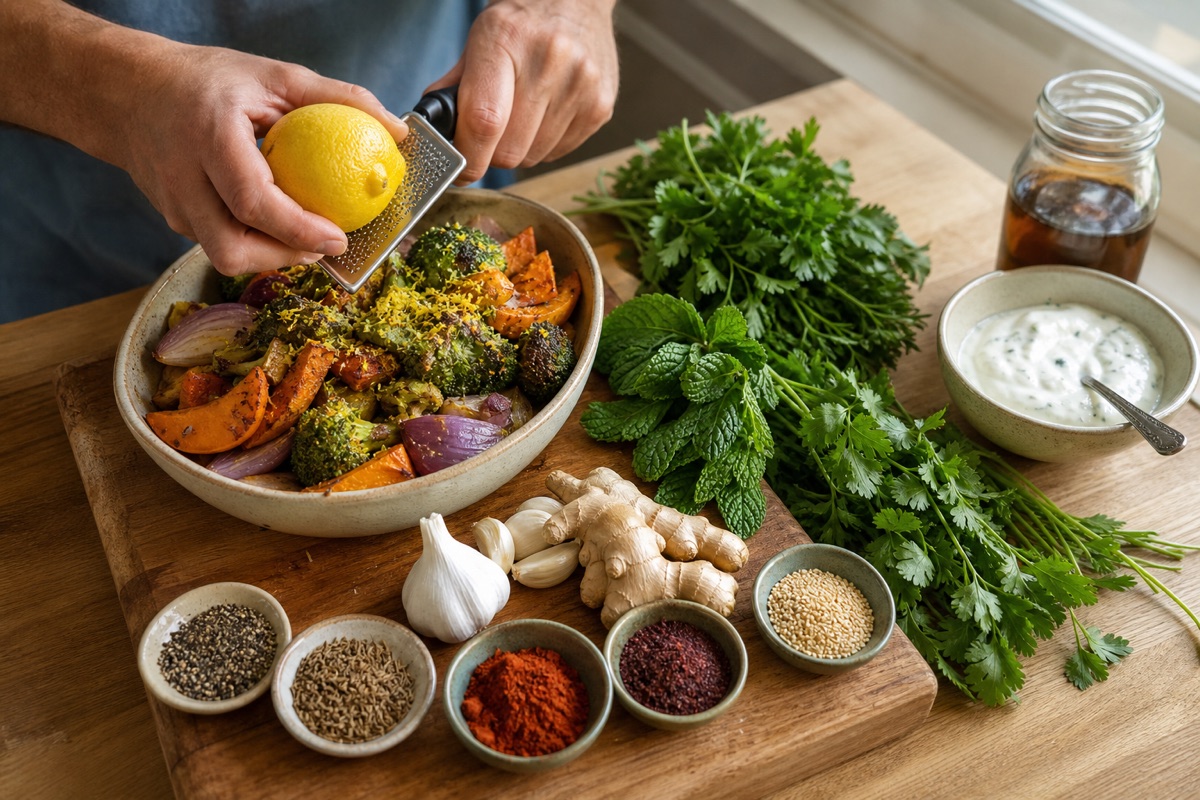
Reducing sodium works best when you add flavor instead of simply removing salt. Brown chicken and vegetables deeply. Toast cumin, coriander, or paprika briefly in oil. Add garlic, ginger, scallions, chiles, and fresh herbs. Finish with lemon, lime, vinegar, sumac, pomegranate molasses whose label you have checked, or a spoon of verified yogurt sauce.
Choose one salty accent rather than five: feta or olives, not necessarily feta plus olives plus pickles plus bottled dressing. Use unsalted or lower-sodium grains and vegetables as the base. Rinse canned beans when the recipe allows, compare broths, and season near the end so you can taste the assembled dish before adding more.
Taste adaptation is real life, not a test of character. Reduce sodium gradually if an abrupt change makes every lunch feel unfinished. A batch you enjoy and actually eat is more useful than a theoretically perfect box abandoned for takeout on Tuesday.
A brief Islamic note: moderation is a principle, not a milligram prescription
Qur'an 7:31 tells believers to eat and drink without excess.[7] That is a meaningful ethical frame for a meal-prep kitchen: care for the body, avoid waste, and do not confuse abundance with benefit. It is not, however, a verse that sets a sodium limit or turns a medical target into a religious ruling.
Salt is halal in itself, and a high-sodium halal-certified food remains halal unless another ingredient or process changes that judgment. The nutrition question is separate: how often, how much, and for whom? Follow qualified religious guidance for halal questions and qualified clinical guidance for a diagnosed health condition. Neither should be invented from a marketing label.
A five-minute sodium audit before Sunday prep
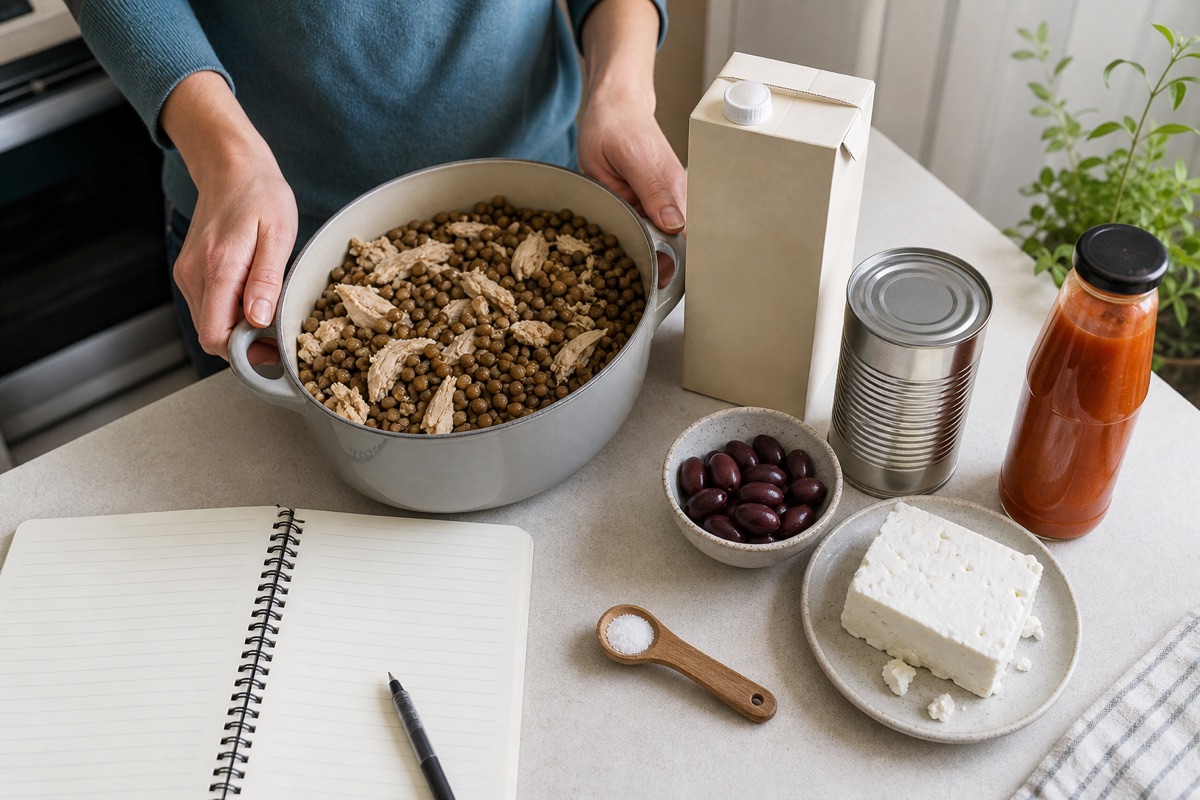
Pull out the broth, sauce, canned food, cheese, cured meat, bread, and seasoning blend before cooking. Circle the serving size and sodium on each label. Calculate the batch, decide how many portions it truly makes, and leave room for whatever travels beside it. Then taste before the final salt goes in.
That is the useful middle ground: not fearing every grain of salt, and not pretending a homemade meal is automatically low in sodium. Measure the ingredients that matter, build flavor deliberately, and let your own health history determine whether the general 2,300-milligram reference or a clinician-set plan belongs in your kitchen.
Frequently asked questions
How much sodium should one meal-prep meal contain?
There is no official universal per-meal limit. For someone planning around the U.S. Daily Value of less than 2,300 mg per day, roughly 500–600 mg for each main meal can leave room for other food and drinks. Treat that as a planning example; a clinician-set target takes priority.
How do I calculate sodium per portion?
Add the labeled sodium from every packaged ingredient, about 400 mg for each gram of salt added, and reliable estimates for unlabeled foods when needed. Divide that batch total by the actual number of portions and remember separately packed sauces and toppings.
Does halal mean low sodium?
No. Halal verification addresses religious ingredients and processing under a particular standard. Sodium is a separate nutrition measure shown on the Nutrition Facts label.
Is a potassium salt substitute safe for heart patients?
Not for everyone. Kidney impairment and some medicines or conditions can make excess potassium dangerous. Anyone with heart or kidney disease should check the exact product with a clinician or pharmacist before regular use.
Is no-salt-added food sodium-free?
Not necessarily. It means salt was not added during processing, but ingredients can still contain sodium naturally or for other purposes. Read the milligrams and serving size on the Nutrition Facts panel.
Sources and further reading
- Sodium in Your DietU.S. Food and Drug AdministrationAccessed Aug 9, 2026
- Current Dietary Guidelines: 2025–2030U.S. Department of Health and Human Services, Office of Disease Prevention and Health PromotionAccessed Aug 9, 2026
- Sodium reductionWorld Health OrganizationAccessed Aug 9, 2026
- About High Blood PressureCenters for Disease Control and PreventionAccessed Aug 9, 2026
- New High Blood Pressure Guideline Emphasizes Prevention, Early Treatment to Reduce CVD RiskAmerican College of CardiologyAccessed Aug 9, 2026
- Use of lower-sodium salt substitutes: WHO guidelineWorld Health OrganizationAccessed Aug 9, 2026
- Surah Al-A'raf 7:31Quran.comAccessed Aug 9, 2026
We review articles for clarity and update them when guidance, products, or local information changes. Always verify current certification and food-safety information with the relevant primary source.
Read our editorial policy →NYHMP Editorial Team
Practical, evidence-aware guidance for healthy halal living in New York.